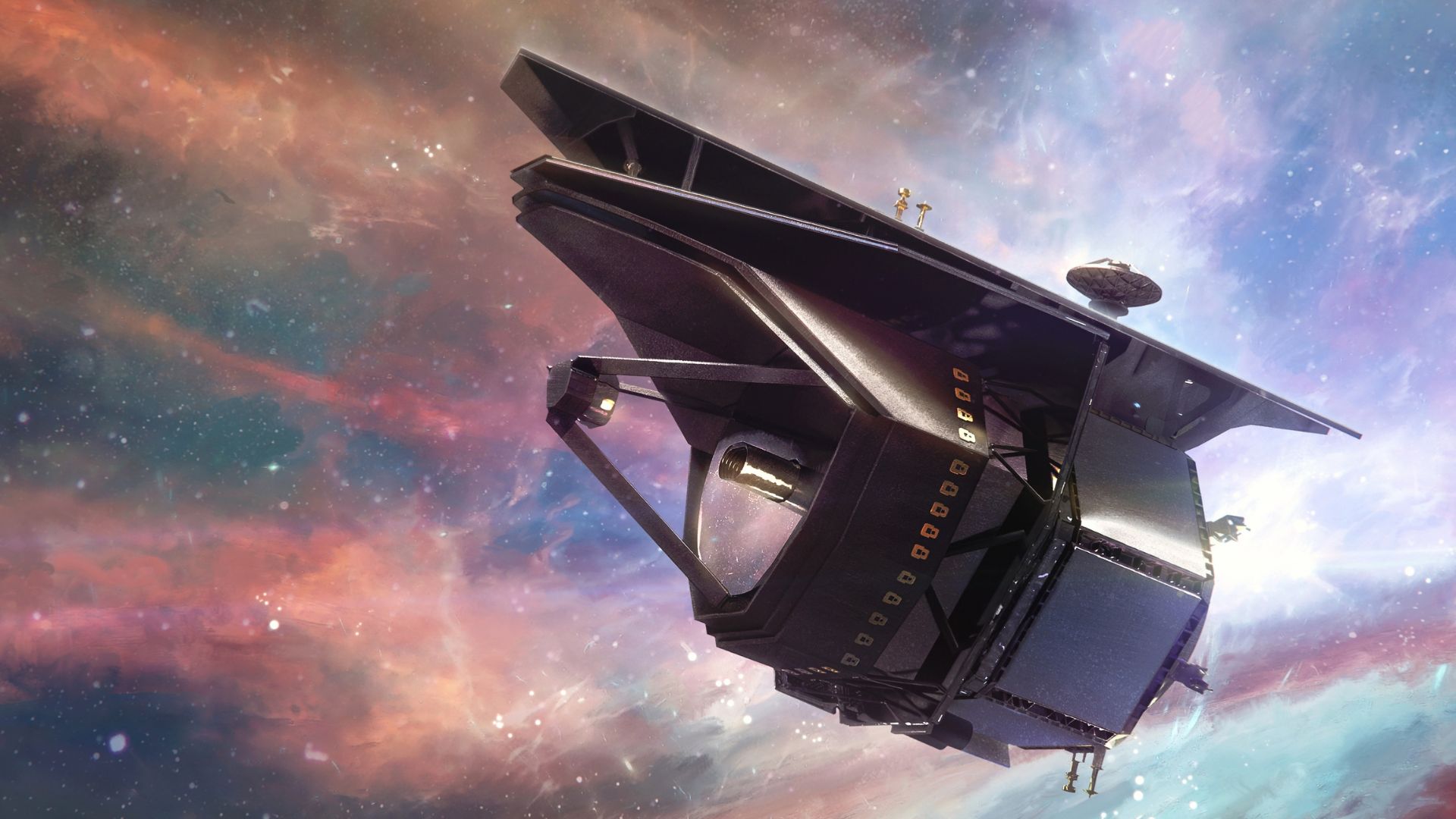
NASA is advancing a new space telescope designed to explore parts of the infrared universe that the James Webb Space Telescope cannot observe.
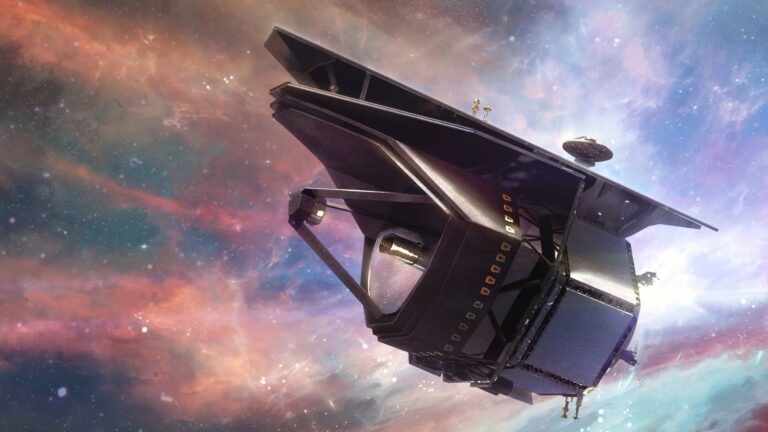
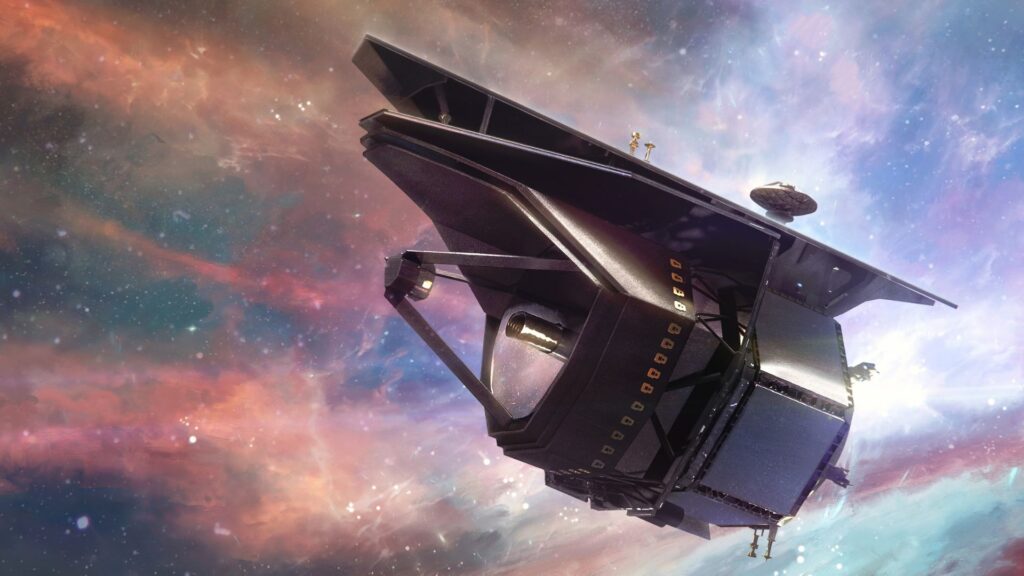
The Probe far-Infrared Mission for Astrophysics (PRIMA )has entered Phase B development as NASA considers a launch no earlier than 2033. The mission will study how planets form, how galaxies evolve and how supermassive black holes influence their surroundings.
PRIMA is now moving into the preliminary design and technology phase of its development.
This stage will examine the mission’s systems, technologies and overall design before NASA decides whether to proceed toward construction and launch. If the project remains on schedule, PRIMA is planned to operate for five years after launch.
The telescope will have a primary mirror measuring about 1.8 metres, or 5.9 feet, across. It will observe the universe in far-infrared wavelengths, which are longer than the near- and mid-infrared wavelengths that form a major part of the James Webb Space Telescope’s scientific range. This difference gives PRIMA a separate role rather than making it a direct replacement for Webb.
The far-infrared range contains information important for understanding cold gas, dust, and chemical elements in space. Some of the spectral lines needed to study these materials are outside Webb’s observing range. PRIMA is being designed to detect those signals and use them to investigate processes that remain difficult to study with existing space telescopes.
Studying How Planets Form
One of PRIMA’s main scientific goals is to examine the conditions in which planetary systems develop. Scientists want to measure the role of water in planet formation and determine how much gas is present in the disks surrounding young stars. The mission will also examine the abundance of carbon and oxygen in those disks to help identify the environments where exoplanets form.
READ ALSO: https://modernmechanics24.com/post/tesla-scales-optimus-robot-production/
Meredith MacGregor, an associate professor of physics and astronomy at Johns Hopkins University and a researcher of planetary-system formation, said PRIMA aims to answer questions Webb cannot fully address.
She explained that the required spectral lines lie in the far-infrared, at wavelengths longer than those Webb can detect.
These measurements can help scientists understand the raw material available to newly forming planets. Disks of gas and dust often surround young stars, and those disks provide the material from which planets develop. By measuring their chemical composition and gas content, PRIMA researchers hope to build a clearer picture of how planetary systems take shape.
Galaxies And Black Holes
PRIMA will also investigate galaxy growth across cosmic time. Its observations will include powerful molecular outflows, which are streams of molecular gas expelled from galaxies. These outflows can affect the supply of material available for new stars and are linked to activity around supermassive black holes.
Alberto Bolatto, an observational astronomer at the University of Maryland and a PRIMA co-investigator, will lead research focused on galaxy evolution.
Lee Armus, a staff scientist at Caltech and another PRIMA co-investigator, will serve as science operations lead. Armus said the mission will examine how molecular outflows influence star formation and the growth of supermassive black holes in galaxy centers.
PRIMA therefore brings together several areas of astrophysics in one mission. Its observations are expected to connect the study of young planetary systems with questions about galaxy development and the activity of their central black holes. The mission’s far-infrared focus gives researchers access to measurements that complement observations from Webb and other major observatories.
New Probe Explorer Class
PRIMA is also significant because it will be the first mission in NASA’s new Probe Explorer category.
NASA created the class to fill a gap between large flagship missions such as Webb and smaller space science missions. NASA is developing the category through its long-running Explorers Program, which began with Explorer 1 in 1958 and has since supported more than 100 missions.
READ ALSO: https://modernmechanics24.com/post/first-embodied-ai-theme-park-robots/
The Probe Explorer concept followed recommendations from the 2020 Decadal Survey for astronomy and astrophysics. The survey is a community-led report prepared by the National Academies of Sciences, Engineering, and Medicine that sets scientific priorities for the US space science community.
NASA funded two Probe Explorer concepts with $5 million each in 2024. PRIMA was one of those concepts, while the other was the Advanced X-ray Imaging Satellite.
NASA selected PRIMA after evaluating the scientific goals, alignment with the Decadal Survey, development plans, projected costs and schedules, and technologies that could support future large space missions.
The mission has a project cost cap of $1.2 billion. That figure does not include launch expenses and other costs outside the project. Meanwhile, the James Webb Space Telescope had an estimated cost of about $10 billion at launch in 2021, excluding inflation and launch expenses.
NASA’s Jet Propulsion Laboratory is expected to manage PRIMA if the mission proceeds through the remaining development stages. Other NASA centers and international partners are also expected to contribute to the project.
PRIMA remains a planned mission rather than an operational telescope, and its launch date is still subject to NASA’s development and review process. If it launches as currently planned, its far-infrared observations will add a new set of measurements to the capabilities provided by Webb, Hubble, and the Nancy Grace Roman Space Telescope.
The next stages will determine how the telescope’s design develops and whether NASA can maintain its target of launching PRIMA no earlier than 2033.