

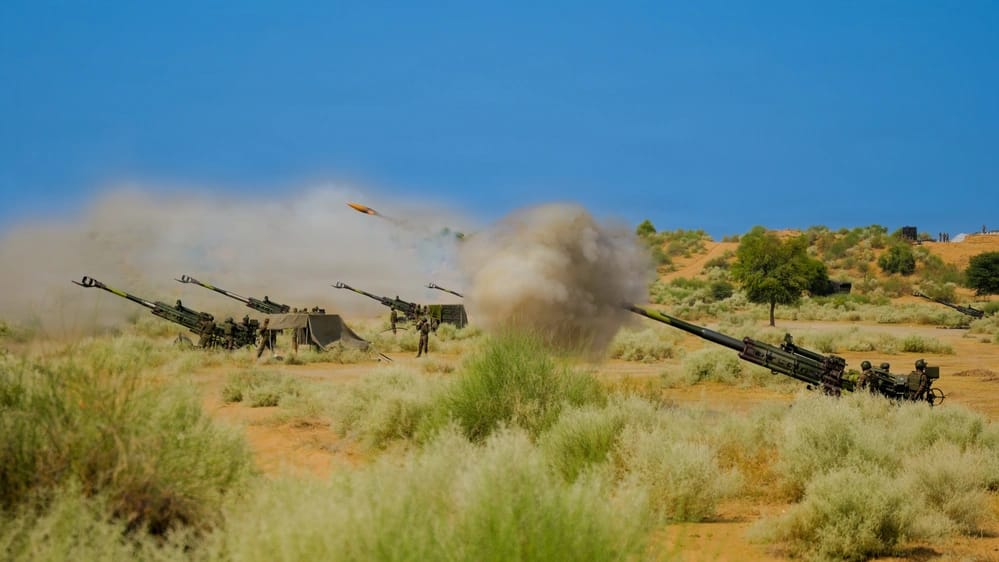
US and Indian soldiers are conducting hands-on artillery and air-defense training during Yudh Abhyas 2026 in Rajasthan.
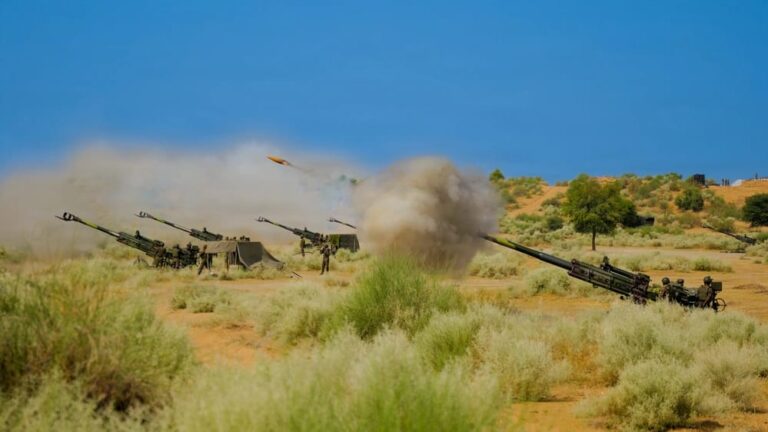
The exercise has brought American crews from the 11th Airborne Division together with Indian personnel operating the M777A2 and Dhanush 155 mm howitzers. US troops are also observing live firing by upgraded Indian L70 40 mm air-defense guns.
The training goes beyond basic weapon familiarization. Soldiers are comparing how the two armies receive fire missions, prepare gun positions, operate weapons and move after firing. The activity provides practical experience in working with a partner that uses different weapons, communications equipment and command structures.
The artillery training is taking place at the Mahajan Field Firing Range in Rajasthan. Charlie Battery, 2nd Battalion, 8th Field Artillery Regiment, 1st Brigade, 11th Airborne Division, is participating alongside Indian artillery units. The activity forms part of the larger Yudh Abhyas 2026 exercise involving US and Indian Army personnel.
READ ALSO: https://modernmechanics24.com/post/rheinmetall-unmanned-maritime-security/
Yudh Abhyas is an established bilateral exercise between the US and India. The 2026 edition includes field training, command-post activities, mountain warfare, cold-weather operations and counter-unmanned aircraft training. The exercise also includes live-fire activities involving systems such as HIMARS and Stinger.
The artillery exchange focuses on practical battlefield routines. US soldiers are learning how Indian crews prepare their weapons and respond to assigned fire missions. Indian personnel are also gaining exposure to American artillery procedures.
A major part of the exchange involves movement before and after firing. Artillery units must balance the need to deliver fires with the need to avoid remaining exposed at one location. Crews therefore practice setting up, firing and preparing to move within a limited period.
That issue has become important on modern battlefields. Drones, radar systems and other sensors can help opposing forces locate artillery positions. Faster movement can therefore reduce the amount of time a gun crew remains in one exposed location.
The training gives both sides a chance to examine these procedures directly. It also helps personnel understand why a partner may organize its artillery operations differently. Such familiarity can become useful during future combined missions.
M777A2 Meets Indian Dhanush
The M777A2 and Dhanush are both 155 mm artillery systems. Their designs, however, reflect different operational requirements and development histories. Training with the two weapons gives soldiers a direct comparison of how different systems affect artillery operations.
The M777A2 is known for its relatively low weight. The US Army describes it as a lightweight towed howitzer intended for expeditionary operations and a range of artillery missions. Its digital fire-control equipment helps crews with functions such as positioning, aiming and firing data.
The system weighs less than 10,000 pounds. Depending on the ammunition used, published figures put its range at about 24.7 kilometers with standard projectiles, around 30 kilometers with rocket-assisted ammunition and up to about 40 kilometers with Excalibur precision-guided rounds.
Dhanush represents a different approach. It is a 155 mm, 45-caliber Indian artillery gun developed from the FH-77B Bofors design. The system incorporates an inertial navigation system, onboard ballistic computing and automated laying features.
Indian government information lists a range of up to 38 kilometers with extended-range ammunition. The gun is designed to use 155 mm ammunition and incorporates several automated functions intended to reduce the workload on its crew.
The differences between the two systems create useful training opportunities. The M777A2 places strong emphasis on low weight and mobility, while Dhanush combines a heavier weapon with a longer barrel and modern fire-control features. Soldiers can see how those characteristics influence deployment, firing and movement.
The comparison also extends to crew routines. Artillery personnel must handle ammunition, establish firing data, position the gun and respond to changes in the mission. Each weapon’s design affects how those tasks are performed.
The exchange therefore focuses on more than technical specifications. Soldiers are learning how equipment choices translate into actual field procedures. This gives both armies a better understanding of what a partner unit can do during a combined operation.
WATCH ALSO: https://modernmechanics24.com/post/long-march-12returns-internet-satellites/
L70 Adds Air Defense
The training at Mahajan also includes short-range air-defense activity. US personnel are observing Indian crews conduct live firing with upgraded L70 40 mm guns. The weapon has its origins in the Swedish Bofors L70 system but has been extensively modernized in Indian service.
The upgraded configuration adds modern electronic and electro-optical equipment to the established gun. Bharat Electronics has described systems incorporating electric servo drives, thermal imaging, a daylight television camera and an eye-safe laser rangefinder. The system also includes automated ballistic computation and can interface with radar-based fire-control information.
These upgrades change how the gun can be employed. Instead of relying only on its original sighting arrangements, the weapon can receive and process information from modern sensors. That gives operators additional tools for detecting, tracking and engaging suitable low-altitude targets.
For the US soldiers attending the activity, the L70 provides another example of India’s approach to modernization. An older weapon platform has been combined with newer electronics and sensor technology. This allows personnel to study how different generations of military equipment can operate within the same force.
The air-defense training also has a direct connection with artillery operations. Gun positions and other military sites can face aerial threats while conducting ground missions. Understanding how Indian forces organize local air defense gives US personnel a broader picture of how Indian formations protect their units.
It also introduces another area of interoperability. Artillery and air-defense units must coordinate their activities while operating in the same battlespace. Their procedures need to account for communications, movement, sensor information and the protection of key positions.
Training Builds Operational Familiarity
Interoperability does not necessarily mean using identical weapons. It also requires soldiers to understand how another force communicates, processes information and executes missions. Yudh Abhyas provides a controlled environment where these differences can be examined before they become issues during a more demanding operation.
The artillery exchange is particularly useful in this regard. The M777A2 and Dhanush do not have identical fire-control arrangements or operating procedures. Yet crews from both countries can learn how their respective systems fit into a wider fire-support process.
The same principle applies to air defense. The upgraded L70 uses a different combination of gun technology, sensors and control systems from those used by American forces. Observing the system in operation gives US personnel a better understanding of Indian tactical procedures.
The exercise is also relevant to the 11th Airborne Division’s mission. Airborne and rapidly deployable formations are expected to operate in areas where infrastructure and support may be limited. Understanding how partner forces establish fires, move equipment and protect their positions can support coordination in such environments.
For India, the exchange provides access to the practices of a US airborne artillery unit. Indian soldiers can observe how American crews organize their equipment and conduct fire missions. The two sides can then compare procedures without requiring either force to replace its existing systems.
India’s artillery inventory illustrates why this type of cooperation matters. The country operates equipment obtained from foreign suppliers alongside systems developed or upgraded domestically. Dhanush is an example of Indian industrial development, while the M777 represents a major American-origin artillery system in Indian service.
The result is a military environment where interoperability must work across several equipment families. Training with foreign partners helps personnel understand those differences at the working level. It also provides opportunities to identify communication and procedural challenges during exercises rather than during real operations.
READ ALSO: https://modernmechanics24.com/post/bae-design-space-force-meo-satellites/
Yudh Abhyas Expands Cooperation
Yudh Abhyas 2026 covers more than artillery. The exercise includes command-post training, mountain operations, cold-weather activities and counter-unmanned aircraft drills. These activities are designed to expose both armies to a broad range of combined operational tasks.
The exercise also reflects the wider development of US-India defense cooperation. Both countries regularly conduct military exercises involving land, air and maritime forces. These activities provide opportunities to improve coordination while allowing each side to understand the other’s equipment and operating methods.
The artillery component adds an important practical element. Soldiers are not simply discussing weapons in classrooms or viewing equipment during static displays. They are working around live-fire procedures and observing how different systems are employed under field conditions.
The combination of artillery and air-defense training is also significant. Ground forces increasingly operate in an environment where drones and other aerial systems can affect artillery positions. Training therefore has to address both the delivery of ground fires and the protection of the units providing them.
The M777A2, Dhanush and upgraded L70 represent three different approaches to military equipment. One is a lightweight American artillery system, another is an Indian 155 mm gun derived from the Bofors lineage, and the third is a modernized legacy air-defense weapon. Studying them together gives participating soldiers a broader view of how different technologies can support the same formation.
The immediate result is greater familiarity between US and Indian personnel. Soldiers gain a clearer understanding of how their counterparts organize missions, operate equipment and manage movement. That knowledge can help reduce procedural differences during future bilateral training.
As Yudh Abhyas 2026 progresses, the artillery exchange will remain one part of a much larger training program. Its value lies in the practical experience gained by crews operating alongside a partner force. Continued exercises of this type can build a deeper working understanding between the US and Indian armies while preserving the distinct equipment and procedures of each force.







One Response