

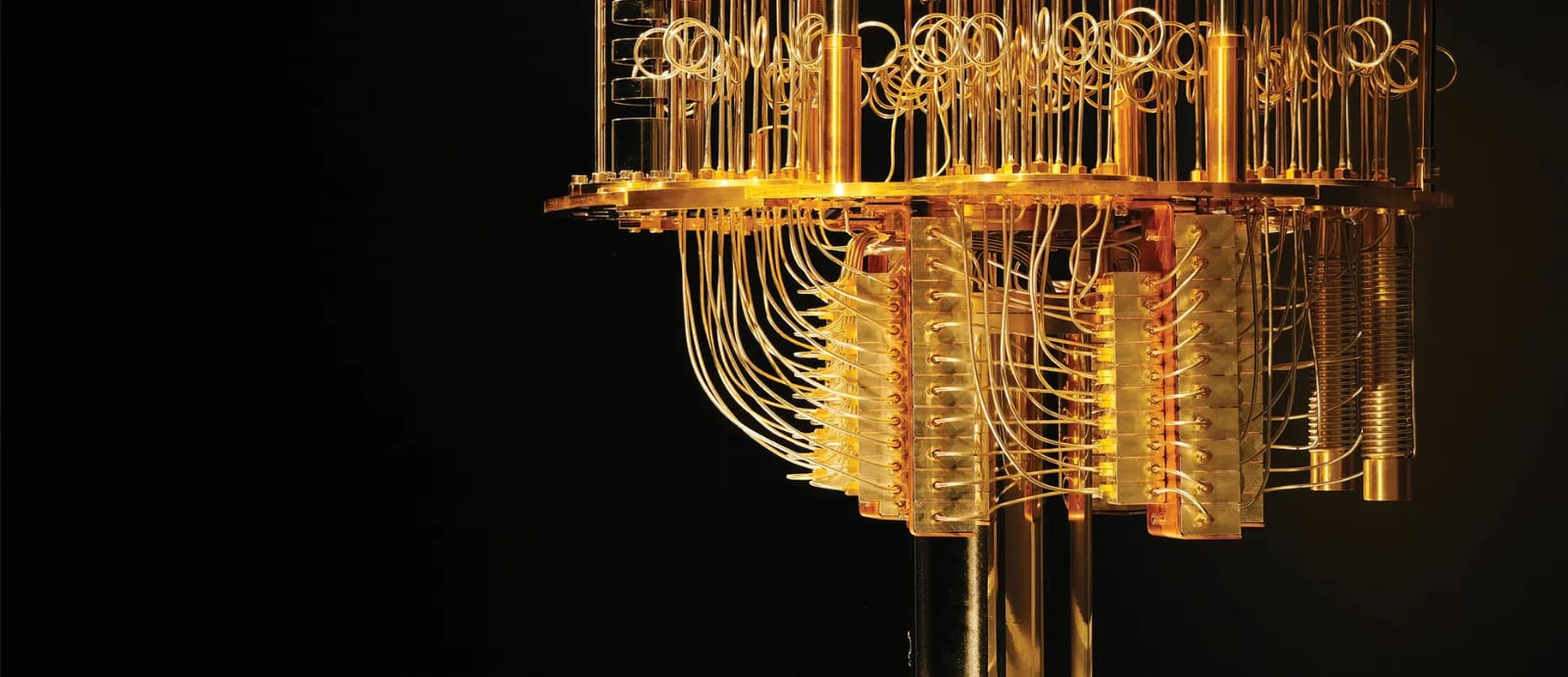
The US Department of Energy has launched a new competition aimed at speeding up the development of fault-tolerant quantum computers.
The Quantum Genesis Q Competition offers up to $215 million in planned funding for private-sector companies. The program targets machines with at least 100 logical qubits and the ability to perform hundreds of millions of reliable quantum operations.
The competition focuses on scientifically relevant quantum computers (SRQCs). These systems are intended to handle scientific problems that remain beyond the practical reach of conventional computing. Target areas include chemistry, materials science, physics and applied mathematics.
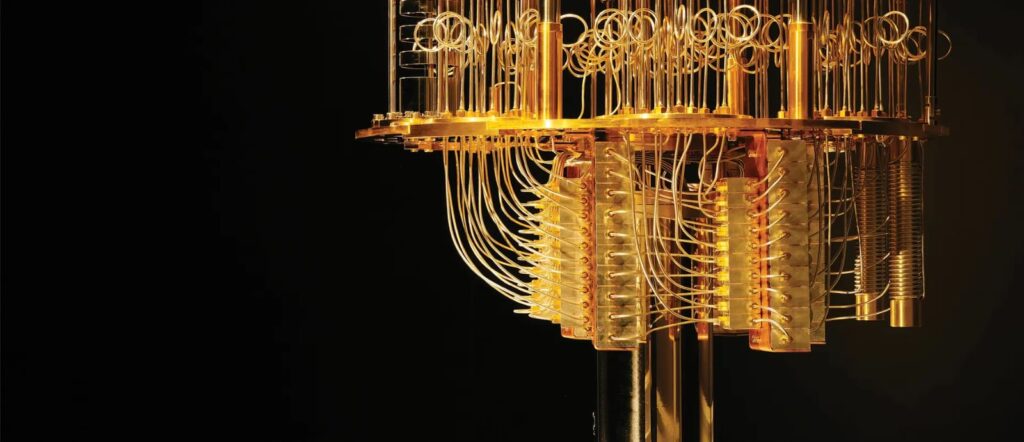
Quantum computers process information differently from classical computers. They use quantum bits, or qubits, which can support calculations that are difficult to perform efficiently on conventional machines. However, physical qubits are vulnerable to errors, making error correction essential for useful large-scale quantum computing.
READ ALSO: https://modernmechanics24.com/post/argonne-find-strontium-formation-clues/
A logical qubit is an error-corrected unit built from multiple physical qubits. Fault-tolerant computing means a quantum system can continue performing calculations accurately even when some errors occur. DOE is therefore targeting systems that combine quantum hardware, error correction and software into a functioning scientific computing platform.
Competition Has Two Phases
The Quantum Genesis Q Competition will operate in two phases. Phase I will provide fixed awards for early development milestones, with individual awards worth up to $1.5 million. This stage is designed to support participants as they work toward the technical requirements of the larger demonstration.
Phase II will introduce a $100 million general incentive pool. The pool will be shared among participants that demonstrate a first-generation SRQC with at least 100 logical qubits and the required fault-tolerant capabilities.
Two additional incentive pools will reward higher logical-qubit demonstrations. Each bonus pool is worth $50 million, with one linked to systems demonstrating 150 logical qubits and the other tied to 200 logical qubits.
The planned competition funding totals up to $215 million. DOE has allocated $2.5 million in Fiscal Year 2026 dollars, while funding for later years depends on congressional appropriations. Applications are open to private-sector companies.
DOE Builds Testbed Support
DOE is also creating supporting infrastructure through a separate Quantum High-Performance Computing Validation and Verification Testbed Lab Call.
The effort will use the capabilities of DOE National Laboratories to establish testing and validation systems for the competition. The planned funding for this program totals $45 million, including $14 million in Fiscal Year 2026 dollars.
The testbed effort addresses a central challenge in quantum computing. A useful fault-tolerant machine needs more than a large number of physical qubits. Researchers must also verify quantum gates, logical architectures, algorithms, applications and classical systems that control the quantum hardware.
The National Laboratories will therefore play a role in checking how different parts of a quantum computing system work together. These tests are intended to provide reliable measurements as companies develop and demonstrate their systems.
WATCH ALSO: https://modernmechanics24.com/post/coast-guard-rescues-two-grounded-vessel/
Global Quantum Push Gains Momentum
DOE said the competition supports goals in the President’s Executive Order on Ushering in the Next Frontier of Quantum Innovation. It also builds on recommendations from the Blueprint for DOE Quantum Supercomputing and a new Office of Science Advisory Committee report on an integrated quantum future.
Under Secretary for Science Darío Gil said the initiative will use public-private partnerships to expand the nation’s computing capabilities. He said the competition is intended to open new areas of computation and support scientific and technological discoveries.
The timetable is already taking shape. DOE will hold a virtual information webinar for potential applicants on September 25, 2026, at 1 p.m. Eastern Time. Final applications for the Quantum Genesis Q Competition are due on October 19, 2026.
The program places fault tolerance at the center of the next stage of quantum computing development. If participating companies meet the specified technical milestones, the resulting systems would give researchers new tools for studying complex scientific problems at a scale that conventional computers struggle to address.







One Response