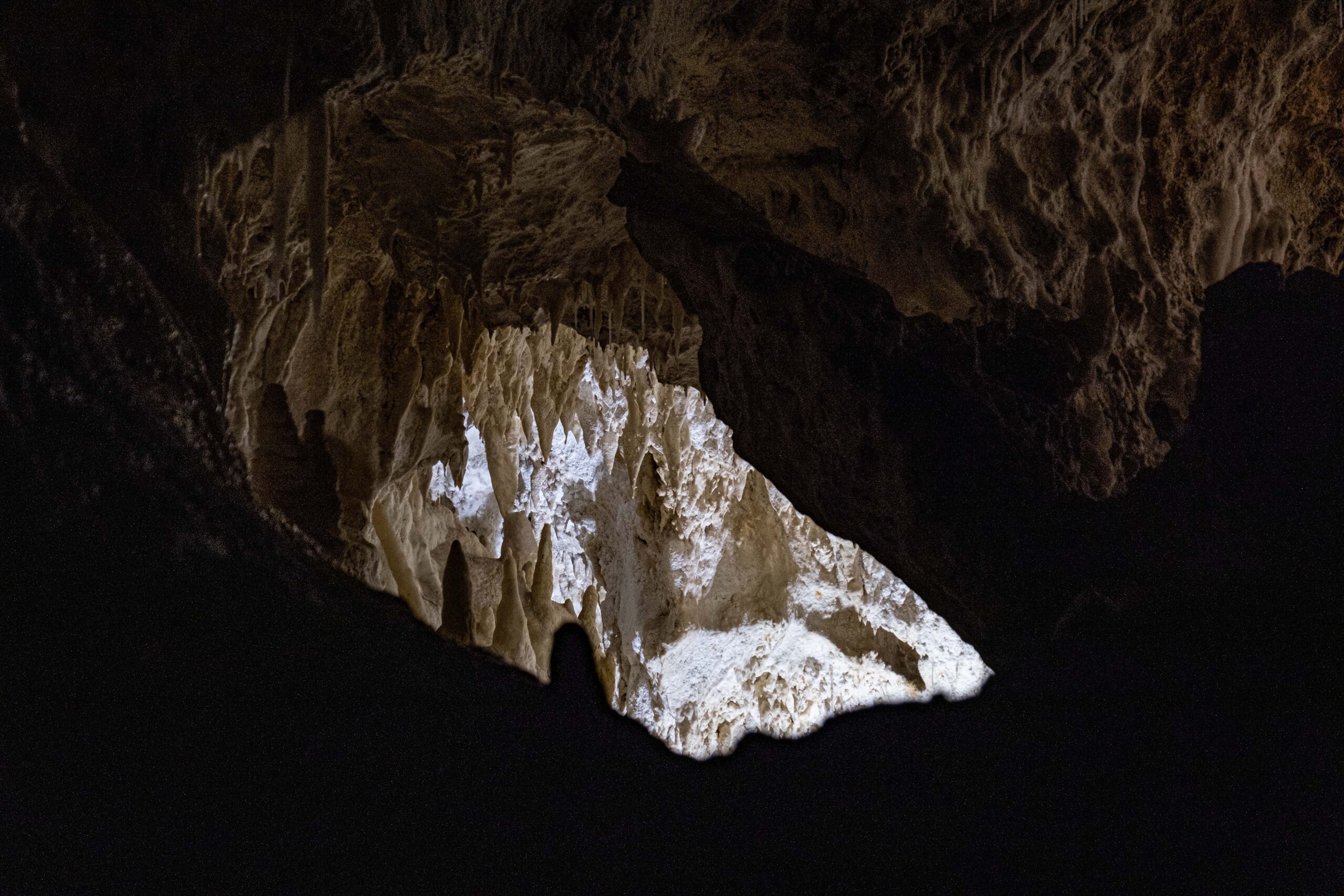
NASA has awarded funding to study a new laser-powered drone that could explore large caves beneath the Moon’s surface. The project is being developed by Stone Aerospace and could help scientists reach places that are too dangerous or impossible for current space robots. The early research received $175,000 through NASA’s Innovative Advanced Concepts (NIAC) program.
The new project is being created by Stone Aerospace, an engineering company based in Austin, Texas. The research is led by Dr. Gilly Elor, Physics Lead at Stone Aerospace. According to NASA and the source article, the company wants to build a drone called the Lunar Underground eXplorer (LUX) that can safely enter deep lunar caves.
Scientists believe these caves could become important places for future Moon missions. Thick rock above the caves can protect astronauts and equipment from harmful space radiation, extreme temperatures, and small meteor impacts. Exploring them could also reveal new information about the Moon’s history.
READ ALSO: https://modernmechanics24.com/post/south-korea-first-nuclear-submarine/
Instead of carrying large batteries, the LUX drone would receive power from a rover on the Moon’s surface. A laser would send energy through a fiber-optic cable connected to the drone. The same cable would also send data back to the rover and support the drone’s cold-gas propulsion system, which avoids polluting the cave environment. The source article says this design combines power, communication, and propulsion into one system.
The first target is a deep opening called the Mare Tranquillitatis skylight. It is about 133 meters (436 feet) deep and leads to a large underground cave network. The opening is around 400 kilometers from the Apollo 11 landing site. Radar data from NASA’s Lunar Reconnaissance Orbiter first detected the area, and researchers confirmed the cave network through later analysis.
The mission is still in its early research stage. Many technical challenges remain. The drone must fly in complete darkness, navigate without GPS, and map an unknown underground environment. It also needs to avoid contaminating the caves so future scientific measurements remain accurate. Both NASA and the source article note that these challenges will require further study before any real mission takes place.
WATCH ALSO: https://modernmechanics24.com/post/elon-musk-unveils-brain-computer-tech/
If the technology succeeds, it could change how scientists explore the Moon and even Mars. The main breakthrough is a laser-powered drone that could make the first exploration of underground caves beyond Earth possible. The same power-over-fiber technology may also find future uses on Earth for robots working in difficult places, including underwater or inside large cave systems.
According to the source article, NASA selected this project as part of its NIAC Phase I program, which supports early-stage ideas with the potential to shape future space exploration.