The European Space Agency (ESA) is preparing a new CubeSat mission that aims to significantly increase the time available to prepare for severe solar storms.
The HENON mission is expected to extend warning times from around 15 minutes to as much as three hours. The spacecraft is scheduled to launch in early 2027 alongside ESA’s PLATO mission.
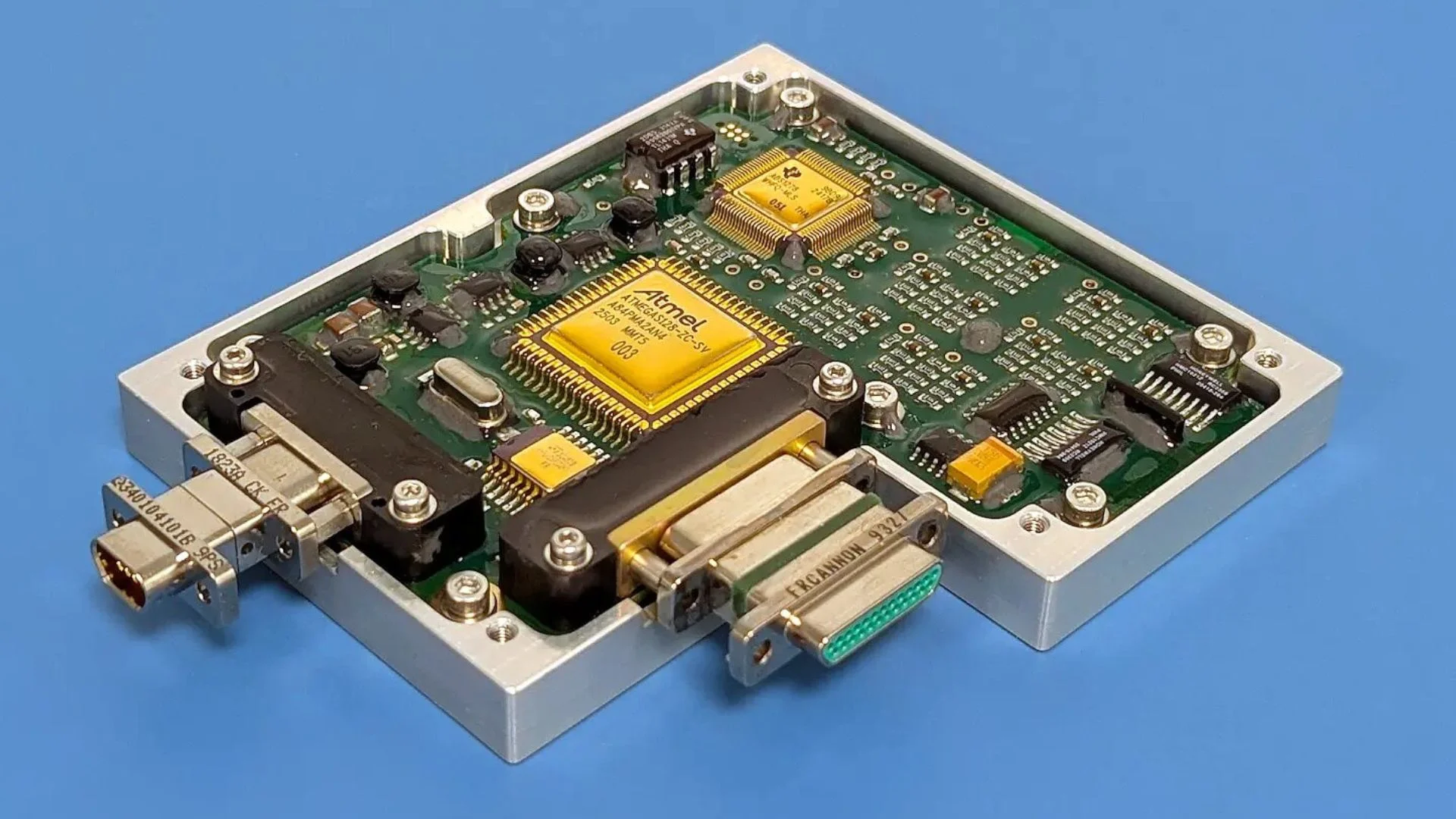
The mission carries a compact instrument called MAGIC, developed by researchers at Imperial College London in the UK. The instrument will measure the magnetic field carried by the solar wind far from Earth. Scientists believe these observations can improve forecasts of how strongly incoming solar storms may affect the planet.
Current Warning Limits
Space weather refers to conditions created by activity on the sun that can influence Earth and nearby space. Major events include solar flares and coronal mass ejections, which release huge clouds of charged particles and magnetic fields into space. When these clouds reach Earth, they can disturb satellites, navigation systems, communication networks, and electrical power grids.
Scientists can already estimate when a coronal mass ejection is likely to reach Earth. However, predicting its strength remains difficult because the magnetic field inside the cloud must be measured directly during its journey. That information determines how strongly the storm will interact with Earth’s magnetic field.
Current operational forecasts depend on spacecraft positioned at the Sun-Earth L1 Lagrange point. This location sits about 1.5 million kilometers from Earth toward the sun. Fast-moving solar storms can cross that distance in only about 15 minutes, leaving little time for protective action.
HENON CubeSat Travels Farther
HENON will follow a different strategy by traveling much farther ahead of Earth than existing monitoring spacecraft. The CubeSat will operate at a distance of about 15 million kilometers upstream from Earth. This is roughly ten times farther away than the current L1 monitoring position.
By collecting measurements much earlier, the spacecraft can provide valuable information long before the solar storm reaches Earth. That additional distance translates into extra warning time for forecasters and infrastructure operators. More preparation time can reduce the risk of service interruptions during major space weather events.
READ ALSO: Japan Airlines Partners With JetZero to Develop Fuel-Efficient Z4 Aircraft
Jonathan Eastwood, Professor of Space Physics at Imperial College London’s Department of Physics, said the mission opens the possibility of greatly improving responses to severe space weather.
He added that flying the miniaturized MAGIC instrument in deep space marks an important technological milestone. Eastwood presented the research at the Royal Astronomical Society’s National Astronomy Meeting in Birmingham.
Compact Instrument Explained
MAGIC stands for MAGnetometer from Imperial College. A magnetometer is an instrument that measures magnetic fields, helping scientists understand the structure and strength of solar storms. Despite its small size, the instrument is designed to perform accurate measurements in deep space.
The mission also carries two additional scientific instruments developed by research teams in the Czech Republic and Finland. Together, the instruments will study the solar wind as it travels away from the sun. Their combined observations will help researchers determine whether earlier and more reliable forecasting is possible.
The HENON mission serves primarily as a technology demonstration. It will test whether placing monitoring spacecraft much farther from Earth offers meaningful forecasting improvements. Success would provide evidence for future operational systems designed specifically for continuous space weather monitoring.
Future Space Protection
ESA plans to use the lessons from HENON to support a future mission known as SHIELD. Unlike the demonstration mission, SHIELD is intended to provide continuous monitoring of solar storms from a much greater distance than current spacecraft. That system would deliver earlier warnings on a routine basis.
If the technology performs as expected, warning times for the strongest geomagnetic storms may increase from around 15 minutes to two or three hours. Satellite operators could place spacecraft into safer operating modes before the storm arrives. Power companies, communication providers, and navigation services would also gain additional time to prepare for potential disruptions.
The HENON CubeSat represents an important step toward stronger global space weather forecasting capabilities. As dependence on satellites and digital infrastructure continues to grow, earlier warnings can help reduce the impact of solar storms on critical services. The mission’s results may shape the next generation of international space weather monitoring systems.