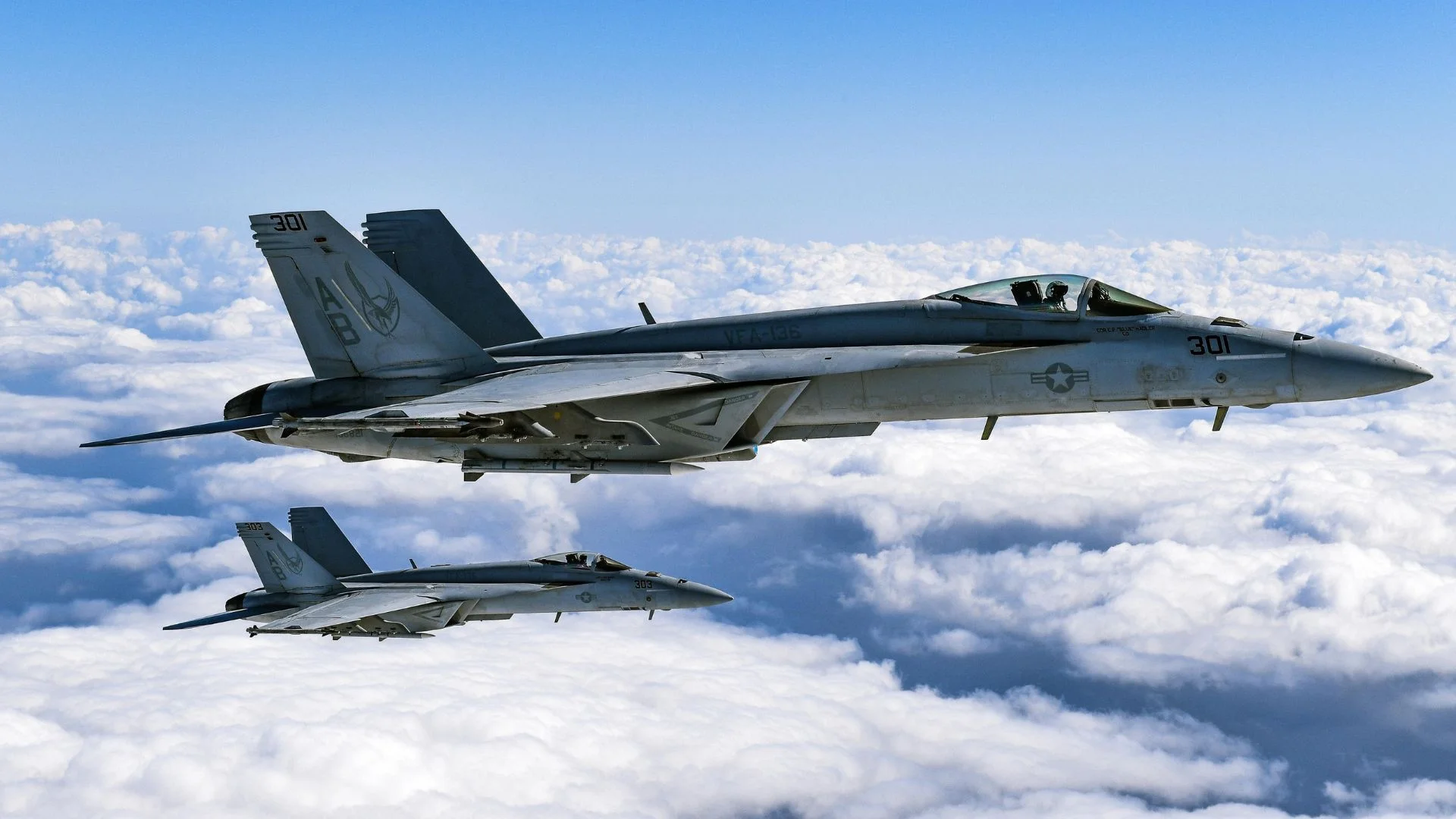
The US Navy is introducing a new 3D-printing repair process that cuts the time needed for selected F/A-18 Super Hornet composite repairs by half.
The technology allows maintenance crews to repair damaged aircraft closer to where they operate, rather than sending them back to specialized facilities. The effort is designed to improve aircraft availability, reduce downtime, and strengthen operational readiness.
3D-Printed Repairs for Super Hornet
The Naval Air Warfare Center Aircraft Division (NAWCAD) has developed a new repair method using high-performance 3D-printed composite patches. These patches are applied directly to the aircraft’s damaged areas to restore structural integrity more quickly. The new approach reduces repair time by about 50 percent compared with traditional methods.
Composite materials are widely used in modern military aircraft because they are lighter and stronger than many metal parts.
However, repairing these materials often requires skilled technicians and specialized equipment. The new repair process simplifies that work, allowing trained maintenance crews to perform repairs at forward operating bases.
Rear Adm. Todd Evans, Commander of NAWCAD, said the goal is to place more repair capability directly in the hands of fleet personnel.
He said simplifying complex repairs allows aircraft to return to service faster while making deployed squadrons more self-sufficient. According to Evans, the new method directly improves operational readiness by reducing maintenance delays.
READ ALSO: TU Berlin’s SpaceBox Battery Project Aims to Transform Satellite Power Storage
Forward Repairs Reduce Downtime for Fighter Jets
Under the traditional repair process, damaged F/A-18 Super Hornets often remain grounded while components are shipped to US maintenance depots. After repairs are completed, the parts must be returned to operational units, adding weeks of delay in some cases. During that period, fewer aircraft remain available for missions.
To solve this problem, engineers from NAWCAD worked with Fleet Readiness Center Southwest to design the new 3D-printed repair patches. The teams focused on creating a repair method that is both durable and easy to use in deployed environments. Their work allows technicians to inspect damage and complete repairs much faster without relying on distant repair facilities.
The repair technology has already passed laboratory evaluations and ground testing. Flight testing on operational Super Hornet aircraft is scheduled to begin later this summer. Successful flight trials will help validate the repair method before it is introduced across the fleet.
Existing 3D Printers Support Global Navy Operations
The US Navy already has 3D-printing capability at 22 maintenance sites worldwide. That existing infrastructure allows the service to introduce the new repair process without building an entirely new support network. Maintenance teams can produce repair patches closer to where aircraft are deployed, improving repair speed and logistics.
The initiative also supports the Navy’s broader effort to modernize aircraft maintenance through advanced manufacturing technologies.
3D printing enables replacement parts and repair materials to be produced on demand, rather than waiting for shipments from centralized facilities. This reduces supply chain delays and increases operational flexibility during deployments.
WATCH ALSO: SpaceX is gearing up to conduct 11th flight test of Starship on October 13
The development comes as the US Marine Corps continues its transition from the legacy F/A-18 Hornet to an all-F-35 tactical aircraft fleet by 2030.
As older Hornet squadrons are retired, maintenance resources are shifting toward newer aircraft while the Navy continues operating the newer F/A-18 Super Hornet. Faster repair methods help keep these frontline fighters mission-ready throughout their remaining service life.
The new 3D-printing repair process highlights how advanced manufacturing is changing military aircraft maintenance. By reducing repair times and enabling more work to be completed near operational units, the technology strengthens fleet readiness and improves the Navy’s ability to keep combat aircraft available for future missions.