Scientists have introduced a new concept called StormWall, a space-based defense system designed to reduce the impact of powerful solar superstorms before they reach Earth.
The proposal uses a group of satellites that would release gas into space to create a protective plasma barrier around the planet’s magnetic field.
Researchers believe the system can significantly reduce the strength of dangerous solar storms and help protect satellites, power grids, communication networks, and other crucial infrastructure.
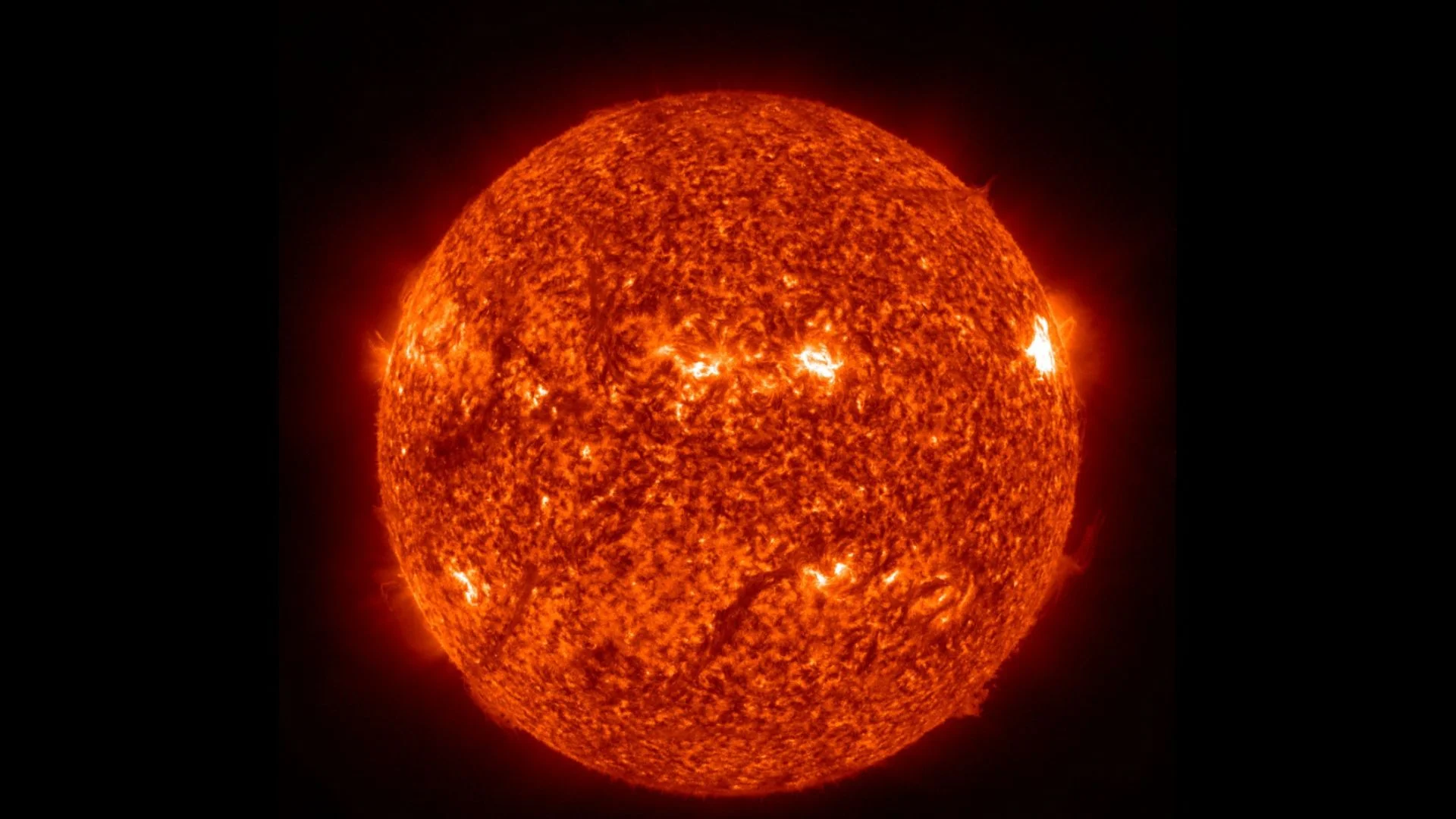
Solar storms are powerful bursts of energy released by the Sun. They often begin with solar flares and are followed by giant clouds of charged particles called Coronal Mass Ejections(CMEs). When these clouds strike Earth, they interact with the planet’s magnetic field, creating what scientists call geomagnetic storms.
Most solar storms are relatively harmless. They often produce colorful auroras that appear closer to the equator than usual. However, stronger storms can disrupt satellite communications, GPS systems, and electrical power networks.
Researchers from Boston University and the University of Michigan believe a more active defense is now possible. Their findings were published in the journal Space Weather. Instead of only predicting solar storms, the team wants to reduce their strength before they reach Earth.
The proposed system, StormWall, consists of six large satellites placed in geosynchronous orbit around 36,000 kilometers above Earth. From this position, the satellites would continuously monitor space weather and remain ready for major solar events.
When scientists detect an incoming extreme solar storm, the satellites would release large amounts of specially selected gas near the outer edge of Earth’s magnetosphere. The gases suggested for the mission include barium, lithium, sodium, or calcium. These materials quickly become electrically charged after exposure to sunlight.
READ ALSO: China’s Reusable Rocket Engine Clears Major Test as Private Space Launch Plans Accelerate
Once ionized, the gas forms a plasma cloud. Plasma is often called the fourth state of matter because it contains charged particles instead of neutral atoms. This artificial plasma cloud would act like a protective cushion between Earth and the incoming CME.
Researchers compare the concept to an airbag in a car. An airbag does not stop a collision, but it reduces the damage during impact. StormWall follows the same idea by reducing the impact of a solar superstorm rather than trying to stop it completely.
How StormWall Works
Earth already has a natural magnetic shield called the magnetosphere. It protects the planet by deflecting most of the charged particles coming from the Sun. During an especially strong solar storm, however, this protective shield becomes compressed and temporarily weakened.
As this happens, oxygen ions from Earth’s upper atmosphere naturally move into the magnetosphere. These particles collect on the Sun-facing side of the magnetic field, forming a temporary protective layer. Scientists designed StormWall to strengthen this natural process before the solar storm arrives.
The satellite network would release gas in advance of the impact. Sunlight would quickly ionize the gas, forming an artificial protective layer around the magnetosphere. This extra layer would absorb part of the incoming energy and redirect some of the solar particles away from Earth.
Computer simulations suggest the idea has significant potential. Researchers tested StormWall against the powerful solar storm that struck Earth during May 2024, often called the Mother’s Day storm. That event became the strongest geomagnetic storm recorded since 2003.
According to the study, StormWall would have reduced the storm’s strength by as much as 84 percent. The results surprised researchers because the amount of gas required is relatively small compared with the enormous mass of a coronal mass ejection. The released material equals roughly the load carried by about a dozen large oil trucks, which represents only about one-millionth of the mass of a typical CME.
Study co-author Daniel Welling from the University of Michigan explained that the system functions much like placing an airbag inside Earth’s magnetic environment. First author Brian Walsh from Boston University said the idea is similar to building a flood barrier before rising water reaches a village. He said the difference is that this protective wall would help every person on Earth.
Why Protecting Earth Solar Storms Matters
Solar activity follows an average cycle lasting about 11 years. The Sun recently reached its most active period, known as solar maximum, leading to frequent solar flares and coronal mass ejections. Scientists have observed dozens of solar storms during this active phase.
Most of these events have caused only limited disruption. Airlines, satellite operators, and communication providers have occasionally experienced technical issues. Auroras also became visible across regions where they are rarely seen.
The biggest concern remains rare but extremely powerful solar superstorms. The most famous example is the Carrington Event of 1859. Scientists consider it one of the strongest solar storms ever recorded.
If an event of similar strength struck Earth today, the consequences would be much greater because modern society depends heavily on space-based technology. Satellites support navigation, weather forecasting, financial systems, emergency services, telecommunications, and military operations. Damage to these systems would affect daily life worldwide.
Power grids also face serious risks during major geomagnetic storms. Strong electrical currents induced by solar activity can overload transformers and disrupt electricity supplies across large regions. Internet infrastructure and undersea communication systems could also experience significant interruptions.
The economic impact would be enormous. Researchers estimate that a Carrington-level event could cause global losses of up to $3.4 trillion. Even the much smaller Mother’s Day solar storm in 2024 reportedly caused around $500 million in losses for American farmers because GPS systems experienced temporary disruptions.
StormWall aims to reduce these risks before they become disasters. By weakening the incoming storm, the system could help keep satellites operational while reducing stress on power grids and communication systems. Even partial protection would reduce financial losses and improve resilience during extreme space weather.
The proposal still faces several practical challenges. Launching six large satellites carrying massive gas tanks into geosynchronous orbit would require powerful launch vehicles. Heavy-lift rockets such as SpaceX’s Starship could eventually support missions of this size if they become fully operational.
WATCH ALSO: Tesla’s Optimus humanoid robot steals spotlight at ‘Tron: Ares’ premiere
Cost is another important consideration. Building, launching, and maintaining the satellite network would require billions of dollars in investment. Researchers argue that this expense remains small compared with the economic damage caused by a single severe solar superstorm.
StormWall also functions as a limited-use system. Once the satellites release their stored gas, they must be refilled or replaced before another major event occurs. Future studies will examine ways to improve long-term operation and reduce maintenance costs.
Scientists are also studying the environmental impact of releasing ionized gas into space. The research team believes the artificial plasma cloud would quickly disperse and be carried away by the solar wind after completing its job. Current models indicate it would not create long-lasting effects on Earth’s atmosphere or magnetic field.
Independent experts have responded positively to the proposal. Allison Jaynes, a space physicist at the University of Iowa who was not involved in the research, described the concept as highly innovative and technically feasible in the near future. David Sibeck, chief of heliophysics at NASA’s Goddard Space Flight Center, also said he would support such a system if scientists knew a major solar disturbance was approaching.
StormWall remains a proposal rather than an active mission, but it highlights a new direction in space weather protection. Instead of relying solely on forecasting and stronger infrastructure, scientists are exploring ways to mitigate the impact of dangerous solar storms before they reach Earth.