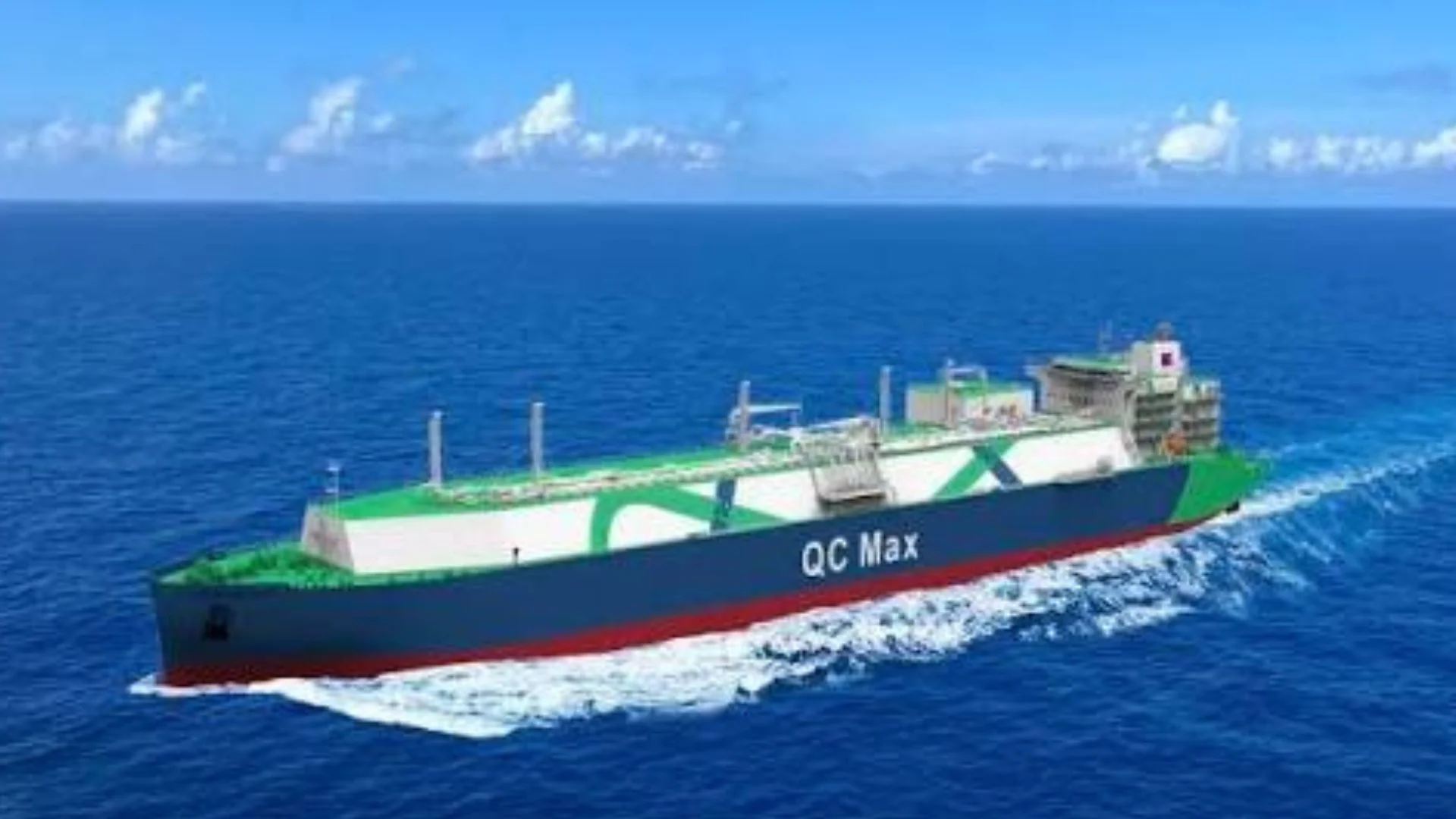
Construction has officially started on the world’s largest liquefied natural gas (LNG) carrier in China.
The vessel, with a capacity of 271,000 cubic meters, is being built by Hudong-Zhonghua Shipbuilding, a subsidiary of China State Shipbuilding Corporation (CSSC). The project marks a major step for the global LNG shipping industry and highlights China’s growing position in high-end shipbuilding.
The new vessel is designed to transport significantly more LNG than conventional carriers. LNG is natural gas that has been cooled to a liquid for easier storage and transportation. It plays an important role in global energy supply because it can be shipped over long distances by sea.
The carrier will have an overall length of 344 meters. It will use the latest NO96 Super+ membrane containment system to safely store LNG. This technology helps improve cargo handling efficiency while maintaining high safety standards during transport.
LNG Carrier Capacity Increase
Compared with the widely used 174,000-cubic-meter LNG carriers operating today, the new vessel offers a major increase in capacity. According to Hudong-Zhonghua, cargo volume will rise by about 57 percent. This allows operators to transport more LNG per voyage and improve overall shipping efficiency.
The vessel will also feature a modern dual-fuel propulsion system. Such systems can operate on both conventional marine fuel and natural gas. This reduces fuel consumption and helps lower greenhouse gas emissions during operation.
READ ALSO: Tracing 8,000 Years of History in Great Salt Lake Sediments
Engineers have also optimized the ship’s hull design to improve performance in the water. A more efficient hull reduces resistance while sailing. This contributes to lower energy use and better fuel economy over long-distance routes.
Environmental performance is a major focus of the project. The LNG carrier is designed to comply with the International Maritime Organization’s Tier III environmental regulations. These standards are among the strictest rules for reducing harmful emissions from ships.
The vessel combines large cargo capacity with lower energy consumption and improved operational efficiency. Safety and reliability have also been key priorities during the design process. The ship is expected to serve a wide range of global LNG transportation needs.
One important advantage is its compatibility with most major LNG import and export terminals worldwide. This means the carrier can operate on many international trade routes without requiring major port modifications. Such flexibility increases its commercial value for LNG producers and shipping companies.
Industry experts view the project as a sign of China’s continued progress in advanced shipbuilding. Large LNG carriers are often considered among the most complex commercial vessels in the world. Their construction requires sophisticated engineering, advanced materials, and highly specialized manufacturing capabilities.
READ ALSO: USNS Point Loma Officially Handed Over to the Navy
Over the past decade, China has invested heavily in developing domestic expertise across the entire LNG shipbuilding supply chain. This includes ship design, containment systems, manufacturing equipment, and supporting industries. The result has been a steady increase in the country’s competitiveness in the global market.
Hudong-Zhonghua has emerged as one of the leading LNG carrier builders worldwide. The company currently holds orders for nearly 60 LNG carriers. Based on total carrying capacity, its order book ranks among the largest in the industry.
The strong demand for LNG vessels has filled the company’s production schedule beyond 2030. Its portfolio now includes a wide range of conventional and ultra-large LNG carrier designs. This growth reflects increasing global demand for cleaner energy transportation solutions.
China’s share of the global LNG shipbuilding market has also expanded rapidly. Industry data indicates that the country now accounts for more than 30 percent of global LNG carrier construction. This growth has reduced the dominance previously held by a small group of foreign shipbuilders.
The timing of the project is significant for the global energy sector. Demand for LNG transportation continues to rise as countries seek diversified energy supplies. Larger carriers can help move greater volumes of fuel while reducing transportation costs per unit of cargo.
The vessel is also expected to support the stability of international energy supply chains. Additional shipping capacity can help address shortages in LNG transport availability. This becomes increasingly important as global energy trade continues to expand.
WATCH ALSO: International Space Station crew wishes New Year 2026
Hudong-Zhonghua plans to complete and deliver the first vessel in 2028. The company will then continue construction of the remaining ships included in the contract series. Each vessel will follow the same high-capacity design and environmental standards.
As construction moves forward, the project is expected to strengthen China’s position in the global shipbuilding industry. It also highlights the growing importance of advanced LNG transportation in supporting international energy trade.
The successful delivery of the vessel could influence future ship designs and contribute to the ongoing modernization of global maritime transport.