Researchers at the Karlsruhe Institute of Technology (KIT) have developed a new method for 3D printing high-performance parts using multiple materials in a single process.
The work comes from the Ceramic Multi Material Additive Manufacturing(CeraMMAM) project and aims to expand how industries design and manufacture complex components.
The team will showcase its first industrial prototypes and real-world use cases at Hannover Messe 2026, taking place from April 20 to 24. Visitors can explore the technology at the KIT booth in Hall 11.
Additive manufacturing already allows parts to be built layer by layer. But until now, most systems have been limited to a single material at a time, such as only metals or only ceramics. The KIT team has changed that by introducing a universal binder system that can combine different ceramics, or ceramics and metals, during the same printing process.
READ ALSO: Anduril, HD Hyundai Expand Autonomous Vessel Push as First Ship Enters Production
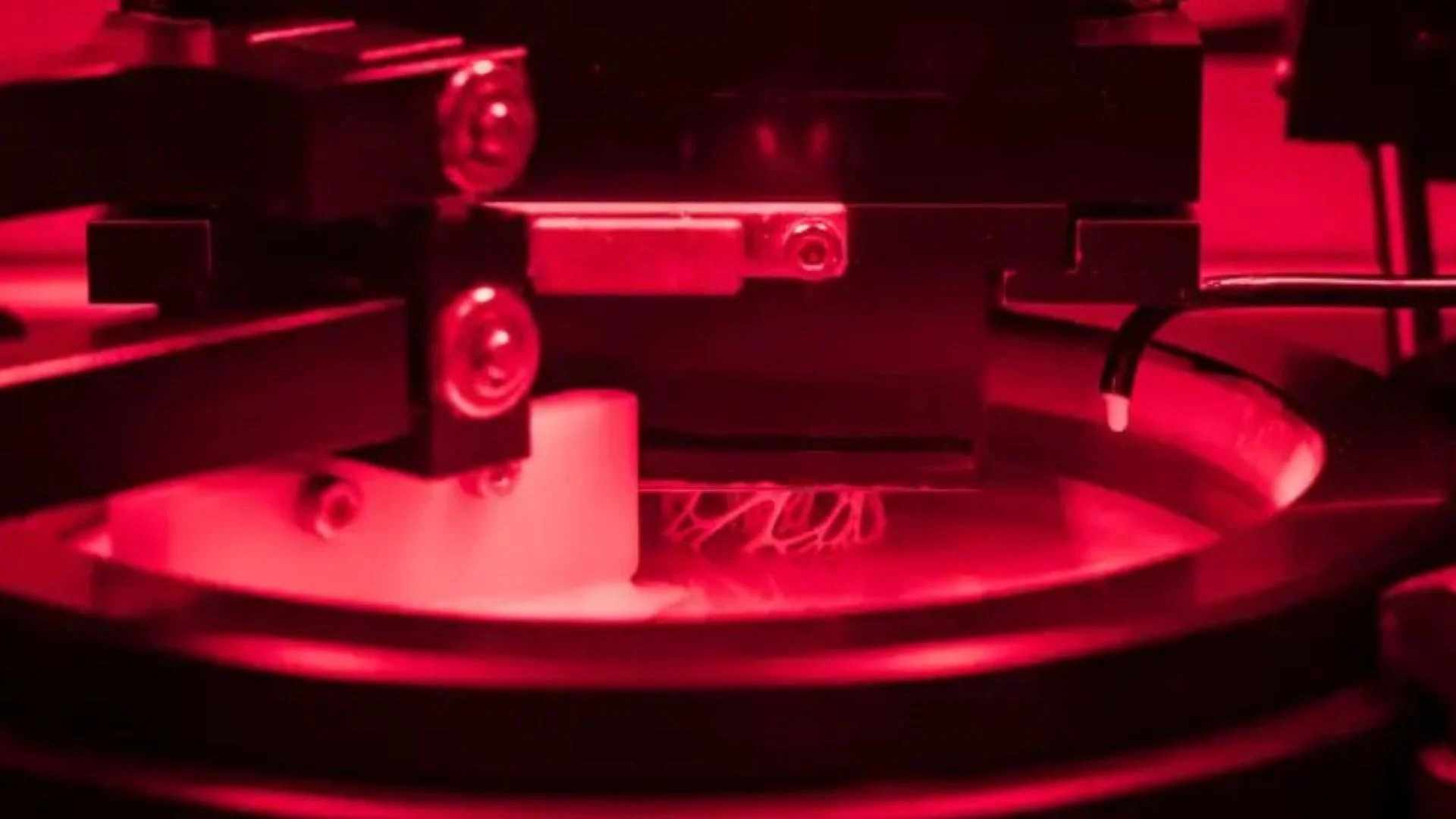
The process uses vat photopolymerization, in which a liquid material containing tiny ceramic or metal particles is hardened with light. Each layer is cured precisely using a specific wavelength. The newly developed binder ensures that different materials stick together firmly during printing.
After printing, the binder is removed in a step called debinding. The component is then heated in a furnace to densify and strengthen it through sintering.
“Using our universal binder system, we produce multi-material components with properties that normally don’t go together,” said Chantal-Liv Lehmann from KIT’s wbk Institute of Production Science. “We are opening the door to designs and functions that were not possible before.”
WATCH ALSO: Skid AI to boost development of its robotic intelligence platform, raises USD 1.4 billion
One example is a ceramic gear with a tough outer surface and a flexible inner structure. The system also allows highly detailed and delicate shapes to be reproduced with precision, which is especially important in ceramics manufacturing.
The team is now working to further refine the technology to better combine ceramics with metals. This mix is particularly valuable because it allows insulating materials to work alongside conductive ones in a single part.
Such capabilities can support new developments in power electronics, 5G and 6G systems, high-frequency devices, and compact sensors for connected devices and autonomous vehicles.
With this approach, multi-material 3D printing moves closer to real industrial use, offering engineers more freedom to design parts that perform better and last longer.