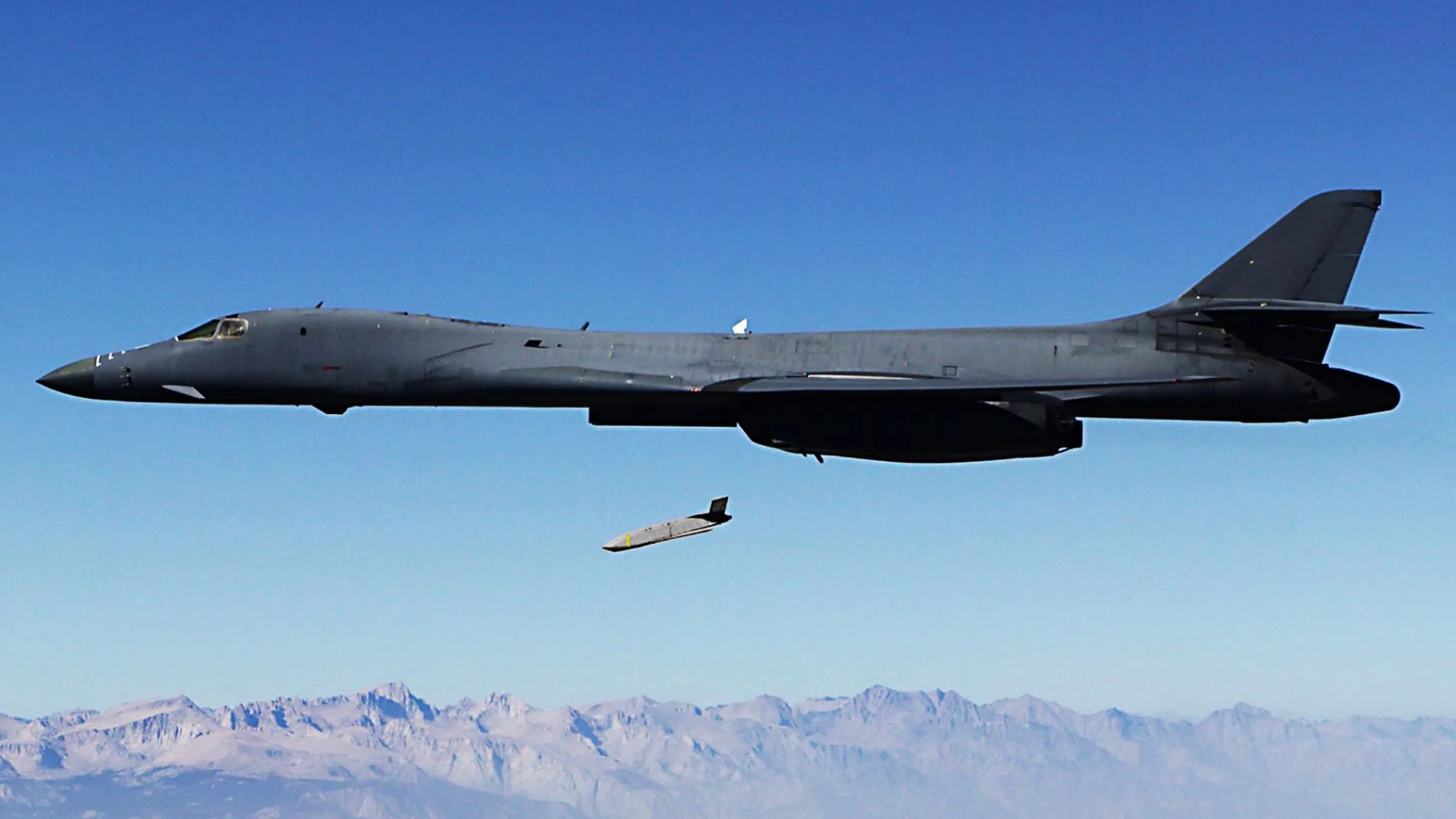
The US Air Force is once again turning its attention to a long-discussed idea, developing a low-cost, air-launched Standoff Attack Weapon (SoAW).
After shelving the concept for nearly four years, the service is now reviving the effort with a clear goal: build an affordable strike option that can be deployed in large numbers. If timelines hold, the weapon could enter service by 2033.
To move things forward, the Air Force has scheduled an industry day on June 17. This event will bring together defense companies to share ideas, explore technologies, and understand the expected requirements for the new missile.
While officials have not released detailed specifications yet, the focus is already clear: cost, scalability, and operational flexibility.
READ ALSO: From Weeks to Hours: AI’s Silent Takeover of US Nuclear Licensing
The SoAW program is being developed as a more economical alternative to existing high-end missiles such as the Joint Air-to-Surface Standoff Missile (JASSM) and the Long-Range Anti-Ship Missile (LRASM), both developed by Lockheed Martin. These weapons are highly capable but come with a heavy price tag, making them difficult to use in large-scale conflicts.
The idea of a cheaper standoff weapon is not entirely new. The Air Force issued a request for information in 2022 but did not follow through at the time.
Now, changing battlefield needs and increased defense funding appear to have revived interest. According to reports, growing concerns over missile stockpiles and the ability to sustain long conflicts have pushed the service to reconsider the program.
Budget trends strongly support this shift. The fiscal 2027 defense budget includes $11.36 billion for missile procurement, almost three times the $3.7 billion allocated in fiscal 2026.
WATCH ALSO: US conducts powerful and deadly strike against ISIS terrorists in Northwest Nigeria
This number is expected to continue to climb, reaching nearly $16 billion by 2029. The surge reflects a broader push to strengthen strike capabilities and prepare for high-intensity conflicts.
Standoff weapons play a key role in modern warfare. They allow aircraft to launch missiles from a safe distance, staying outside enemy air defenses. This makes them especially useful for non-stealth aircraft, which are more vulnerable in contested airspace. However, the high cost of current systems limits their widespread use.
For example, the latest version of the AGM-158 JASSM, known as the AGM-158D, has a range of about 600 miles (965 kilometers) and costs roughly $1.5 million per missile. An even longer-range version under development could reach up to 1,000 miles (1,609 kilometers), but its price rises to around $2.6 million. Meanwhile, the AGM-158C LRASM offers a range of about 350 miles (560 kilometers) and costs close to $3 million per unit.
Such prices make large-scale deployment difficult. Analysts and studies have described these weapons as ‘unaffordable and unsustainable’ in a major conflict, especially in regions like the Pacific, where thousands of targets may need to be hit quickly.
READ ALSO: China Rocket Engine Seabed Test at 200m Shows Underwater Missile Launch Possible
Recent combat experience has reinforced this concern. During operations against Iran, US forces reportedly ran out of Precision Strike Missiles early in the campaign. This exposed a serious gap: the inability to sustain long-duration strikes due to limited and expensive inventories.
The revived SoAW effort aims to fix that problem. By focusing on affordability and mass production, the Air Force hopes to build a weapon that can be used in large numbers without exhausting resources. If successful, it could reshape how future air campaigns are fought, shifting from limited high-cost strikes to sustained, high-volume operations.