The US Army has taken another step to strengthen its battlefield mobility with a new contract for the iconic Black Hawk helicopter.
Sikorsky, a division of Lockheed Martin, has secured a $65 million deal to support the production of 10 UH-60M Black Hawk helicopters.
The contract focuses on advanced procurement. This means the funding is not for complete aircraft production yet, but for long-lead materials and essential services. These early steps help avoid delays and ensure faster manufacturing once full production begins.
READ ALSO: MirrorBot Reveals What Happens When Strangers Finally Look Up
Work on the helicopters will take place at Sikorsky’s facility in Stratford, Connecticut. The project will run through December 2026. Oversight will be handled by the Army Contracting Command based at Redstone Arsenal, Alabama. This deal may appear modest in value. But its importance lies in what it enables next.
UH-60M Black Hawk
The UH-60M Black Hawk remains the backbone of the Army’s medium-lift fleet. It is used for a wide range of missions. These include troop transport, medical evacuation, air assault, logistics, and command support. No single platform can replace it quickly, making continued investment essential.
The latest version, the UH-60M, is a major upgrade over earlier models. It features a redesigned airframe, a modern digital cockpit, and more powerful engines. With a maximum weight of around 22,000 pounds, it can carry up to 11 fully equipped soldiers.
The helicopter is powered by GE T700-701D engines. Combined with advanced rotor blades, this provides better lift and performance, especially in challenging environments such as high altitudes and hot climates. It can cruise at about 152 knots and climb rapidly, allowing quicker mission execution.
WATCH ALSO: India’s DRDO successfully completes user evaluation trials of Akash-NG Missile System
Inside the cockpit, pilots now rely on digital displays instead of older analog systems. These include moving maps and real-time data systems like Blue Force Tracker.
This setup improves awareness during missions and reduces pilot workload. It also allows mission data to be uploaded before takeoff, saving time and improving coordination.
While the Black Hawk is not an attack helicopter, it still plays a critical role in combat zones. It can be equipped with M240H machine guns on its doors. These weapons provide suppressive fire during landings and takeoffs, which are often the most dangerous moments in a mission.
This capability allows troops to be inserted or extracted under fire. It helps keep enemy forces at bay just long enough for soldiers to move in or out safely. The focus is not on heavy attack, but on protection and survival.
Survivability is one of the Black Hawk’s strongest features. The aircraft includes armored components and redundant systems. Its structure is designed to absorb impact energy, protecting those inside during crashes. It also uses improved exhaust systems to reduce heat signatures, making it harder to detect.
READ ALSO: Spain’s Indra Unlocks Ka-Band for Submarines, Changing Naval Communication
Beyond immediate production, the contract connects to a larger plan. The US Army is now studying how to keep the Black Hawk fleet in service beyond 2050. The helicopters have been operational since the early 2000s, and the Army wants to extend their life through modernization programs.
This effort will include deep inspections and upgrades. Each aircraft may undergo full disassembly. This allows engineers to identify worn-out parts and replace or repair them as needed.
The Army is also considering upgrading 12 to 24 helicopters each year. This would happen alongside continued production of new units, including HH-60M medical evacuation variants.
Looking ahead, future improvements are already being planned. One major upgrade is a more powerful T901 engine, expected to deliver around 3,000 shaft horsepower. A decision on this is likely by 2029.
Other planned enhancements include open system architecture, which makes it easier to add new technologies. There is also growing interest in autonomy features. These could help pilots operate in difficult conditions such as dust, fog, or darkness.
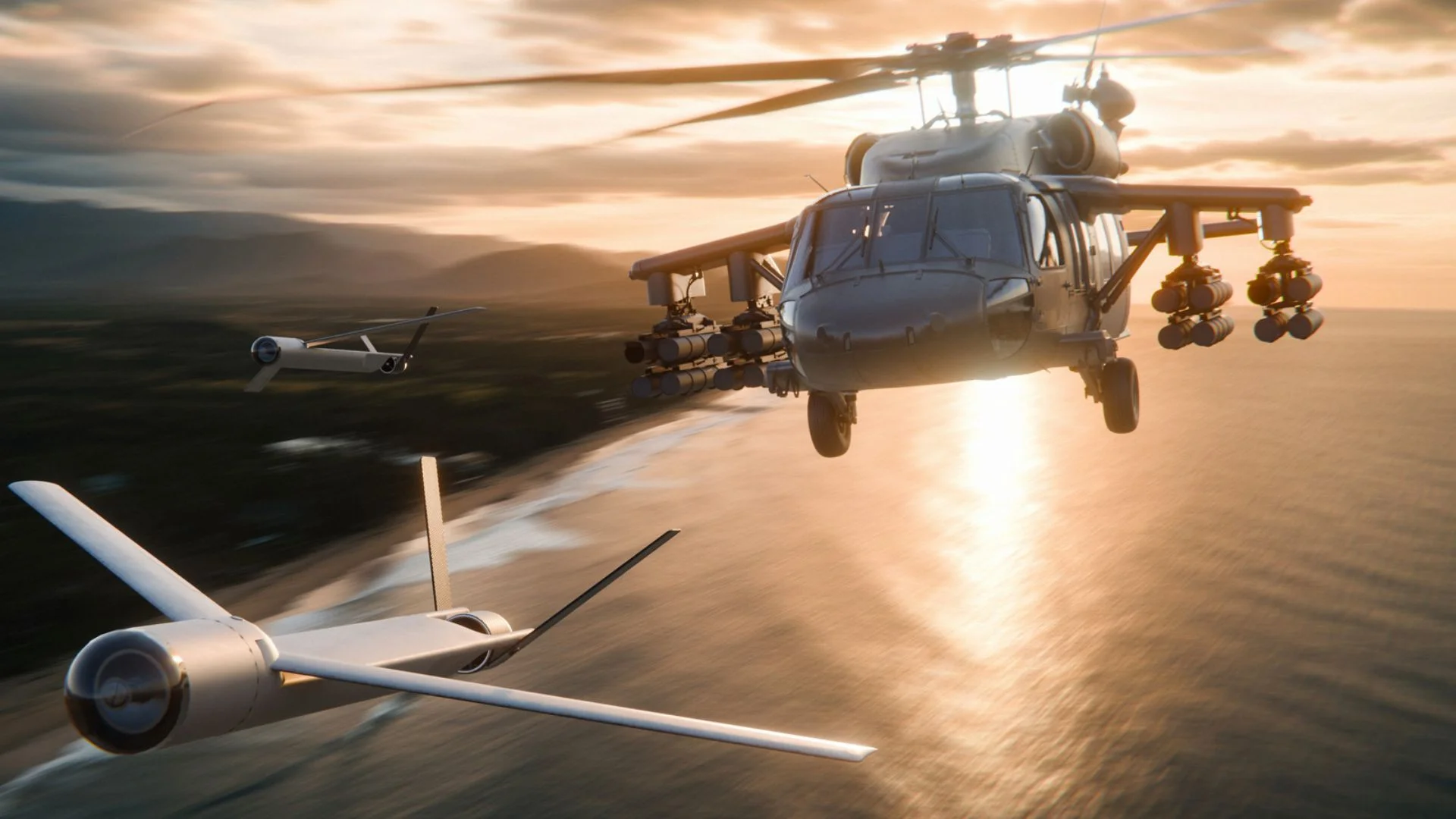
The Army is also exploring the idea of ‘launched effects.’ This means the Black Hawk could deploy small drones during missions. These drones could gather intelligence or extend the aircraft’s reach in contested areas.
WATCH ALSO: Cartoon-like humanoid robot learns everyday kitchen chores from humans
Another key concept is the use of a digital twin. This is a virtual model of the helicopter used to predict maintenance needs. It can improve readiness and reduce downtime by identifying issues before they become serious.
Since its introduction, the Black Hawk program has delivered more than 2,000 helicopters to the Army. It remains a critical link between ground forces, supply lines, and command centers.
This latest contract shows that the Army is not ready to move away from the platform. Instead, it is choosing to evolve it.
While future aircraft under the Future Vertical Lift program are still in development, the Black Hawk continues to fill a vital role. The Army’s approach is clear: maintain strong current capabilities while preparing for the next generation.
In that context, this $65 million deal is more than just a procurement step. It reflects a broader strategy to keep one of the military’s most trusted helicopters ready for the challenges of tomorrow.