Lenovo has introduced a new range of high-performance workstations designed for the fast-growing world of artificial intelligence.
Alongside these devices, the company also revealed a breakthrough battery technology that could reshape how laptops perform in the future.
The announcement marks a significant step in Lenovo’s push toward smarter, faster, and more efficient computing systems.
The newly launched ThinkPad and ThinkStation P Series workstations are designed to handle demanding workloads. These include artificial intelligence development, data science, 3D design, and engineering simulations.
The systems are powered by the latest NVIDIA GPUs, specifically the RTX PRO Blackwell series. These GPUs bring real-time AI processing directly to the device. This means users can run AI models without relying heavily on cloud computing.
Lenovo said this approach improves speed, reduces latency, and enhances data privacy.
Focus on On-Device Intelligence
A key highlight of the new lineup is on-device AI capability. The workstations combine next-generation processors from Intel and AMD with dedicated Neural Processing Units (NPUs).
READ ALSO: Robotic Hand Achieves 91% Success Grasping Fragile Objects on First Attempt
This combination allows faster AI inference and model development. It also reduces the time between input and output, making workflows smoother.
Tom Butler, Vice President at Lenovo, explained the vision behind the launch. He said, “AI is evolving fast, and professionals need scalable productivity. Our workstations let users process data where and when needed.”
He added that the devices support mobility, performance, and expandability across different user groups.
Meet Lenovo’s New Workstations
Lenovo introduced several new models under its ThinkPad and ThinkStation series.
ThinkPad P14s Gen 7
This is the lightest AI-ready mobile workstation in the lineup. It features a 14-inch design and focuses on portability. It comes with Intel Core Ultra processors or AMD Ryzen AI PRO chips. Users can also choose NVIDIA RTX PRO Blackwell GPUs.
WATCH ALSO: International Space Station crew wishes New Year 2026
The device is aimed at professionals who need performance on the go.
ThinkPad P16s Gen 5
This 16-inch workstation offers more power while remaining lightweight. It weighs under 1.76 kg. It supports advanced AI tasks and professional visualization.
The system is ideal for engineers and designers who travel frequently but need powerful computing.
ThinkPad P1 Gen 9
This is the most powerful ThinkPad in the new lineup. It features a premium thin design but packs high-end hardware.
It includes Intel Core Ultra processors with up to 16 cores and advanced NVIDIA GPUs. The system delivers up to 672 TOPS (trillions of operations per second), making it suitable for 3D rendering, AI development, and high-end visualization.
READ ALSO: YouTuber Built a 3D-Printed Fiberglass Dive Helmet and It Actually Works
Lenovo positions it as a top choice for creative professionals and engineers.
ThinkStation P5 Gen 2
For desktop users, Lenovo introduced the ThinkStation P5 Gen 2. It is designed for heavy computing tasks.
The workstation runs on Intel Xeon 600 processors and supports up to two NVIDIA RTX PRO 6000 Blackwell GPUs. It can handle complex workloads like medical imaging, molecular modeling, and large-scale AI training.
This makes it suitable for industries such as healthcare, VFX, and data science.
Strong Push Toward Hybrid AI
The new systems are part of Lenovo’s Hybrid AI strategy. This approach blends on-device computing with cloud capabilities.
It allows users to run workloads locally while still connecting to cloud platforms when needed. This balance improves efficiency and flexibility.
Lenovo is also supporting open-source tools, such as NVIDIA OpenShell. These tools help developers build secure AI agents. The company is working on additional frameworks to simplify AI deployment.
Security and Sustainability Features
Lenovo has added strong security measures across the new devices. These include ThinkShield, a suite of hardware and firmware-level protections.
WATCH ALSO: Chinese humanoid robot plays basketball with almost human-like accuracy
Features such as BIOS security, secure data wiping, and privacy controls help protect sensitive information.
The company has also focused on sustainability. The devices use recycled materials and meet global certifications, including EPEAT Gold and ENERGY STAR.
They are also built to military-grade durability standards, ensuring reliability in tough conditions.
A Breakthrough in Battery Technology
Alongside the workstations, Lenovo introduced a major innovation in battery design.
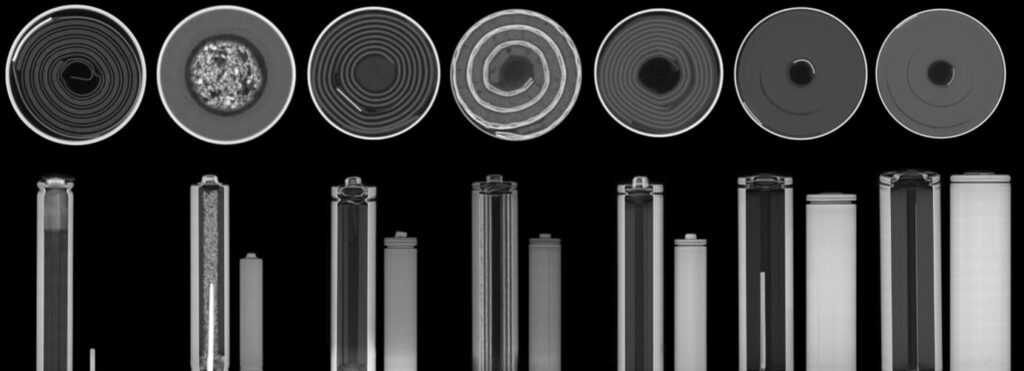
The company unveiled the world’s first 1,000Wh/L silicon-anode battery for laptops and workstations. This technology offers an energy density that is more than 10% higher than that of current batteries.
The new ED1000 battery delivers up to 99.9Wh of capacity without increasing the device’s size.
This means longer battery life and better performance without making laptops heavier or bulkier.
The battery was developed in partnership with Shanghai Jiao Tong University. This collaboration highlights the role of research institutions in advancing next-generation technology.
Lenovo believes this innovation will open new possibilities for laptop design and efficiency.
Showcased at Global AI Event
Lenovo is presenting its latest innovations at NVIDIA GTC 2026. The event is being held in San Jose, California, from March 16 to 19.
Visitors can experience the new ThinkPad and ThinkStation models at the San Jose McEnery Convention Center.
READ ALSO: Hacker Flies to China to Modify $3K Samsung Foldable Phone; You Won’t Believe How
Lenovo’s latest launch reflects a growing shift toward AI-driven computing. By bringing AI capabilities directly to devices, the company aims to reduce dependence on cloud infrastructure.
The introduction of a high-density silicon-anode battery also signals a major step forward in laptop efficiency.
These innovations could redefine how professionals work across industries.
From students to engineers and data scientists, the new systems promise faster performance, better mobility, and smarter computing.
As AI continues to expand, devices like these may soon become the standard rather than the exception.