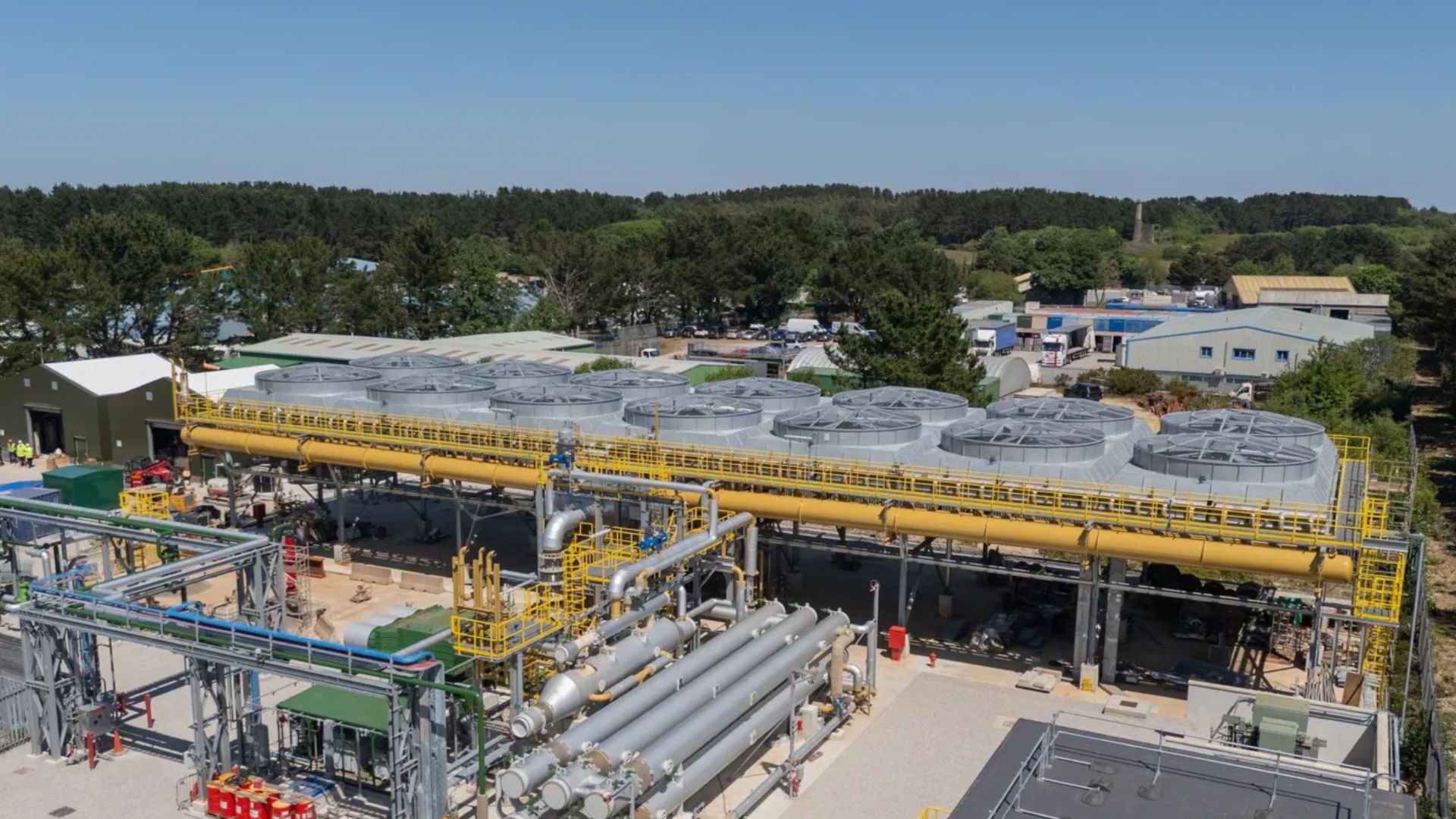
UK has officially entered a new chapter in renewable energy as its first deep geothermal power plant begins generating electricity from heat stored three miles beneath the Earth’s surface.
Located at United Downs in Cornwall, the project marks the first time the UK has successfully produced commercial electricity from deep geothermal sources.
This initiative helps in delivering round-the-clock renewable power to up to 10,000 homes while simultaneously unlocking a domestic supply of lithium, a critical mineral for electric vehicle batteries.
After nearly two decades of development, the landmark project spearheaded by Geothermal Engineering Ltd (GEL) is now operational. It signals a pivotal moment for Britain’s energy transition.
READ ALSO: https://modernmechanics24.com/post/tesla-model-3-cybertruck-car-hack-risk/
A 15-Year Journey Beneath Surface
The Cornwall site required drilling the deepest onshore wells ever constructed in the UK, reaching depths of approximately three miles (around 4.5 kilometers). At that depth, underground granite formations naturally heat water to temperatures approaching 200°C. This is hot enough to produce electricity.
“You drill deep boreholes into the ground, and then fractures within the granite rock are used to circulate the water that picks up the heat used for electricity production,” explained Dr. Stuart Monaghan, head of geothermal at the British Geological Survey.
Granite plays a critical role in the project’s success. Its ability to retain and conduct heat makes it particularly suitable for enhanced geothermal systems.
Ryan Law, CEO of Geothermal Engineering Ltd, expressed relief and excitement at the launch. “I’m tremendously excited. After 15 years of hard graft and difficulties, we’re finally there,” he said.
Law emphasized geothermal’s reliability compared to other renewables. “Geothermal power is really important for the UK because there are no price fluctuations like with gas. And unlike wind and solar, we are constantly on, 24/7 electricity.”
What Makes Deep Geothermal Different?
Geothermal heating is not new to Britain. Ground-source heat pumps are already installed in around 30,000 homes. Generating electricity from deep geothermal resources represents a technological leap.
Shallow geothermal systems harness moderate underground temperatures to heat buildings. Cities such as Southampton have long operated district heating networks powered by geothermal sources.
But deep geothermal drills much further into the Earth’s crust, tapping significantly higher temperatures capable of spinning turbines and producing grid-scale electricity.
The United Downs facility will now feed its electricity into the national grid through Octopus Energy, supplying enough clean power to meet the needs of up to 10,000 households.
WATCH ALSO: https://modernmechanics24.com/post/china-humanoid-robot-combat-moves/
An Octopus spokesperson described the project as transformative: “This project is a genuine game-changer. For the first time, we’re tapping into always-on green power in the UK, providing a steady stream of clean, home-grown energy.”
Innovation rarely comes cheaply. The Cornwall geothermal project has cost approximately £50 million to date, funded through private investors and £15 million from the European Development Fund. This was secured while the UK was still part of the European Union.
Experts warn that high upfront drilling costs remain the biggest barrier to replicating similar projects nationwide.
Anne Murrell, head of industry body Geothermal UK, highlighted the economic hurdle. “The cost of deep geothermal is comparable to other forms of electricity generation, but a lot of spending money is upfront,” she said.
She added, “We have a great energy resource underneath our feet in the UK, but we’re not maximising its potential. To unlock investment and increase investor confidence, we need supportive government policy. Geothermal needs to be recognised as a key part of our energy strategy.”
Recognizing the sector’s promise, the government appointed Lord Whitehead as the country’s first geothermal minister last year. Ahead of the plant’s launch, he described the moment as groundbreaking for UK energy innovation.
Beyond Power: A Domestic Lithium Breakthrough
Perhaps the most strategic aspect of the Cornwall facility lies not only in electricity generation but also in mineral extraction.
The geothermal fluid circulating underground contains lithium carbonate. It is an important component in electric vehicle batteries and renewable storage technologies.
READ ALSO: https://modernmechanics24.com/post/lab-made-ear-cartilage-offers-hope-in/
GEL will extract approximately 100 tonnes of lithium annually from the site. This is enough to supply batteries for around 1,400 electric vehicles each year. While modest in scale initially, the company aims to expand production to 18,000 tonnes annually.
The UK government has supported lithium extraction with a £1.8 million grant, covering half of the pilot project’s costs.
Domestic demand for lithium is projected to rise between 12 and 45 times during the 2020s, according to the British Geological Survey. Local production would strengthen the UK’s green supply chain and reduce reliance on overseas imports.
A Global Trend Driven by Tech Giants
The International Energy Agency reports that global investment in deep geothermal electricity has surged by 80% year-on-year since 2018. One reason is escalating power demand from data centres operated by technology giants.
“Data centres have major power needs, and this is very challenging for our current and future grid,” Murrell said. “What’s happening worldwide is that companies like Google, Meta, and Microsoft are looking to geothermal power their facilities.”
Geothermal’s constant output makes it particularly attractive for large-scale, energy-intensive operations. In some cases, excess heat from data centres can even be reinjected underground, creating a circular energy system.
While Cornwall leads the way, geological studies suggest similar deep geothermal potential exists in Scotland and Northeast England. However, no approved electricity-generating projects are currently underway in those regions.
Shallow geothermal expansion continues to grow. Councils such as Gateshead Council are already heating hundreds of homes using water from flooded coal mines. This approach could benefit roughly a quarter of UK households located above abandoned mines.
Across Europe, ambitions are even greater. The Netherlands aims to heat 25% of its homes using geothermal energy by 2050, demonstrating the scale of transformation possible.
WATCH ALSO: https://modernmechanics24.com/post/us-giant-robot-fights-wildfires/
Why “Always-On” Renewable Power Matters
While wind turbines that depend on breezes or solar panels are reliant on daylight, geothermal energy provides continuous baseload power. This reliability strengthens grid stability and reduces exposure to volatile gas markets.
With Britain pushing toward net-zero emissions and energy independence, deep geothermal could serve as a strategic complement to wind, solar, and nuclear power.
However, long-term growth hinges on policy certainty, investor confidence, and improved drilling efficiencies to reduce capital costs.
A Turning Point for UK Energy?
The activation of the United Downs geothermal plant represents more than a technical achievement. It symbolizes a diversification of Britain’s renewable portfolio.
From powering 10,000 homes with constant clean electricity to producing critical lithium for electric vehicles, the project underscores how the Earth’s natural heat could play a far greater role in the country’s energy future.
As Ryan Law reflected on the milestone, his optimism was clear: “We’ve proven it works. Now it’s about scaling it.”
The future will say whether this pioneering project remains a one-off achievement or becomes the foundation of a broader geothermal revolution beneath Britain’s feet.