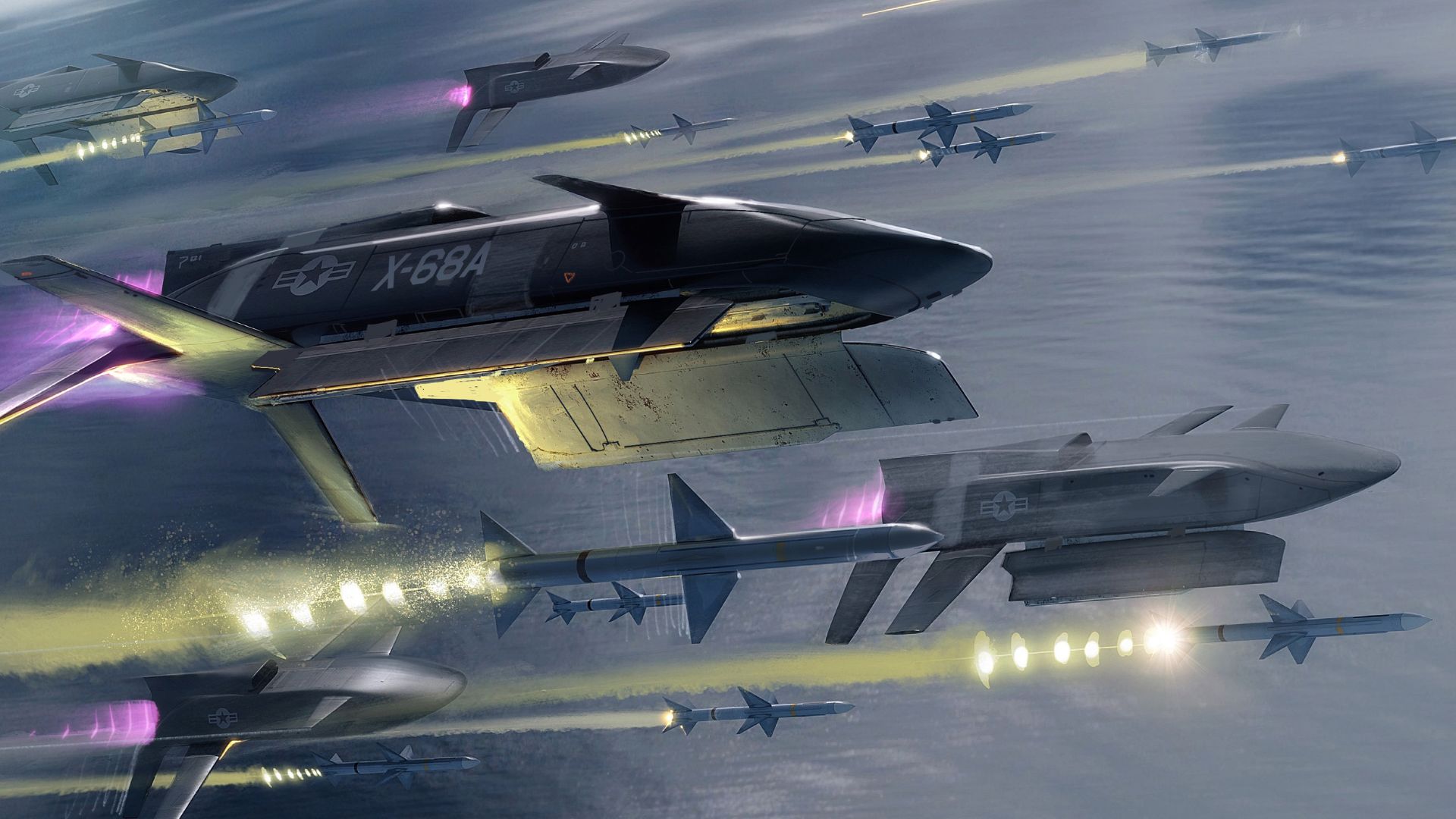
The Defense Advanced Research Projects Agency (DARPA) has announced significant progress in its LongShot program, with the air-launched uninhabited vehicle now officially designated as the X-68A.
What was once a bold concept sketched on drawing boards is now edging closer to operational reality.
The X-68A is developed in partnership with General Atomics Aeronautical Systems, Inc. (GA-ASI). It is designed to fundamentally reshape the way modern air combat is conducted.
Instead of placing fighter pilots directly in harm’s way, the LongShot concept introduces an air-launched, missile-armed drone that can fly ahead of manned aircraft and engage enemy targets independently.
Recent development marks an important phase in the program’s evolution. DARPA confirmed that the X-68A successfully completed full-scale wind tunnel testing, validating its aerodynamic stability.
READ ALSO: https://modernmechanics24.com/post/agilitys-digit-humanoids-in-toyota/
In addition, engineers conducted successful parachute recovery trials and weapons-release system tests. These are two essential components for ensuring operational safety and combat effectiveness.
These advancements pave the way for an integrated flight test campaign expected as early as late 2026. The upcoming tests will evaluate the safe launch of the X-68A from an F-15 fighter jet, verify the drone’s flight performance, and demonstrate its ability to deploy a captive sub-munition safely.
The LongShot program is built around a simple but transformative premise. An uninhabited aircraft is launched from a larger host platform, flies forward of the main force package, and fires its own air-to-air missiles at adversary aircraft. This approach dramatically increases the reach of fighter formations while allowing pilots to remain at safer stand-off distances.
“LongShot burns down significant technical risk and presents a viable path for the military services to increase air combat reach and effectiveness from uninhabited, air-launched platforms,” said Col. John Casey, DARPA’s LongShot program manager. He added, “With the help of our partners, we’ve completed critical milestones necessary for the integrated flight test campaign, which will validate vehicle performance and lay the foundation for efficient follow-on development.”
WATCH ALSO: https://modernmechanics24.com/post/idaho-lab-receives-nuclear-reactor-fuel/
One of the program’s most compelling features is its flexibility. The LongShot system is designed to be host-platform agnostic. It can potentially integrate with fighters, bombers, or even be deployed as a palletized munition from mobility aircraft. This versatility opens the door to wide-ranging operational applications across the US military’s branches.
The initiative draws on a broad coalition of defense and research organizations. Key contributors include the US Air Force’s Arnold Engineering Development Complex, the Air Force Research Laboratory, the Naval Air Warfare Center Aircraft Division, NASA, and multiple US Army research and test centers. GA-ASI serves as the industry lead, overseeing the design, development, and demonstration of the LongShot vehicle.
Global air forces invest hugely in next-generation capabilities. At this time of need, the X-68A represents a strategic shift toward distributed, survivable combat systems. After upcoming flight tests confirm its performance, LongShot could redefine air superiority doctrine. It will extend combat reach, enhance mission effectiveness, and significantly improve pilot survivability.