Peking University researchers have built the world’s first large-scale quantum key distribution network running entirely on integrated photonic quantum chips—a system linking 20 users across a simulated distance of 3,700 kilometers. Led by Professor Wang Jianwei and Academician Gong Qihuang, the breakthrough, published in Nature on Thursday, solves a two-decade engineering puzzle: how to shrink quantum communication hardware from room-sized optics racks to mass-producible silicon, without losing the quantum states that make the technology secure.
The problem Professor Wang and his team set out to solve is not whether quantum key distribution works—it has worked in laboratories since the 1990s. The problem is that it has never scaled affordably. Traditional QKD systems require bulky optical tables, precision-aligned lasers, and temperature-stabilized rooms. They are expensive, fragile, and impractical for the kind of multi-user metropolitan networks that would actually protect power grids, financial systems, or government communications.
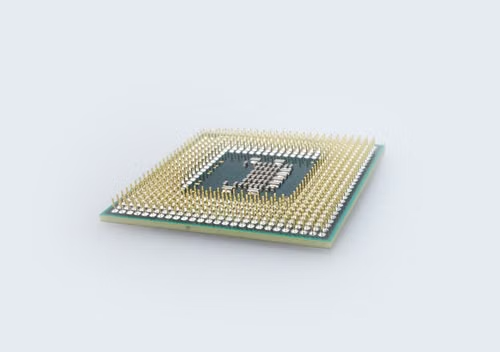
What the Peking University team built instead is a photonic quantum chip that performs twin-field quantum key distribution—an advanced protocol that allows keys to travel longer distances and permits multiple users to share expensive detection equipment. The chip integrates high-performance light sources and modulation devices onto a single compact platform, something the field has pursued for years without success. According to Xinhua News Agency, this marks the first demonstration in over twenty years of a QKD network based on photonic quantum chips.
READ ALSO: https://modernmechanics24.com/post/nasa-targets-500kw-nuclear-reactor-moon/
The basic function of the system, from a user’s perspective, is deceptively simple. Twenty participants, each equipped with one of these chips, can exchange encryption keys with any other participant in the network. The quantum states transmitted between them are fragile by design; any attempt to intercept or measure them collapses the state, immediately alerting both parties. This is not encryption that can be cracked later with a better computer. It is encryption that detects eavesdroppers in real time.
Still, the achievement carries an honest limitation that the researchers themselves acknowledge. The current network accommodates 20 users—an impressive leap from point-to-point links, but still short of the thousands of nodes required for a national-scale quantum internet. Professor Wang told Xinhua that the chips exhibit high uniformity in wafer-level fabrication, meaning they are candidates for low-cost mass production. But moving from laboratory prototypes to foundry-scale manufacturing will require additional engineering investment. The yield of chips that meet the exacting optical coherence standards necessary for QKD remains an active area of development.
What makes this matter, ultimately, is the direction it signals. For thirty years, quantum communication has chased a paradox: the systems that offer perfect security are too large and expensive to deploy, while the systems that are deployable offer only marginal security improvements over classical encryption. Professor Wang’s team has demonstrated, for the first time, that the performance-dense path exists. The chips are small enough to fit inside standard telecommunications equipment. They consume far less power than optical bench setups. And because they are fabricated using semiconductor processes, their cost curve follows the logic of Moore’s Law, not bespoke laboratory assembly.
WATCH ALSO: https://modernmechanics24.com/post/blue-dogs-spotted-in-chernobyl-zone/
The innovator of this integrated architecture is Professor Wang Jianwei, whose research group at Peking University’s School of Physics has spent years pushing the boundaries of what lithium niobate and silicon photonics can do with single photons. But the engineers who turned the design into functioning hardware—the doctoral students and postdoctoral fellows who spent nights inside Peking University’s cleanroom aligning grating couplers and debugging phase modulators—are the ones who proved the concept could survive outside simulation. Academician Gong Qihuang, a towering figure in Chinese quantum optics, provided the institutional vision and laboratory infrastructure that made the scale of this demonstration possible.
Reported by Xinhua News Agency and published in Nature, the network operates at a global leading level in both user count and overall reach. The 3,700-kilometer distance is simulated over spooled fiber in controlled conditions, but the underlying chip performance is what matters. If the chips can maintain coherence across metropolitan-scale links in the lab, they can do so across actual cities.
What comes next is the slow work of scaling. Professor Wang described the QKD chip network as “one of the important paths toward system miniaturization and practical device deployment.” Academician Gong framed the achievement as an exemplary case of integrated photonic quantum technology driving the development of quantum communication. Neither is claiming that commercial quantum networks are imminent. But the barrier that has held the field back for twenty years—the impossibility of putting high-performance QKD on a chip—no longer exists.
READ ALSO: https://modernmechanics24.com/post/worlds-tiniest-autopilot-turns-uk-drone/
For the rest of us, who will never handle a single photon or align an interferometer, the significance is quieter. Somewhere in Beijing, on a laboratory bench, there is a silicon chip smaller than a fingernail that can talk securely to nineteen others. That chip was built using the same industrial tools that produce smartphone processors. The distance between a laboratory demonstration and a product you can buy is still measured in years. But for the first time, it is measured, not infinite.