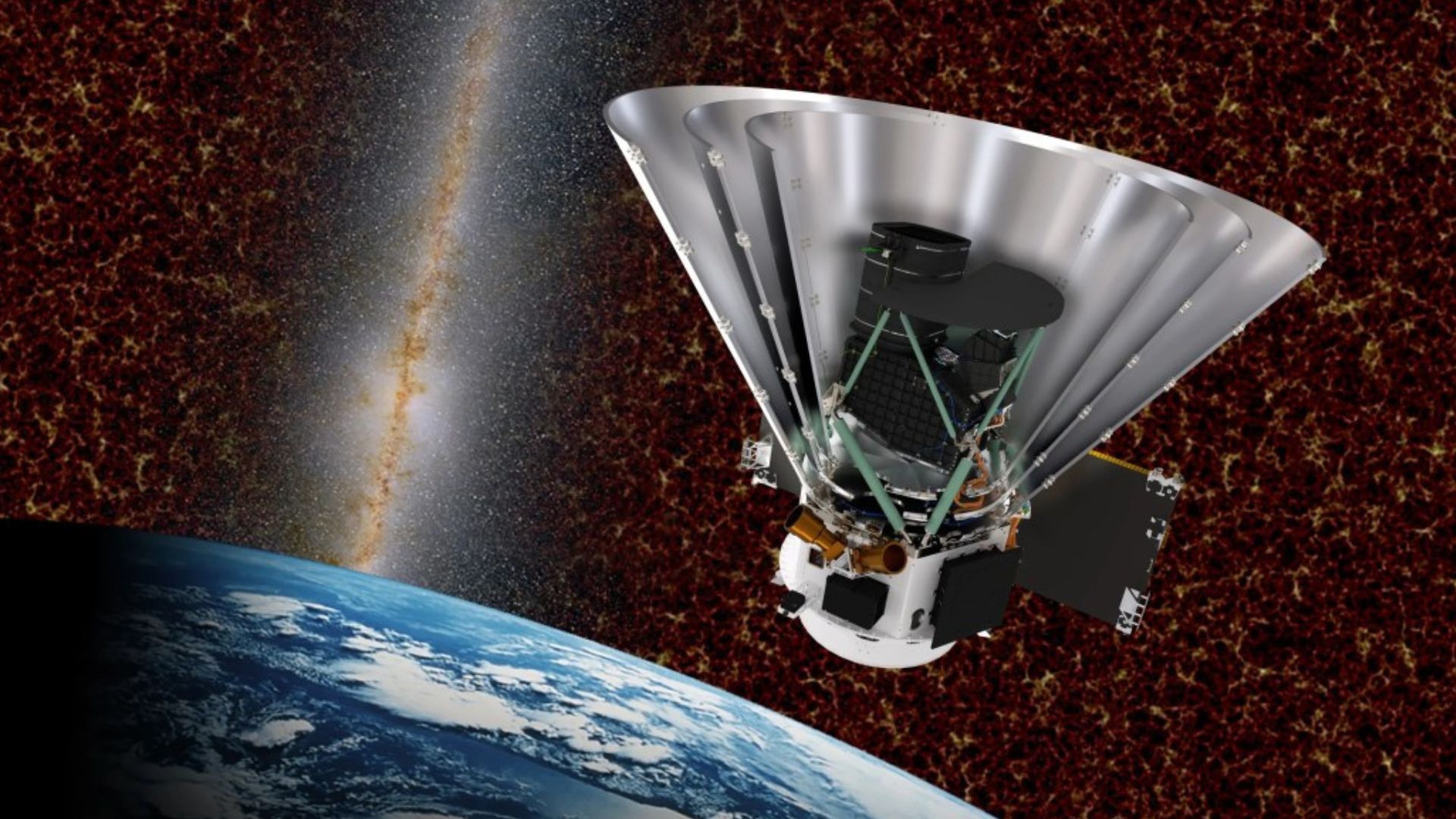
NASA’s space telescope, SPHEREx, detected organic molecules streaming out of the rare interstellar comet 3I/ATLAS.
The discovery has sparked new interest in how the basic ingredients of life travel across the universe.
Scientists say the comet released key organic compounds, including methanol, methane, and cyanide, as it passed through the inner solar system in late 2025.
While these molecules are essential to life on Earth, researchers stress that their presence does not indicate the presence of alien life on the comet.
The findings were published in the February issue of Research Notes of the American Astronomical Society and are currently awaiting peer review.
What Is Comet 3I/ATLAS?
The interstellar comet 3I/ATLAS became one of the most talked-about space objects of 2025. It was only the third confirmed interstellar visitor ever observed passing through our solar system.
READ ALSO: https://modernmechanics24.com/post/lasers-drones-drugs-escalate-in-texas/
As the comet approached the Sun, its surface heated up. Ice trapped inside the comet began to turn directly into gas. This process is called sublimation. This created bright jets of gas and dust. The material formed a glowing cloud, called a coma, around the comet, and a long tail stretched behind it.
Orbiting around Earth, NASA’s SPHEREx monitored the comet between December 8 and 15.
During this period, the telescope captured infrared data that revealed the presence of organic molecules escaping from the comet’s surface. These carbon-rich molecules are important in many biological processes on Earth.
However, NASA clarified that organic molecules can also form through natural chemical reactions in space. Their presence does not automatically signal life.
Leading Researchers
The research team includes scientists from NASA and leading institutions worldwide.
Carey Lisse, an astronomer at Johns Hopkins Applied Physics Laboratory, led the study. He explained the comet’s dramatic activity during its close approach to the sun.
“Comet 3I/ATLAS was full-on erupting into space in December 2025 after its close flyby of the Sun,” Lisse said. “Even water ice was quickly sublimating into gas in interplanetary space. Since comets consist of about one-third bulk water ice, they are releasing an abundance of new, carbon-rich material that had remained locked in ice deep below the surface.”
WATCH ALSO: https://modernmechanics24.com/post/wing-expands-walmart-drone-delivery/
He added, “We are now seeing the usual range of early solar system materials, including organic molecules, soot, and rock dust, that are typically emitted by a comet.”
Deputy study lead Yoonsoo Bach from the Korea Astronomy and Space Science Institute highlighted the unexpected opportunity.
“Our unique space telescope is gathering unprecedented data from across the universe,” Bach said. “But in this case, our galaxy delivered a piece of a faraway star system to us only a few months after launch, and SPHEREx was ready to observe it. Science is sometimes like that: You’re in the right place at the right time.”
Why This Discovery Matters
First, it supports the theory that the building blocks of life are common across the universe. If comets from other star systems carry organic materials, then similar chemistry may exist elsewhere.
Second, scientists believe comets may have played a role in delivering water and organic molecules to early Earth billions of years ago. Some researchers suggest that comets could have helped seed life on our planet.
Although this does not confirm life beyond Earth, it strengthens the idea that life-friendly chemistry is not new to our solar system.
The discovery also helps scientists understand how planetary systems form and evolve. By studying the composition of an interstellar object, researchers gain insights into conditions in distant star systems.
READ ALSO: https://modernmechanics24.com/post/faw-semi-solid-state-ev-battery/
A Rare Visitor from Another Star
Astronomers first detected 3I/ATLAS in July 2025. The object was moving at around 137,000 miles per hour within Jupiter’s orbit, signaling that it originated from outside the solar system.
Scientists estimate the comet may have been traveling through space for billions of years. It likely gained speed through gravitational interactions with stars and cosmic clouds before entering our solar neighborhood.
The comet reached its closest point to the Sun in October 2025 and made its nearest approach to Earth in December at about 168 million miles away. After looping around the Sun, it began heading outward again.
Soon, it will make a close pass by Jupiter. NASA’s Juno spacecraft may get one final opportunity to observe it before it leaves the solar system forever.
Role of SPHEREx
SPHEREx, short for Spectro-Photometer for the History of the Universe, Epoch of Reionization, and Ices Explorer, launched into low-Earth orbit in March 2025.
The telescope is designed to scan the entire night sky using 102 infrared color sensors. Its mission includes studying the origins of the universe and searching for water and organic molecules in space.
The encounter with 3I/ATLAS was not part of its planned schedule. However, the timing turned out to be fortunate. Just months after launch, the telescope captured valuable data from a visitor that traveled across interstellar space.
This unexpected observation shows how space missions can deliver surprising discoveries.
WATCH ALSO: https://modernmechanics24.com/post/china-tests-mooncraft-reusable-rocket/
A Way Forward
Scientists will continue analyzing the data collected by SPHEREx. Since the research is still under review, further studies may refine the findings.
The comet’s journey toward Jupiter also provides another chance for observation before it exits the solar system permanently.
For now, the detection of organic molecules in 3I/ATLAS adds another piece to the puzzle of how life’s building blocks form and travel across the cosmos.