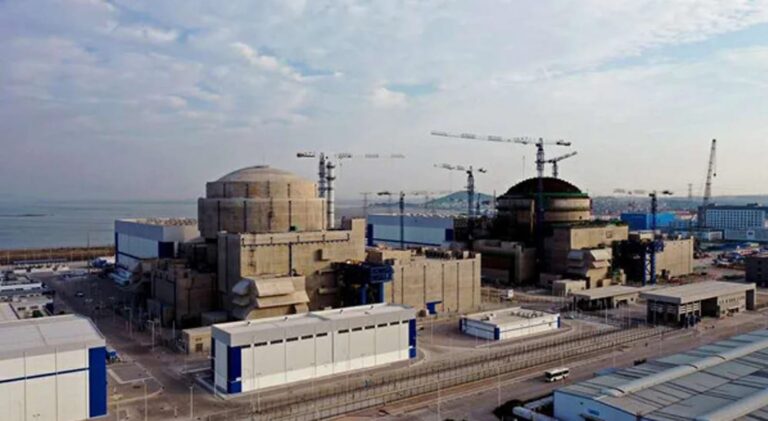
Chinese researchers have unveiled a breakthrough electrochemical strategy that achieves uranium extraction efficiencies above 90 percent from complex wastewater, a critical advance for securing nuclear fuel sources and mitigating environmental pollution.
By engineering a novel covalent organic framework (COF) electrode that synergizes chemical binding with an indirect electrochemical process, the team has created a system that demonstrates remarkable long-term stability and resistance to interfering substances.
The pursuit of uranium from non-traditional sources is intensifying as conventional mining faces environmental and economic challenges. Electrochemical extraction has emerged as a promising alternative due to its controllability and selectivity, but it has been plagued by electrode passivation and interference from other ions. This new study, led by Professor Wang Xiang from the Chinese Academy of Sciences, directly confronts these limitations with an ingeniously designed electrode.
The core of the innovation is a self-standing covalent organic framework (COF) built on a carbon cloth support. This single electrode performs a dual function, reported the research team in their paper. Its polyarylether backbone drives an oxygen reduction reaction to electrochemically generate hydrogen peroxide, while its amidoxime groups act as highly selective claws that chelate and bind uranyl ions from the wastewater.
READ ALSO: https://www.modernmechanics24.com/post/ai-tool-tells-if-salmon-is-wild-or-farmed
The researchers systematically identified the optimal conditions for maximum performance. They found that solution pH is a master variable. In acidic conditions, the extraction efficiency plummets as the amidoxime groups become protonated and lose their binding power. However, in a neutral to alkaline pH range, the system thrives, achieving extraction efficiencies above 90 percent and facilitating the formation of a crystalline uranium peroxide compound called studtite.
The applied voltage is another powerful lever. By carefully increasing the voltage, the team could precisely control the two-electron oxygen reduction reaction, thereby boosting the local production of hydrogen peroxide. This electrochemical “fuel” is essential for driving the studtite formation, which in turn pulls more uranium out of the solution, creating a highly efficient recovery cycle.
Perhaps most impressive is the system’s resilience in chemically complex environments, a common stumbling block for earlier technologies. When tested in solutions with high concentrations of sodium ions and various organic additives, the electrode maintained a robust uranium extraction efficiency above 85 percent. This strong tolerance, according to the researchers, stems from the inherent and powerful selectivity of the amidoxime groups for uranyl ions over other common contaminants.
WATCH ALSO: https://www.modernmechanics24.com/post/transform-home-life-with-1x-neo-robot-1
The practical durability of the electrode was proven in a demanding long-term test. In organic-rich radioactive wastewater, the system operated continuously for 450 hours, accumulating an extraordinary more than nine thousand milligrams of uranium per gram of adsorbent material. “This performance ranks among the highest values ever reported for electrochemical uranium extraction systems,” stated Professor Wang.
The success hinges on a synergistic mechanism where chemical binding and electrochemical generation work in concert. The amidoxime groups first capture the uranyl ions and initiate nucleation. Simultaneously, the electro-generated hydrogen peroxide drives sustained crystal growth, locking the uranium into a solid, easily collectable form.
The authors acknowledge that challenges remain on the path to large-scale deployment, including optimizing electrode fabrication and preventing active site blockage during extended operation. Future work will focus on machine learning-guided material design and modular flow system engineering. This research provides a powerful blueprint for next-generation environmental remediation and resource recovery technologies, turning problematic wastewater into a valuable source of nuclear fuel.
READ ALSO: https://www.modernmechanics24.com/post/tum-startup-reinventing-rocket-pressure-tanks