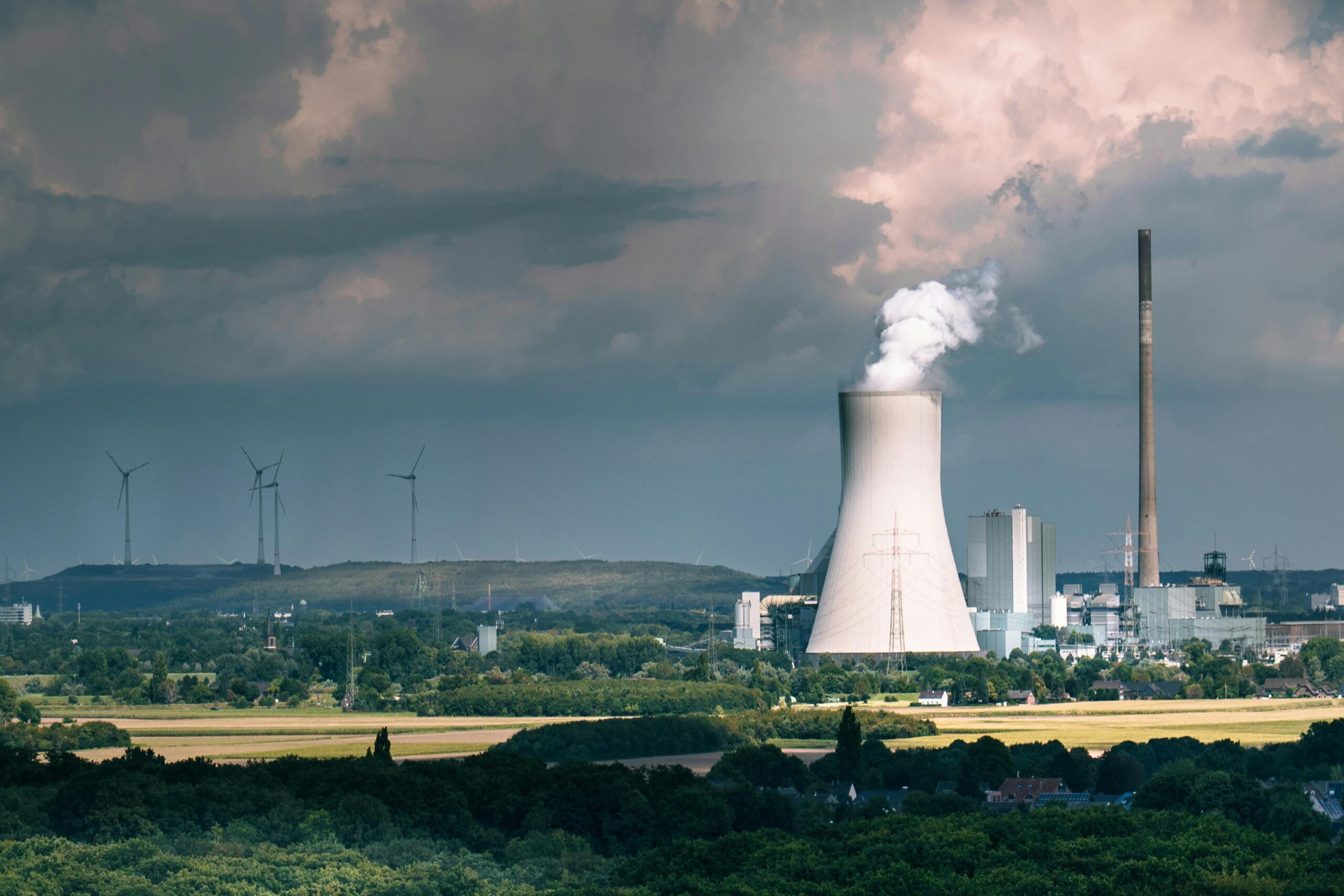
China’s Hualong One nuclear power base in Fujian has fully completed its Phase I project, with two reactors now in commercial operation and capable of producing 20 billion kilowatt-hours of clean electricity annually. The milestone confirms the large-scale deployment of China’s independently developed third-generation nuclear technology, marking a decisive shift from construction to full operation.
As of 00:07 am on January 1, the No.2 Unit of the Zhangzhou Nuclear Power Plant in eastern Fujian Province officially entered commercial service after passing a rigorous 168-hour full-power continuous operation test, reported China Central Television (CCTV). With this step, both reactors in Phase I are now online, making the Zhangzhou site the world’s largest nuclear power base built around the Hualong One reactor.
For China’s nuclear industry, the moment carries symbolic and practical weight. Analysts told CCTV that completing Phase I signals a turning point in scaling up the country’s homegrown nuclear technology. Instead of relying on imported reactor designs, China is now operating one of the world’s largest nuclear facilities using a system it designed, engineered, and owns outright.
READ ALSO: https://modernmechanics24.com/post/china-crab-walking-electric-icbm-launcher/
The numbers behind the project help explain the excitement. With two reactors running, the Zhangzhou base is expected to generate 20 billion kilowatt-hours of electricity each year. That output is equivalent to cutting around 16 million tons of carbon dioxide emissions annually, replacing fossil fuel generation at a scale that would otherwise require millions of tons of coal.
At the heart of the project is Hualong One, China’s fully independent third-generation pressurized water reactor (PWR) technology. Developed with complete proprietary intellectual property rights, the system has earned international recognition, including European Utility Requirements (EUR) certification and approval under the UK Generic Design Assessment (GDA) framework. Those credentials place it among a small group of reactor designs cleared for use in some of the world’s most tightly regulated nuclear markets.
Each Hualong One unit can generate up to 10 billion kilowatt-hours of electricity per year on its own. That output reduces carbon dioxide emissions by about 8.16 million tonnes annually, equivalent to saving more than 3 million tonnes of standard coal, according to official data cited by CCTV. In practical terms, a single unit can power a medium-sized city while dramatically lowering its carbon footprint.
WATCH ALSO: https://modernmechanics24.com/post/us-supersonic-jet-cuts-flight-time-silences-sonic-boom/
The Zhangzhou plant plays a special role in this story. It serves as the starting point for the large-scale rollout of Hualong One technology, with six reactors planned in total at the site. According to people.cn, this makes it the largest nuclear power base in the world centered entirely on a domestically developed reactor design, highlighting China’s growing confidence in exporting and replicating its own nuclear systems.
Progress so far suggests that confidence is not misplaced. Unit 1 of the Zhangzhou plant entered commercial operation on January 1, 2025, and by December 24, 2025, its annual power generation had already exceeded 10 billion kilowatt-hours, official figures show. That performance provided a strong operational track record before Unit 2 came online at the start of 2026.
Globally, the Hualong One is gaining traction. It has become the third-generation nuclear power technology with the largest number of reactors in operation and under construction worldwide, according to people.cn. This growing fleet underscores not just technical maturity, but also China’s rising competitiveness in the global nuclear power industry.
READ ALSO: https://modernmechanics24.com/post/china-high-speed-rail-50000km/
Once all six reactors at Zhangzhou are completed, the base is expected to deliver around 60 billion kilowatt-hours of clean electricity every year. For Fujian Province, that means a major upgrade to its energy structure, stronger energy security, and a more balanced north-to-south electricity transmission pattern.
Beyond Fujian, the implications are national and international. Large, stable nuclear bases like Zhangzhou support China’s long-term climate goals while showcasing technology that could be deployed abroad. With Phase I now complete, the world’s largest Hualong One nuclear base has moved from blueprint to reality, setting the pace for the next chapter of China’s nuclear expansion.