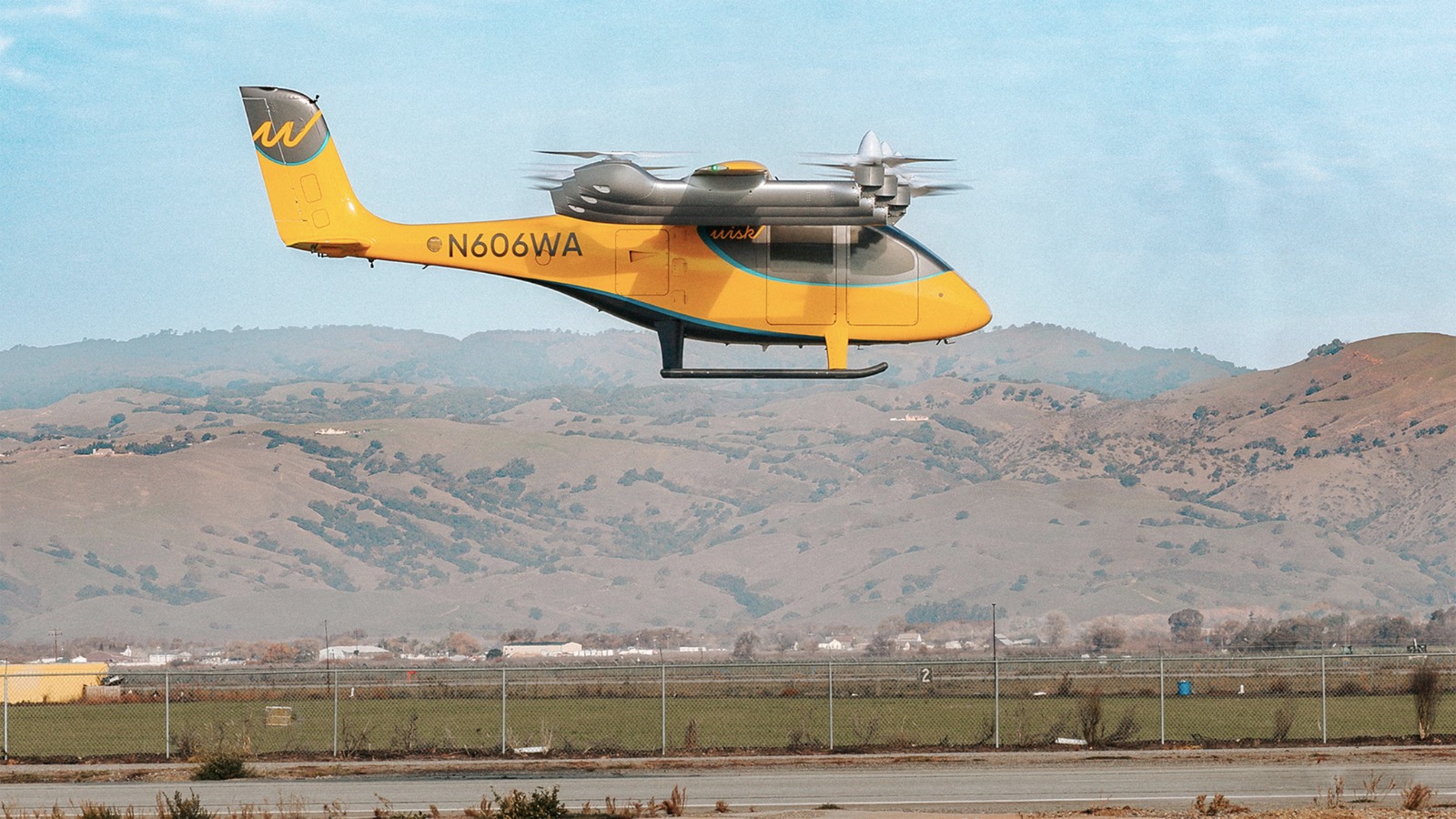
Wisk Aero, a leader in autonomous aviation backed by Boeing, has successfully completed the first flight of its Generation 6 electric vertical takeoff and landing (eVTOL) aircraft. This milestone marks the beginning of the certification journey for what the company aims to be the first-ever FAA-certified autonomous, passenger-carrying aircraft in the United States, reported the company’s official announcement.
Seeing a sleek, pilotless aircraft silently lift off the ground might feel like science fiction, but for the team at Wisk, it’s the culmination of over 1,750 test flights across five previous generations of aircraft. This inaugural hover flight at their Hollister, California test facility wasn’t just a proof-of-concept; it was a critical validation of the core systems for a vehicle designed to carry paying passengers in cities like Houston, Los Angeles, and Miami. So, what makes this sixth attempt so special? It’s the first model submitted to the Federal Aviation Administration (FAA) as a candidate for full commercial certification.
“This first flight is the moment our team has been working toward, and it is a powerful demonstration of the work, expertise, and commitment that have gone into the Gen 6 program,” said Sebastien Vigneron, CEO of Wisk. The flight represents more than just technical achievement; it’s a bet on a specific vision for the future of urban air mobility. Unlike some eVTOL concepts that still feature a pilot, Wisk’s aircraft are designed to be fully autonomous from the start, with human oversight provided remotely by a ground-based Multi-Vehicle Supervisor.
READ ALSO: https://modernmechanics24.com/post/frog-gut-bacterium-cures-cancer-tumors/
This approach, according to Wisk, is the key to unlocking the safety, scalability, and affordability needed for everyday flight. Brian Yutko, VP of Product Development at Boeing Commercial Airplanes and Chairman of the Board at Wisk, emphasized the rigorous engineering behind the milestone. He noted that the advanced technologies developed across flight controls, sensing, and systems integration are “a valuable source of insight for Boeing as we work together and thoughtfully apply them to the future of flight.”
The path from first hover to certified service is a long and meticulously planned one. With this initial flight complete, Wisk is now embarking on a rigorous test campaign. The next phases will systematically expand the aircraft’s flight envelope, moving from stable hover to testing takeoffs, landings, and eventually complex maneuvers like transitions to forward flight. Each step generates crucial data to refine the aircraft’s performance and control laws, stated the company’s release.
WATCH ALSO: https://modernmechanics24.com/post/rolls-royce-test-methanol-marine-engine-2/
Simultaneously, Wisk is advancing the other half of the equation: the autonomous brain. The company is maturing critical technologies like its detect-and-avoid (DAA) and navigation systems while collaborating with regulators and partners like NASA and SkyGrid to define the rules for a new era of air traffic management. The goal is to create a vehicle and ecosystem that don’t just add to the sky but make it safer. Wisk asserts its aircraft is being designed to meet or exceed today’s rigorous commercial aviation safety standards.
This flight is a significant data point in the rapidly evolving advanced air mobility sector. It demonstrates that a major player, with the backing of an aerospace titan like Boeing, is committed to skipping the “pilot” phase altogether and going straight to autonomy. The success of the Generation 6 aircraft could reshape not only how we imagine short-hop travel but also how regulatory bodies like the FAA approach certifying a completely new class of automated passenger vehicle.
READ ALSO: https://modernmechanics24.com/post/plant-hormone-controls-proteins-for-life/