Researchers at Toyohashi University of Technology have explored how the movement speed of an AI-powered prosthetic arm influences whether users feel it as their own or as something foreign and unsettling.
As AI-driven prosthetic limbs move closer to everyday reality, understanding human acceptance may be just as important as technical precision.
For decades, prosthetic research has focused on control systems that respond directly to a user’s intention.
Technologies such as electromyography (EMG) and electroencephalography (EEG) convert muscle and brain signals into movement. It allows artificial limbs to act when the user commands them. But AI is changing the equation.
Future prosthetic arms may not simply respond, but anticipate. Using machine learning, these devices could assess surroundings and initiate movements autonomously or semi-autonomously to assist users.
READ ALSO: https://modernmechanics24.com/post/nric-mstec-inl-advance-molten-salt/
That possibility raises a psychological challenge: What happens when a part of your body moves on its own?
Researchers warn that when movement feels disconnected from intention, users may experience discomfort or a sense that the limb is not part of them. That barrier could slow adoption of even the most advanced devices.
To explore this issue safely and systematically, the research team turned to virtual reality (VR).
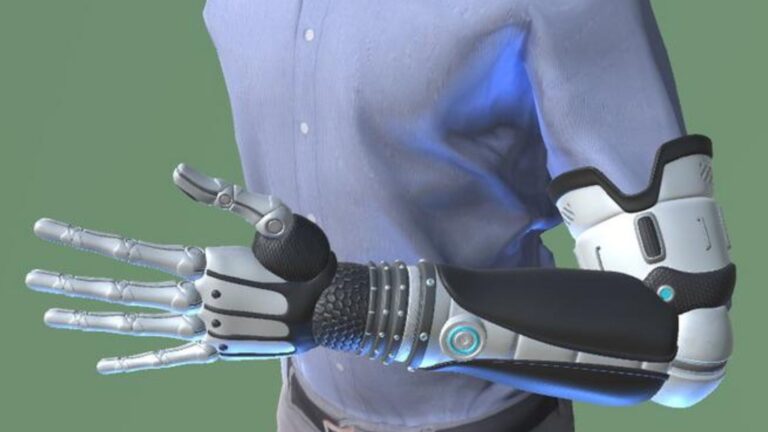
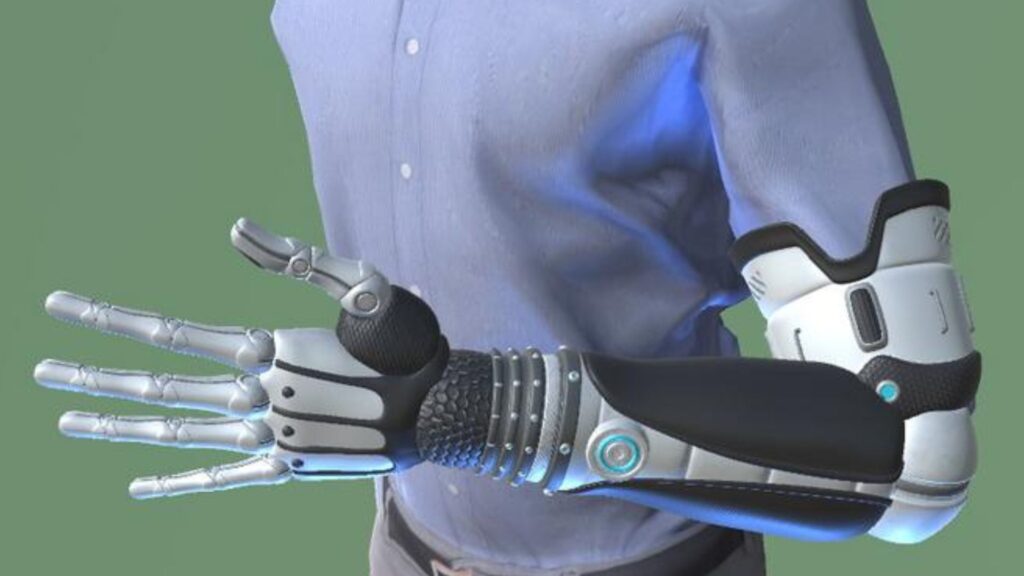
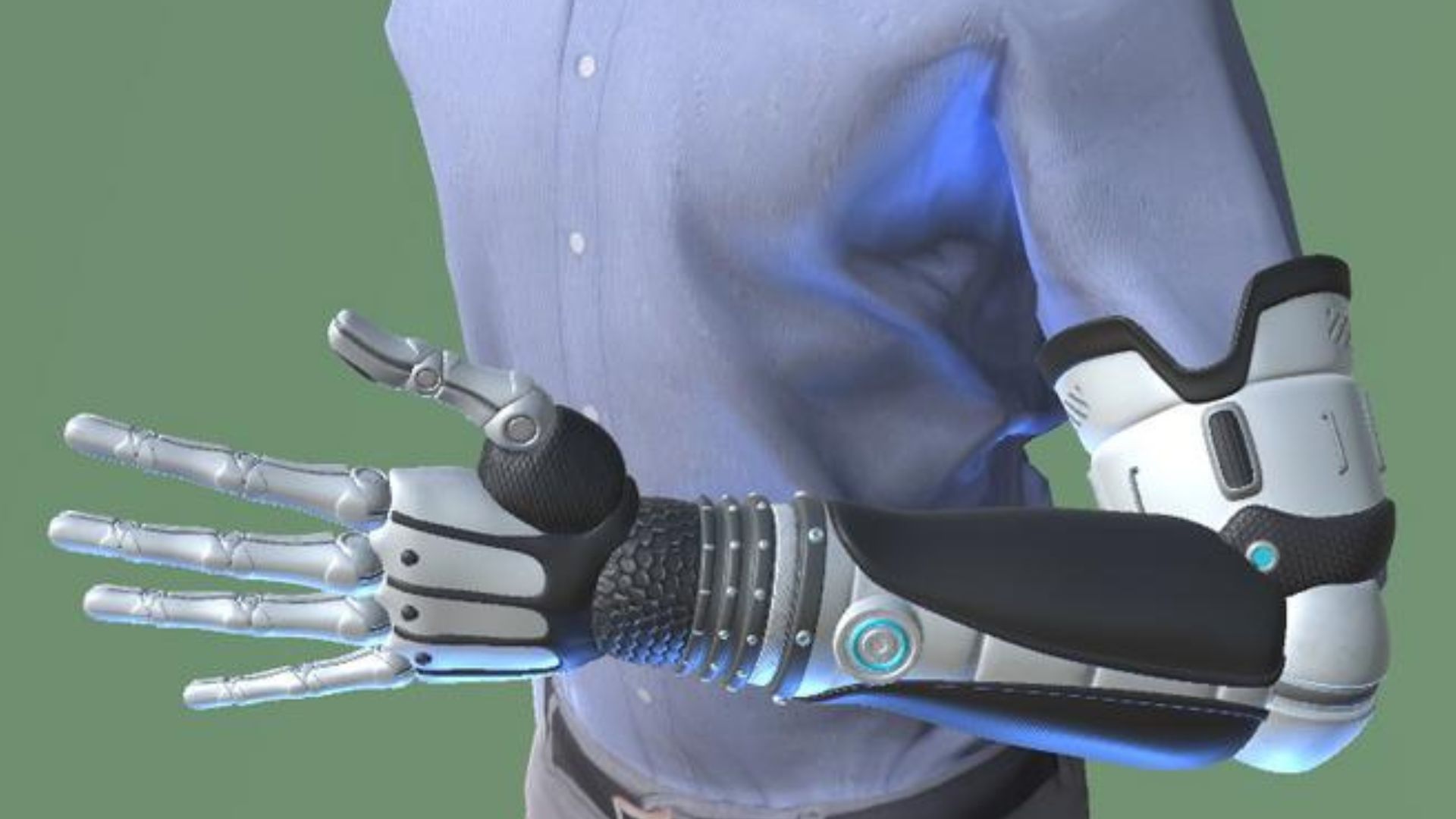
Participants entered a VR environment where their left forearm was replaced with a robotic prosthetic arm on a digital avatar. They performed a simple reaching task while the prosthetic arm autonomously flexed toward a target.
The key variable was speed. Researchers tested six different movement durations, ranging from an ultra-fast 125 milliseconds to a slow four seconds, to see how timing influenced perception.
After each trial, participants rated their experience across multiple dimensions. They assessed body ownership; whether the prosthetic truly felt like their own arm and sense of agency, or how much control they believed they had over its movement.
They also evaluated usability using the System Usability Scale (SUS), along with broader social impressions of the robotic limb, including its perceived competence, warmth, and the level of discomfort it evoked. The results were striking.
WATCH ALSO: https://modernmechanics24.com/post/china-launches-80000-ton-fujian-aircraft-carrier/
The “Goldilocks Zone” of Movement
Arms that moved too fast felt alien. Arms that moved too slowly felt awkward and inefficient.
But when the prosthetic reached its full extent in about 1 second, at a speed close to that of natural human reaching, participants reported the strongest sense of body ownership, agency, and usability.
In other words, there appears to be a just-right speed that allows autonomous movement to feel natural rather than mechanical.
The fastest condition (125 milliseconds) triggered the highest levels of discomfort. Meanwhile, moderate-to-slightly-faster speeds boosted perceptions of competence. Warmth, interestingly, did not significantly depend on speed.
The findings suggest that performance alone is not enough. Designers cannot simply aim for faster and more precise prosthetics. If movement deviates too far from human norms, it may undermine psychological acceptance.
READ ALSO: https://modernmechanics24.com/post/sodium-sulfur-battery-us-power-grid/
The implications extend beyond limb replacement.
As wearable robotics, exoskeletons, and even supernumerary robotic limbs become more common, ensuring that autonomous devices feel integrated with the body will be critical.
The researchers emphasize that embodiment is not purely mechanical. It is deeply psychological. Movement must align with human expectations to foster trust.
They also plan to investigate long-term adaptation. Humans often come to experience tools they use frequently as extensions of their bodies. With continuous daily use, even faster robotic limbs might eventually feel natural.
Using VR allowed the team to simulate technologies that are not yet widely available, without physical risk. This approach enables scientists to test psychological and design requirements before hardware reaches the market.
As AI-powered prosthetics advance, speed is not just about efficiency. It is about identity. If a robotic arm is to feel like part of the body, it must move not only accurately but humanly.