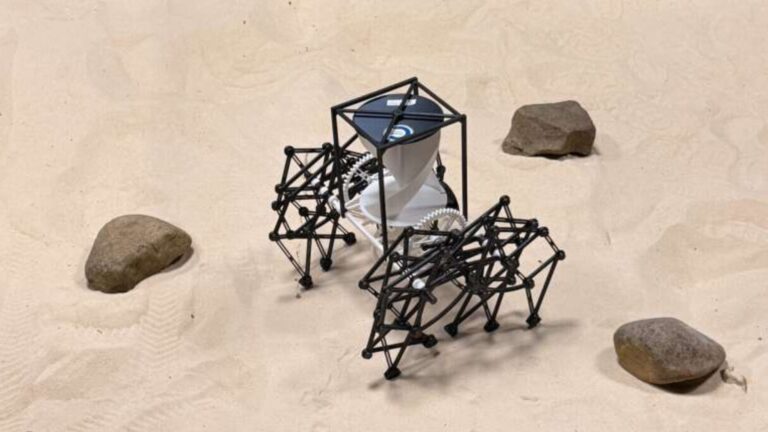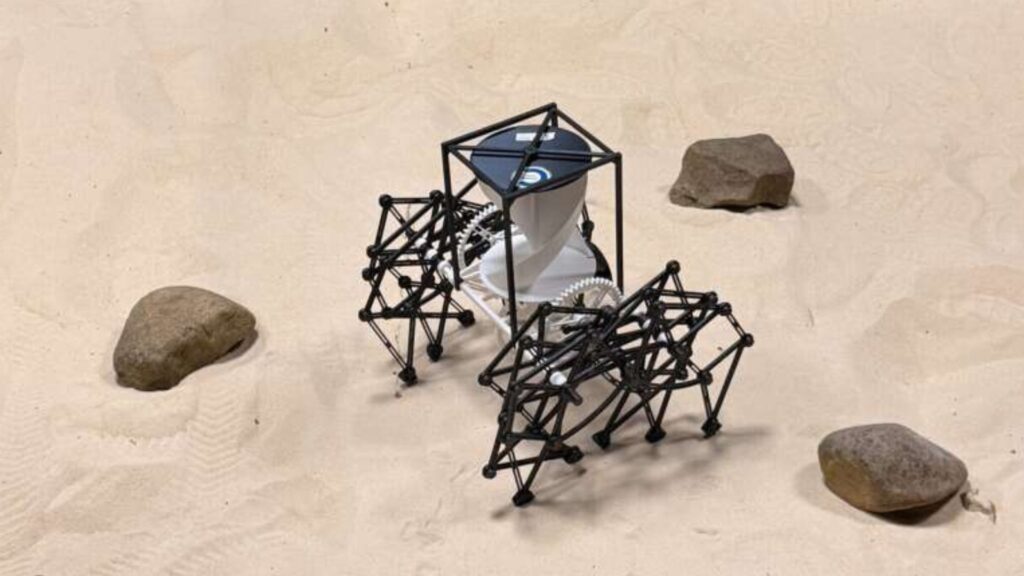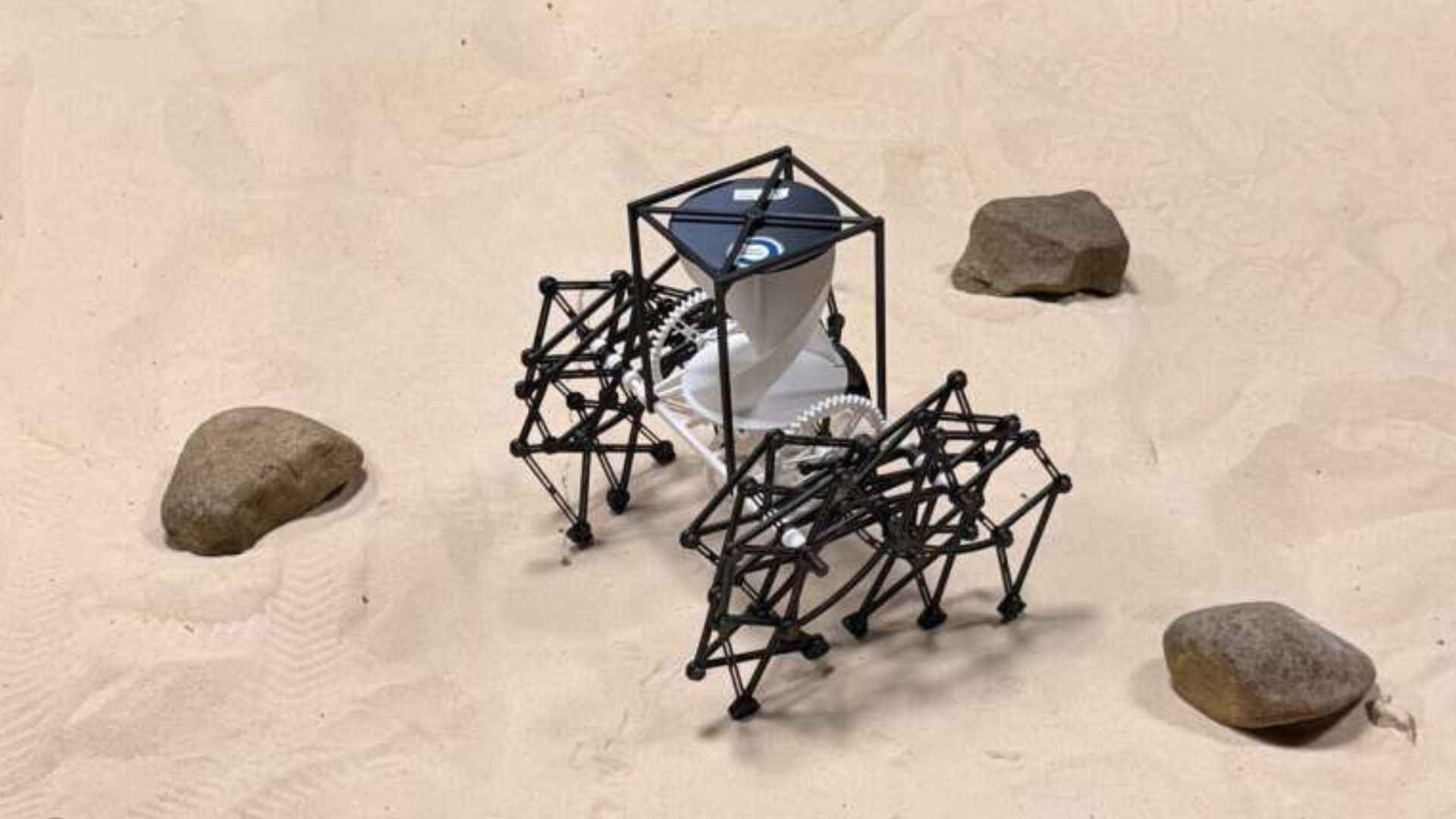
Researchers at Cranfield University have developed WANDER-bot, a low-cost, 3D-printed robot powered entirely by wind energy.
Designed for use in harsh, windy environments such as deserts and polar regions, and potentially on other planets, the robot can operate for extended periods without batteries or recharging, marking a step forward in sustainable autonomous robotics.
This robot moves using only wind energy. The machine does not need a battery to walk across sandy or rocky terrain. This allows it to operate for long periods without stopping to recharge.
READ ALSO: YouTuber Built a 3D-Printed Fiberglass Dive Helmet and It Actually Works
WANDER-bot was designed by Dr. Saurabh Upadhyay and Sam Kurian at Cranfield University. The team presented their work at the European Space Agency’s ASTRA Conference 2025.
Movement uses about 20% of a typical robot’s battery power. By removing this need, WANDER-bot can explore hostile environments such as deserts and polar regions for much longer. Any future sensors added for data collection can have their own small power source.
READ ALSO: ISS Will Burn and Fall to Earth: A New Space Race Has Already Begun
The robot uses a Savonius wind turbine to capture wind energy. This connects to a Jansen linkage mechanism, inspired by Dutch artist Theo Jansen’s Strandbeesten creations. The design turns wind into a walking motion.
All parts are 3D printed and deliberately simple. This means users could print and repair the robot anywhere. There is no need for costly resupply missions to replace broken parts.
The current version is a low‑technology readiness prototype. It moves forward in a straight line and cannot yet change direction. The team’s next step is to add maneuverability to tackle more challenging terrain.
WATCH ALSO: http://HMND-01 Alpha Shows How Simulations Fast-Track Humanoid Robots
Dr. Upadhyay said the robot is a first step toward self‑sufficient machines that can reach places where humans cannot easily work. WANDER-bot shows how low‑cost, repairable robots could one day explore other planets or remote areas on Earth.