Firefly Aerospace has signed a new payload agreement with Canada’s Volta Space Technologies to fly a wireless power receiver on its Blue Ghost Mission 2 lunar lander, targeting the Moon’s far side. The experiment will demonstrate Volta’s LightGrid system, a pioneering step toward building a permanent power utility network for future lunar operations.
In the harsh, airless environment of the Moon, where two-week-long nights plunge temperatures to cryogenic levels, reliable power isn’t just convenient—it’s the difference between a thriving outpost and a frozen, silent machine. Now, a pioneering partnership aims to solve this fundamental challenge not with batteries or nuclear reactors, but with light beamed from orbit, creating the first-ever wireless power grid for another world.
READ ALSO: https://modernmechanics24.com/post/worlds-largest-spider-web-110000-spiders/
This ambitious vision is being advanced by a new agreement between Firefly Aerospace, the Texas-based space technology company, and Volta Space Technologies, a startup based in Montreal, Canada. Volta’s experimental payload, a wireless power receiver called a LightPort, will hitch a ride to the lunar surface on Firefly’s Blue Ghost Mission 2 lander. The mission’s destination is the scientifically critical far side of the Moon, a region perpetually out of view from Earth.
“Firefly is proud to welcome Volta to our second Blue Ghost mission and serve as a core partner in the ongoing development of lunar power utilities,” said Jason Kim, CEO of Firefly Aerospace. He highlighted that the mission will enable “critical technology demonstrations that lay the groundwork for lasting operations on the Moon.”
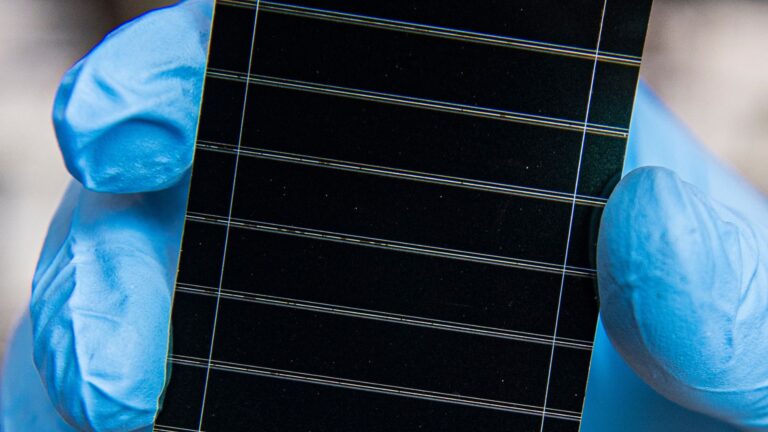
The concept behind Volta’s system, named LightGrid, is both simple and revolutionary. The company plans to deploy a constellation of satellites in lunar orbit that act as power collectors. These satellites would harvest abundant solar energy in space—unhindered by the Moon’s day-night cycle—and then transmit it wirelessly via focused laser beams down to surface-based LightPort receivers. These receivers, integrated onto landers, rovers, and habitats, would convert the laser light back into usable electrical power.
WATCH ALSO: https://modernmechanics24.com/post/ubtech-world-first-robot-shipment/
The demonstration on Blue Ghost Mission 2 is the crucial first hardware test of this chain, validating the LightPort receiver’s ability to function in the actual lunar environment. “Partnering with Firefly on Blue Ghost Mission 2 is an important step forward for Volta and the future of lunar infrastructure,” said Justin Zipkin, CEO of Volta. “This collaboration allows us to prove our LightPort receiver in a real lunar environment and move one step closer to delivering a fully integrated power grid for the Moon,” according to the Firefly Aerospace announcement.
Success would mark a paradigm shift. Instead of each surface element being solely responsible for its own finite power supply—relying on short-day solar panels or hauling massive batteries—they could tap into a persistent, orbital power utility. This could enable operations through the long lunar night, dramatically increase mission longevity, and support much larger-scale surface activities.
Volta’s payload joins an increasingly international manifest for Blue Ghost Mission 2, which will now carry six payloads from five different countries. Other notable passengers include NASA’s LuSEE-Night radio telescope, the European Space Agency’s Lunar Pathfinder communications satellite, the United Arab Emirates’ Rashid Rover 2, and a seismic sensor from Australia’s Fleet Space Technologies.
READ ALSO: https://modernmechanics24.com/post/russia-su57-upgrade-first-foreign-delivery/
The mission will also debut Firefly’s Ocula lunar imaging service. An orbiting vehicle called Elytra will first act as a communications relay for the lander—essential for operating on the far side—and then remain in orbit for more than five years to provide high-resolution mapping of lunar resources and potential landing sites.
With qualification testing underway and flight hardware being assembled, Blue Ghost Mission 2 is shaping up to be a cornerstone mission for establishing a sustainable lunar economy. By testing the building blocks of a wireless power network, Firefly and Volta aren’t just delivering another instrument to the Moon; they are attempting to wire it for light, paving the way for a future where lunar bases have a plug they can simply turn on.