Eighty-one years after World War II, German auto giant Volkswagen is moving in a direction few expected. The company, long known for its cars, is now in talks to manufacture parts for Israel’s Rafael Advanced Defense Systems.
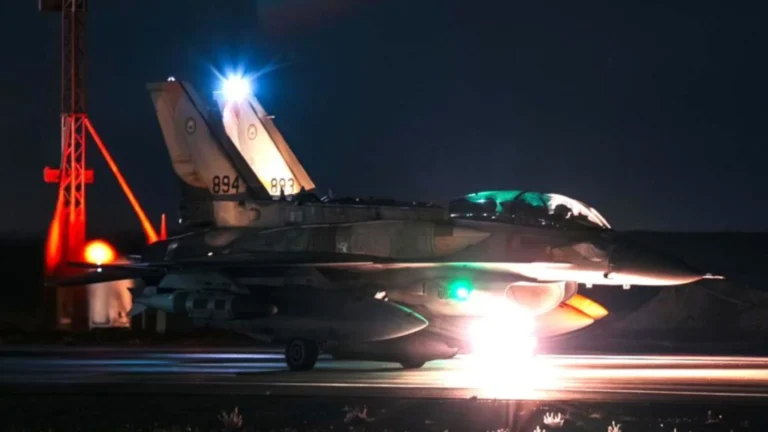
These components would support the Iron Dome, one of the world’s most recognized air defense systems. At one level, the shift is practical. At another, it carries deep historical symbolism.
Volkswagen’s origins trace back to Nazi Germany. The company was established under Adolf Hitler’s vision. During World War II, its factories contributed to the war effort, including the production of parts for V-1 flying bombs. That history now contrasts sharply with its possible role in building defensive missile systems for Israel.
READ ALSO: Stockholm University Uses X-ray Lasers to Find Water’s Hidden Critical Point
The move comes at a time when Volkswagen is under pressure.
The company reported a 44 percent drop in net profit last year, bringing earnings down to around €7 billion. While still profitable, the decline signals deeper problems. Europe’s car market is slowing. Manufacturing costs in Germany remain high. Global competition is intensifying.
Volkswagen is still one of the world’s largest automakers, second only to Toyota. It owns major brands like Audi, Skoda, Porsche, Bentley, and Lamborghini. Yet scale is no longer enough to guarantee growth.
Demand has weakened in key markets, such as China. Trade tensions and tariffs are affecting exports to the United States. Meanwhile, heavy investments in electric vehicles and software-driven cars have not delivered the expected returns. These challenges are forcing difficult decisions.
Volkswagen Factories at Risk, Jobs on the Line
Volkswagen has already begun restructuring. The company announced the closure of its Dresden plant. Another facility in Osnabrück was also facing an uncertain future.
The Osnabrück plant, once known for producing convertibles like the T-Roc Cabriolet and the Porsche 718 Boxster, may now be repurposed. Instead of building cars associated with leisure and lifestyle, it could soon produce components for missile interception systems.
WATCH ALSO: U.S. lab advances demo microreactor as Project Pele gets nuclear fuel
For Volkswagen, the logic is clear. Defense manufacturing offers stability amid shrinking car production in Europe. It also helps protect jobs and keep factories running.
From Passenger Cars to Defense Platforms
The shift is not limited to missile components. Volkswagen has quietly explored military applications for its vehicles. It recently showcased two prototype defense vehicles under a new label, D.E.S Defense. These include a pickup truck based on the Amarok and a van derived from the Crafter.
Engineers and workers at the Osnabrück plant played a key role in adapting these vehicles for military use. While these models are not yet in production, they signal a broader strategy.
The company appears to be testing the waters in the defense sector.
Volkswagen is not alone in this transition. Across Europe, rising security concerns, especially linked to Russia, are pushing governments to increase defense spending. This has created new opportunities for manufacturers with large-scale production capabilities.
French automaker Renault recently announced plans to produce military drones. German defense giant Rheinmetall has also shown interest in expanding its manufacturing base, including the potential acquisition of facilities like Osnabrück.
READ ALSO: Leipzig University Creates Microrobot That Learns to Navigate Flowing Fluids
Automakers bring valuable strengths to defense production. They understand mass manufacturing, supply chains, and quality control. These capabilities can be adapted to produce drones, armored vehicles, or missile components.
Despite the economic logic, the symbolism remains striking. Volkswagen’s past is closely tied to one of the darkest periods of history. Its future may now include supporting a system designed to protect civilians from missile attacks.
The contrast is sharp. A company once linked to wartime aggression may soon contribute to modern defense.
Even the transformation of the Osnabrück plant reflects this shift. A facility that once built cars symbolizing freedom and open roads could now produce parts meant to intercept incoming threats.
WATCH ALSO: Explore Raytheon’s giant facility where it develops powerful naval radar SPY-6
A Defining Moment for Volkswagen
Volkswagen’s potential partnership with Rafael is more than a business deal. It reflects a turning point. The global auto industry is changing. Demand patterns are shifting. Costs are rising. Traditional business models are under strain.
In response, companies are exploring new paths, some of them unexpected. For Volkswagen, the move into defense may help stabilize its future. But it also raises larger questions about identity, history, and the evolving role of industrial giants in a changing world.