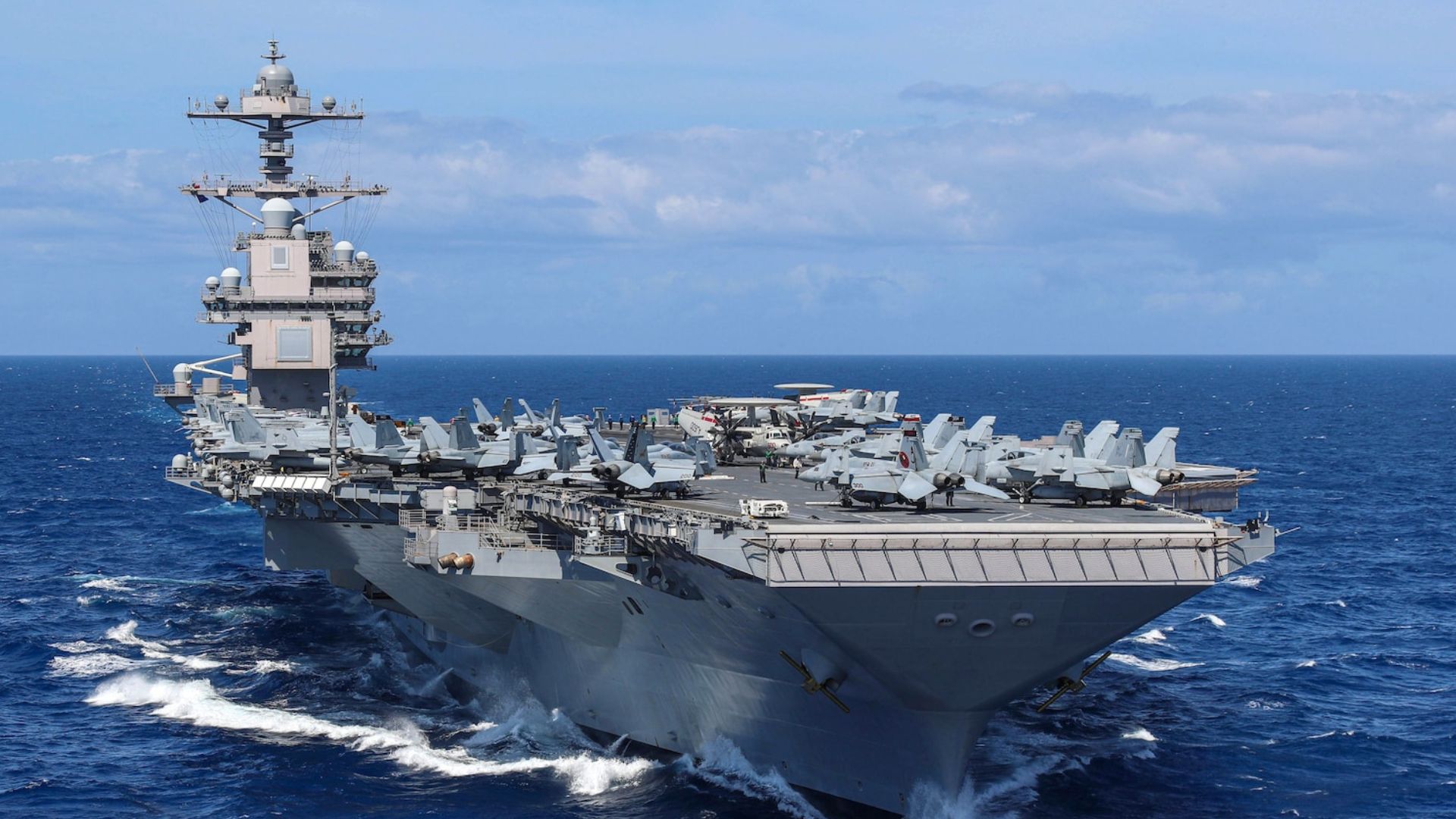
The US’s nuclear-powered aircraft carrier USS Gerald R. Ford has been tracked moving eastward through the Strait of Gibraltar.
It signals as a calculated show of force designed to strengthen deterrence without triggering immediate escalation.
According to reports, the carrier briefly transmitted Automatic Identification System (AIS) data while operating off Morocco’s Atlantic coast before verified imagery captured its transit into the Mediterranean Sea on February 20, 2026.
The movement indicates a coordinated shift in US naval posture amid fragile diplomatic negotiations with Iran.
READ ALSO: https://modernmechanics24.com/post/nasa-boeing-starliner-type-a-mishap/
Strategic Signal at Sea
The deployment follows recent remarks by Donald Trump. He stated that all options remain on the table if Iran fails to curb its nuclear activities. He emphasized that diplomacy remains possible but insisted the US would not allow Iran to advance unchecked.
Ford’s movement is more than symbolic. The carrier represents the most technologically advanced warship ever built by the US Navy. Its presence alters the military balance in any theater it enters.
USS Mahan, an Arleigh Burke-class guided missile destroyer equipped with the Aegis Combat System, accompanied through the Strait of Gibraltar.
The joint transit confirms that the Ford is not operating alone but as part of a full Carrier Strike Group, complete with layered air, missile, and anti-submarine defenses.
Inside USS Gerald R. Ford
Commissioned as CVN-78, USS Gerald R. Ford is the lead ship of the Ford-class supercarriers and represents a generational leap beyond the Nimitz-class fleet.
Displacing over 100,000 tons, the carrier is powered by two next-generation A1B nuclear reactors. These reactors generate significantly more electrical output than their predecessors, enabling the ship to support advanced systems and future directed-energy weapons.
WATCH ALSO: https://modernmechanics24.com/post/humanoid-robots-no-human-control/
Unlike older carriers that rely on steam catapults, the Ford operates with the Electromagnetic Aircraft Launch System (EMALS). This technology uses electromagnetic force to launch aircraft more smoothly and swiftly. The system reduces stress on airframes, increases sortie rates, and allows a wider range of aircraft weights to take off safely.
The Advanced Arresting Gear (AAG) complements EMALS by improving aircraft recovery operations. Together, these systems enable the Ford to conduct higher-tempo flight operations than any previous US carrier.
The Navy designed the ship to generate up to 33 percent more sorties per day during sustained combat operations.
Its air wing includes F-35C Lightning II stealth fighters, F/A-18E/F Super Hornets, EA-18G Growlers for electronic warfare, and E-2D Advanced Hawkeyes for airborne early warning. The combination provides air superiority, precision strike capability, electronic suppression, and real-time battlefield coordination.
The carrier’s Dual Band Radar system boosts detection and tracking of airborne and surface threats. Additionally, redesigned weapons elevators use electromagnetic motors to move munitions more rapidly from storage to the flight deck, improving response time in high-intensity engagements.
Dual-Carrier Deterrence
The strategic picture becomes more significant when viewed alongside the existing deployment of USS Abraham Lincoln in the broader Middle East. Operating under US Central Command, the Nimitz-class carrier has maintained air operations in waters including the Arabian Sea and the Gulf of Oman.
READ ALSO: https://modernmechanics24.com/post/plant-based-nanocellulose-rare-earth/
If USS Gerald R. Ford joins USS Abraham Lincoln within operational proximity, the US would field two carrier strike groups within reach of key maritime chokepoints such as the Strait of Hormuz.
A dual-carrier presence dramatically increases available combat air sorties and expands missile defense coverage for regional partners.
The deployment of two carriers to the region has marked a peak deterrence posture, signaling readiness for escalation while maintaining strategic flexibility.
Defensive Layers Against Regional Threats
Iran fields a substantial missile arsenal, including ballistic and cruise missiles, as well as fast-attack craft capable of swarm tactics in narrow waterways. In this situation, layered defense is critical.
USS Mahan’s Aegis Combat System integrates radar tracking with interceptor missiles such as the SM-2 and SM-6. The destroyer can also deploy Tomahawk land-attack cruise missiles for exact strikes.
By combining carrier-based airpower with guided-missile destroyers and potentially submarines, the strike group forms a multi-domain defense shield. Airborne early warning aircraft extend radar coverage, while electronic warfare jets can disrupt hostile targeting networks.
This integrated network allows commanders to respond proportionally, from surveillance and air patrols to precision strikes against specific infrastructure.
Geographically, Ford’s current position in the Mediterranean offers multiple operational pathways. It can remain in the Eastern Mediterranean to project airpower across parts of the Levant or transit through the Suez Canal into the Red Sea and onward to the Arabian Sea.
Such flexibility complicates adversary planning. The mere uncertainty of its next move enhances deterrence.
According to Defense analysts, this concentration of power does not automatically signal imminent conflict. Rather, it provides decision-makers with options. The presence of two carrier strike groups allows Washington to calibrate its response based on diplomatic developments.
WATCH ALSO: https://modernmechanics24.com/post/elon-musk-space-internet-ghana/
Iran has responded with defensive signaling of its own, reinforcing military installations and warning that any US strike would provoke retaliation.
The Strait of Hormuz remains a vital global energy corridor, with a significant percentage of the world’s oil shipments passing through daily.
As naval assets accumulate near this chokepoint, both deterrent effect and operational risk increase. Accidental encounters, miscalculations, or aggressive maneuvers could rapidly escalate tensions.
The convergence of tracking data, verified imagery, and official remarks shows a deliberate shift in posture. The USS Gerald R. Ford is not simply another ship at sea; it is a floating airbase capable of projecting sustained combat power throughout continents.
Whether this deployment stays a significant signal of deterrence or becomes a precursor to direct confrontation will depend on the trajectory of diplomatic negotiations in the coming weeks.
America’s most advanced aircraft carrier is on the move, and its presence itself is changing the strategic equation in the Middle East.