Northrop Grumman has been competitively awarded a key role in the US Marine Corps’ program to rapidly develop an operational, mission-ready version of Kratos’ XQ-58A Valkyrie stealth drone. The contract, valued at approximately $231.5 million, tasks Northrop Grumman with delivering a sophisticated “mission kit” featuring its Prism autonomy software and advanced sensors, transforming the experimental Valkyrie into the service’s first Collaborative Combat Aircraft (CCA).
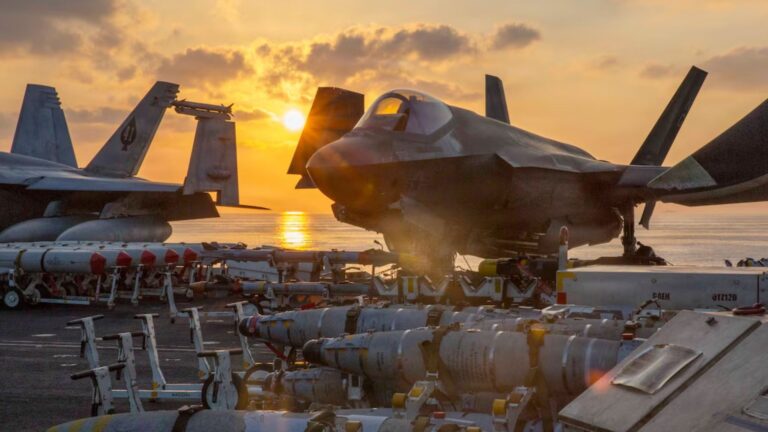
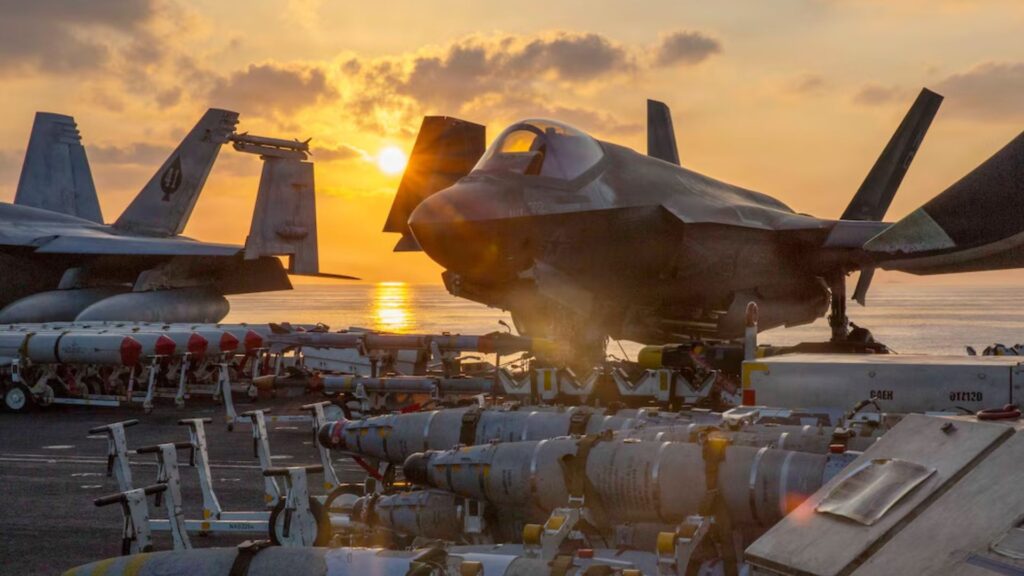
The US Marine Corps’ vision for a loyal robotic wingman is accelerating from concept to concrete reality. In a significant development for the MUX TACAIR CCA program, defense giant Northrop Grumman has officially joined forces with drone-maker Kratos to create a fully weaponized, autonomous version of the stealthy XQ-58A Valkyrie. This partnership aims to deliver a low-cost, high-capability drone that can be mass-produced and deployed alongside crewed fighters like the F-35B. “This enhanced capability set ensures optimal performance for both crewed and uncrewed platforms,” said Krys Moen, Vice President for Advanced Mission Capabilities at Northrop Grumman.
The core of Northrop Grumman’s contribution is a modular “mission kit” designed to turn the Valkyrie airframe into a multi-role combat asset. Reported by Breaking Defense, the kit centers on the company’s Prism open-architecture autonomy software, which will manage the aircraft’s operations. It also integrates a suite of sensors and “software-defined technologies” capable of delivering both kinetic and non-kinetic effects, such as electronic warfare. This integration is critical for the Marines’ plan to use these drones for air-to-ground strikes, reconnaissance, and electronic attack missions in support of its Stand-in Force doctrine.
READ ALSO: https://modernmechanics24.com/post/chinese-team-time-travel-physics/
The program is moving with notable speed, leveraging a 24-month Other Transactional Authority (OTA) agreement to bypass slower traditional procurement. The Marine Corps, which has acquired at least three Valkyries since 2023, hopes to receive its first operational prototype before the end of this year. A major focus is on flexibility: Kratos is developing a Conventional Takeoff and Landing (CTOL) variant with built-in landing gear, as requested in budget documents, while also retaining the original rocket-launched, parachute-recovered version prized for expeditionary operations.
“The integration of the Kratos Valkyrie aircraft system configured with the world’s best multifunction mission systems from Northrop Grumman results in a high-capability CCA at a price point that enables the uncrewed systems to be deployed in mass with crewed aircraft,” stated Steve Fendley, President of Kratos’ Unmanned Systems Division. This team structure positions Northrop Grumman as the Lead Systems Integrator, with Kratos as the airframe subcontractor, combining deep mission systems expertise with rapid, cost-effective drone manufacturing.
WATCH ALSO: https://modernmechanics24.com/post/humanoid-robot-towel-task/
While the technical path is clarifying, major operational questions remain. Marine Corps leaders openly acknowledge the challenge of integrating autonomous drones into complex air operations. “We still have a lot to learn simply to get this thing airborne, flying, and executing next to an F-35, and not hitting each other,” Col. Derek Brannon, director of the Marine Corps’ Cunningham Group, said last year. The $231.5 million contract is a down payment on solving those problems, representing a decisive leap from experimentation toward fielding a tangible, game-changing capability for the future battlespace.