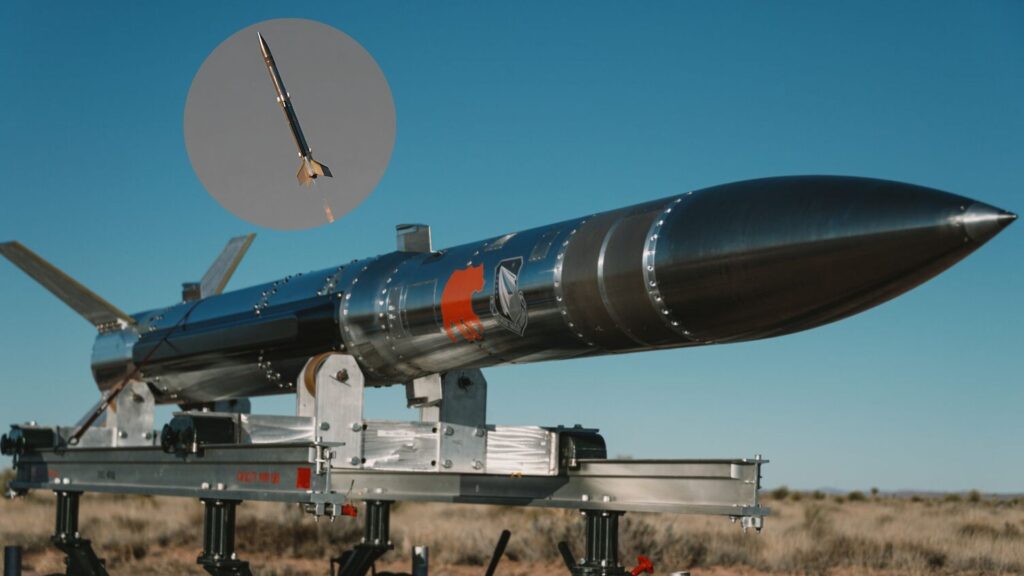
The US Navy has quietly carried out new live-fire tests of its prototype electromagnetic railgun, years after the program was publicly shelved.
The testing took place at the White Sands Missile Range (WSMR) in New Mexico during a three-day campaign in February 2025.
The development suggests that the advanced weapon system may still play a role in future US naval capabilities, particularly as plans emerge for a new class of large warships.
Railgun Tested at White Sands
The test was mentioned briefly in a year-in-review document released by the Naval Surface Warfare Center, Port Hueneme Division (NSWC PHD). The division operates mainly from California but maintains a detachment at White Sands.
According to the report, “The WSD tested a railgun to collect critical information about high-velocity firing during a three-day campaign at White Sands Missile Range in New Mexico.”
READ ALSO: People Thought Police ‘Arrested’ a Robot: What Really Happened in Macau
Officials added that the February 2025 testing effort was conducted jointly by the White Sands Detachment and the Naval Surface Warfare Center Dahlgren Division in Virginia. The project supported work by the Naval Sea Systems Command (NAVSEA) and the Joint Hypersonics Transition Office (JHTO).
White Sands Missile Range, managed by the US Army, is widely used by multiple branches of the military for research, development, and weapons testing.
The Navy’s railgun program attracted significant attention during the 2010s because of its potential to fire projectiles at extremely high speeds using electromagnetic force rather than traditional gunpowder.
The prototype system was originally installed at a land-based test facility at NSWC Dahlgren in Virginia. In 2019, the Navy moved the weapon to White Sands for further testing.
However, repeated delays in plans to test the weapon at sea eventually slowed progress. In 2021, the Navy announced that it would end active work on the program and place the remaining hardware in storage.
At the time, the Navy said, “Railgun hardware will be realigned to maximize its sustainability to facilitate potential future use.”
WATCH ALSO: China commissions world’s largest open-sea offshore solar photovoltaic project
Until the recent disclosure, there had been no public indication that additional live-fire tests had taken place since that decision.
Possible Role in Hypersonic Research
The exact purpose of the February 2025 tests remains unclear. The involvement of the Joint Hypersonics Transition Office suggests that the railgun may have been used in research on hypersonic technologies.
The office, created in 2020, focuses on advancing hypersonic systems and helping transition experimental technologies into operational military capabilities.
A railgun can accelerate projectiles to extremely high speeds, making it a potentially useful test platform for certain high-velocity experiments.
The recent testing also comes as the US considers a new generation of large surface combatants known as the Trump-class battleships, also referred to as BBG(X).
READ ALSO: AI Adviser Helps Robotic Lab Discover Advanced Electronic Materials 60x Faster
These planned warships are expected to displace around 35,000 tons and carry a combination of advanced weapons. Proposed systems include hypersonic missiles, traditional naval guns, and directed-energy laser weapons.
Some proposals suggest that electromagnetic railguns could also be integrated into these ships.
The lead vessel in the class, USS Defiant, is not expected to begin construction until the early 2030s.
Technical Challenges Remain
Despite its promise, railgun technology has faced major engineering hurdles. The system requires substantial electrical power and advanced cooling systems to operate effectively.
Rapid firing also causes heavy wear on the weapon’s barrel, which can affect accuracy, range, and safety. These challenges have made it difficult to develop a reliable operational version.
Still, a successful naval railgun could provide major advantages. The weapon can fire projectiles at extremely high speeds and long ranges without using explosive propellants. Its ammunition is also smaller and potentially far cheaper than traditional missiles.
This could allow ships to carry larger ammunition supplies while reducing costs.
Japan recently reported significant progress with its own naval railgun program. In 2024, Japan demonstrated what is believed to be the first instance of a railgun mounted on a ship firing at sea against a real target vessel.
WATCH ALSO: EHang’s next-gen autonomous eVTOL completes first public flight
Japanese officials have also discussed possible cooperation with the United States on railgun technology. Japan’s Acquisition, Technology and Logistics Agency (ATLA) has signed agreements with European research institutes to advance the field.
China has also tested a naval railgun prototype, which was first spotted on a People’s Liberation Army Navy vessel in 2018. Turkey is another nation actively developing similar systems.
For now, it remains unclear whether the US Navy will revive the railgun program fully or simply use the existing prototype for experimental testing.
However, the 2025 firing at White Sands confirms that the weapon remains functional and continues to attract interest as the Navy explores advanced weapons for its next-generation warships.