The US Navy is making a decisive change in how it plans to build and deploy its future fleet of unmanned ships.
In a move that signals urgency and adaptation to modern warfare, the service is stepping away from long development cycles and focusing instead on speed, readiness, and real-world capability.
Marketplace Model to Accelerate Ships Deployment
At the center of this transformation is a new marketplace model. It is an approach that aims to cut through years of delays and bring operational unmanned surface vessels into service much faster than before. The idea is to stop waiting for perfect designs and start using what is already close to being ready.
Secretary of the Navy John Phelan framed the shift as a necessary response to a quickly developing threat environment. He said the nature of warfare is changing rapidly and emphasized that the Navy needs to adapt its acquisition systems to deliver capabilities to sailors more quickly.
READ ALSO: China’s Hukeda-2 Satellite Tests Octopus-Like Robotic Arm for In-Orbit Refuelling
He added that the new approach would tap into private-sector innovation and reward companies that can deliver working solutions, not just ideas.
Modular MUSVs and a Shift Beyond Prototyping
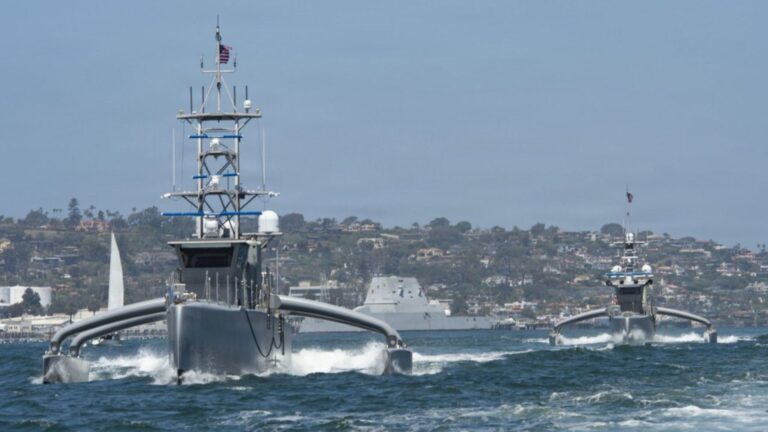
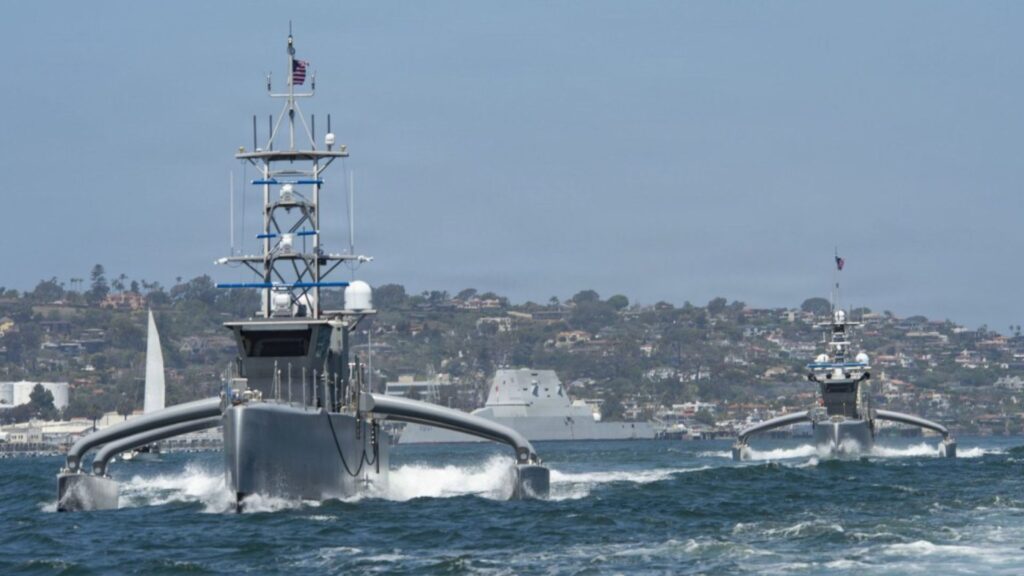
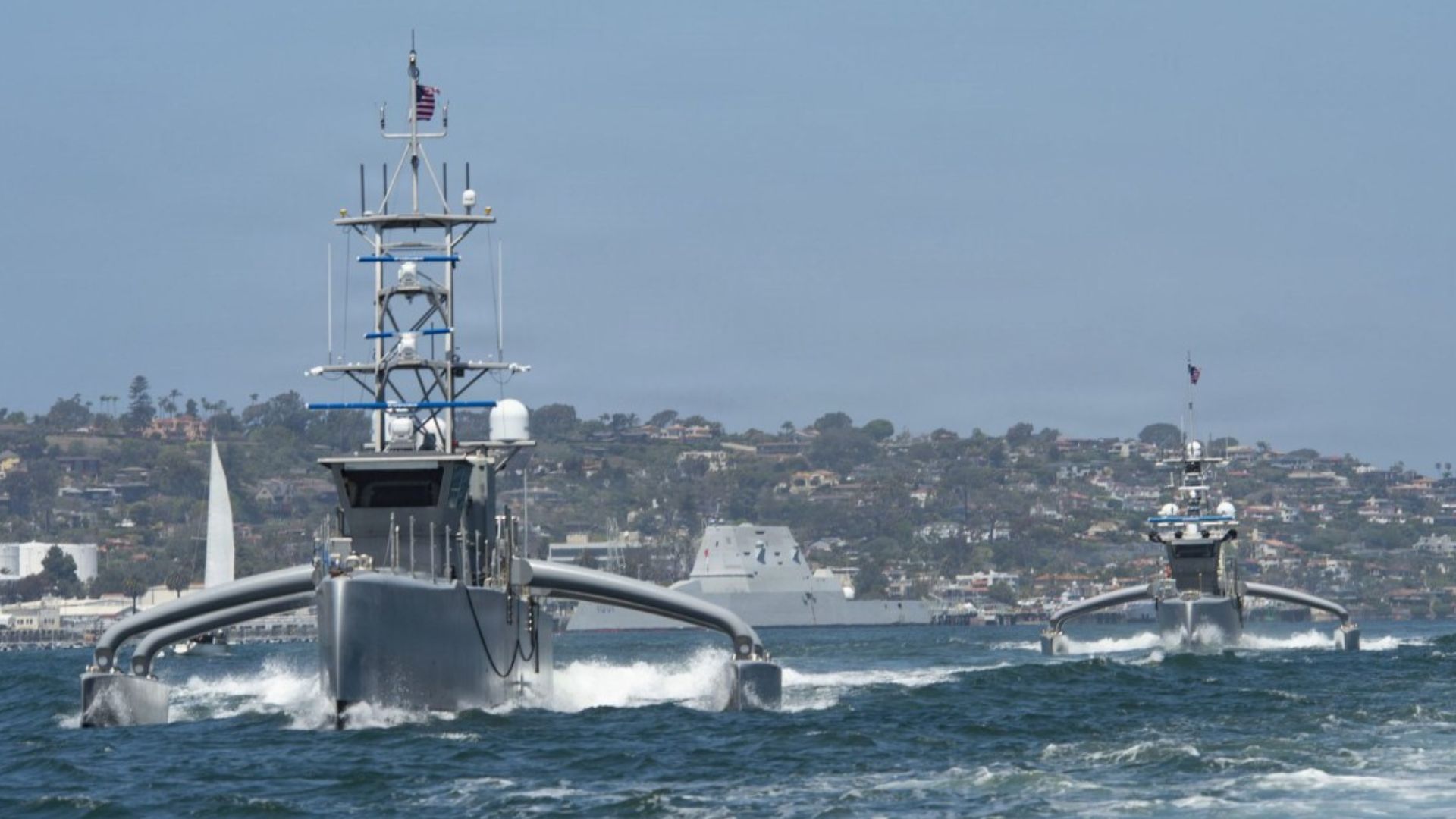
This new strategy begins with Medium Unmanned Surface Vessels (MUSVs). These ships are expected to play a key role in future naval operations due to their flexibility and capacity to operate without an onboard crew.
Unlike traditional warships designed for specific missions, these vessels are built around modularity. They can carry containerized payloads, enabling them to switch roles as needed.
Rebecca Gassler, the Navy’s Portfolio Acquisition Executive for Robotic and Autonomous Systems, explained that the marketplace model is designed to reward performance rather than promises. She said the Navy is not interested in another long prototyping phase. Instead, it wants to see systems performing at sea and then move them directly into operational service. Her remarks underline a clear change in mindset from experimentation to execution.
This change effectively replaces the earlier Modular Surface Attack Craft (MASC) program, which followed a more traditional development, testing, and production path. While MASC was designed to meet specific mission requirements, the new approach reflects a broader, more flexible vision. Gassler confirmed that the marketplace model is a complete replacement, driven by the need to meet a wider range of operational demands.
WATCH ALSO: Buildroid AI expanding simulation-first robotic platform to multiple US sites
The urgency behind the plan is visible in its timeline. Companies interested in participating have only a short window to submit proposals, and the vessels must be ready for testing on water within months. This requirement sends a strong signal that the Navy is no longer willing to invest time in early-stage concepts. It is looking for mature systems that can demonstrate capability almost immediately.
High Performance Demands and Future Combat Potential
The technical expectations for these vessels are demanding. They must be capable of traveling long distances at sustained speeds while carrying heavy payloads. They also need to operate effectively in challenging sea conditions, ensuring reliability even in rough weather.
Apart from physical performance, autonomy is a central requirement. These ships must be able to operate independently, comply with global maritime rules, and continue operating even when communication links are disrupted.
Stealth and survivability are also key considerations. The Navy wants these vessels to minimize radio-frequency emissions when required, enabling them to operate in contested environments without revealing their position.
At the same time, they must maintain situational awareness using passive sensing systems. This combination of autonomy and low observability reflects the increasing complexity of modern naval operations.
Another defining feature of the program is its emphasis on open architecture. The Navy wants systems that can easily integrate new technologies and change over time. This ensures that the vessels remain relevant as threats evolve and new capabilities emerge. It also allows for interoperability with other platforms, both manned and unmanned.
READ ALSO: World’s Most Volatile Substance on Wheels: CERN Turns a 30-Year Antimatter Dream into Reality
Production readiness is being treated with equal importance. Unlike traditional programs where manufacturing considerations come later, the Navy is evaluating them from the beginning. Companies must demonstrate not only that their designs work, but also that they can produce multiple vessels quickly and reliably. This includes showing strong supply chains, sufficient workforce capacity, and scalable production facilities.
Gassler highlighted that this approach represents a fundamental change in how the Navy evaluates proposals. She explained that manufacturing readiness, supply chain stability, and production capacity are now central to decision-making. This ensures that successful designs can transition rapidly from testing to deployment without bottlenecks.
Perhaps the most striking aspect of the new strategy is the decision to largely bypass the prototyping phase. For decades, military acquisition programs have relied heavily on prototypes to refine designs before production.
However, the Navy now believes that industry has already done much of this work independently. By leveraging existing investments, the service expects to save significant time, potentially up to a year, and accelerate the delivery of operational capabilities.
Despite this shift, testing remains crucial to the process. Vendors will still need to demonstrate their systems in real-world conditions. These demonstrations may involve near-production designs or surrogate platforms, but they must prove that the core technologies work effectively. Once selected, the final systems will undergo comprehensive testing to validate endurance, autonomy, and mission performance.
The use of containerized payloads opens the door to a wide range of missions. These vessels could be equipped for intelligence gathering, surveillance, electronic warfare, or even logistical support. The ability to swap payloads quickly means a single platform can perform multiple roles, increasing efficiency and reducing costs.
Gassler noted that the contents of these containers could vary widely, from sensors to repair equipment, depending on mission needs.
WATCH ALSO: Wing expanding drone delivery to additional Walmart stores in US city
There is also growing speculation that these vessels may carry offensive capabilities. The Navy has already developed containerized missile systems that can be deployed on various platforms. While not explicitly confirmed, integrating such systems with unmanned vessels could significantly expand their role in combat operations.
This initiative is part of a broader transformation within the Navy. Admiral Daryl Caudle has been advocating for more flexible and adaptable force structures. His vision includes the use of tailored force packages that combine different types of assets to meet specific mission requirements. Unmanned vessels are expected to play a key role in this concept, providing scalable and cost-effective capabilities.
The shift also reflects lessons learned from past challenges. The Navy has spent years developing unmanned systems, but many programs have struggled to transition from experimentation to operational deployment. Even existing vessels have taken years to reach limited operational use. The new marketplace model aims to break this cycle and deliver tangible results more quickly.
Competition is a central element of the strategy. Companies that successfully demonstrate their systems will receive fixed-price payments as a reward. This not only incentivizes performance but also encourages innovation. The Navy retains the flexibility to purchase or lease the best-performing designs, enabling it to adapt its approach to evolving needs.
READ ALSO: Beavers Turn Wetlands Into Carbon Traps, Scientists Call It Game-Changer to Fight Climate Change
Ultimately, the Navy’s new approach represents a significant departure from traditional acquisition practices. It prioritizes speed, flexibility, and real-world performance over lengthy development processes. By leveraging existing technologies and focusing on readiness, the service hopes to build a more agile and capable fleet.
As global security challenges continue to evolve, the ability to deploy advanced systems could prove decisive. With its new marketplace model, the Navy is betting that faster is not just better, but necessary.