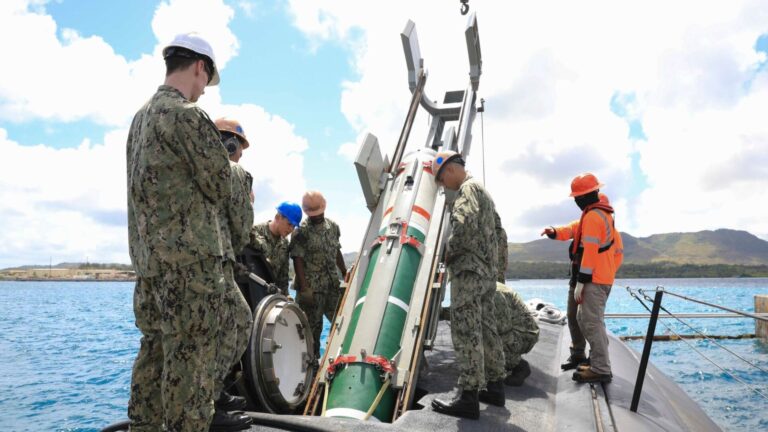
The US Navy is accelerating its push to strengthen deep-water defense capabilities by expanding production of advanced Hammerhead mine systems that autonomously detect and engage enemy submarines.
Under a recent contract modification awarded to General Dynamics Mission Systems, additional units are scheduled for delivery by late 2026 to meet growing operational demands. The Navy also moves to acquire the system’s full technical data package, potentially enabling other defense manufacturers to produce the technology in the future.
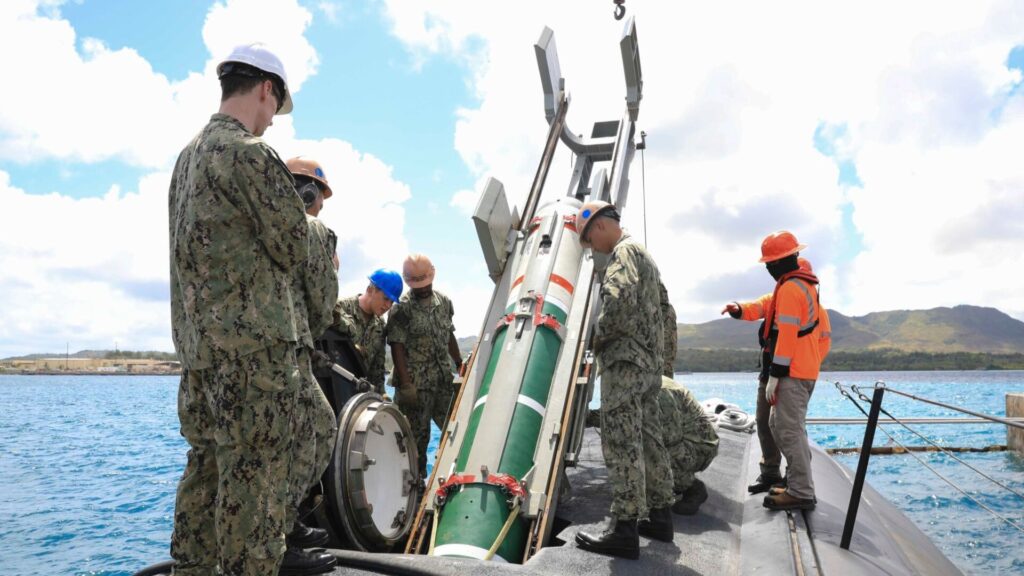
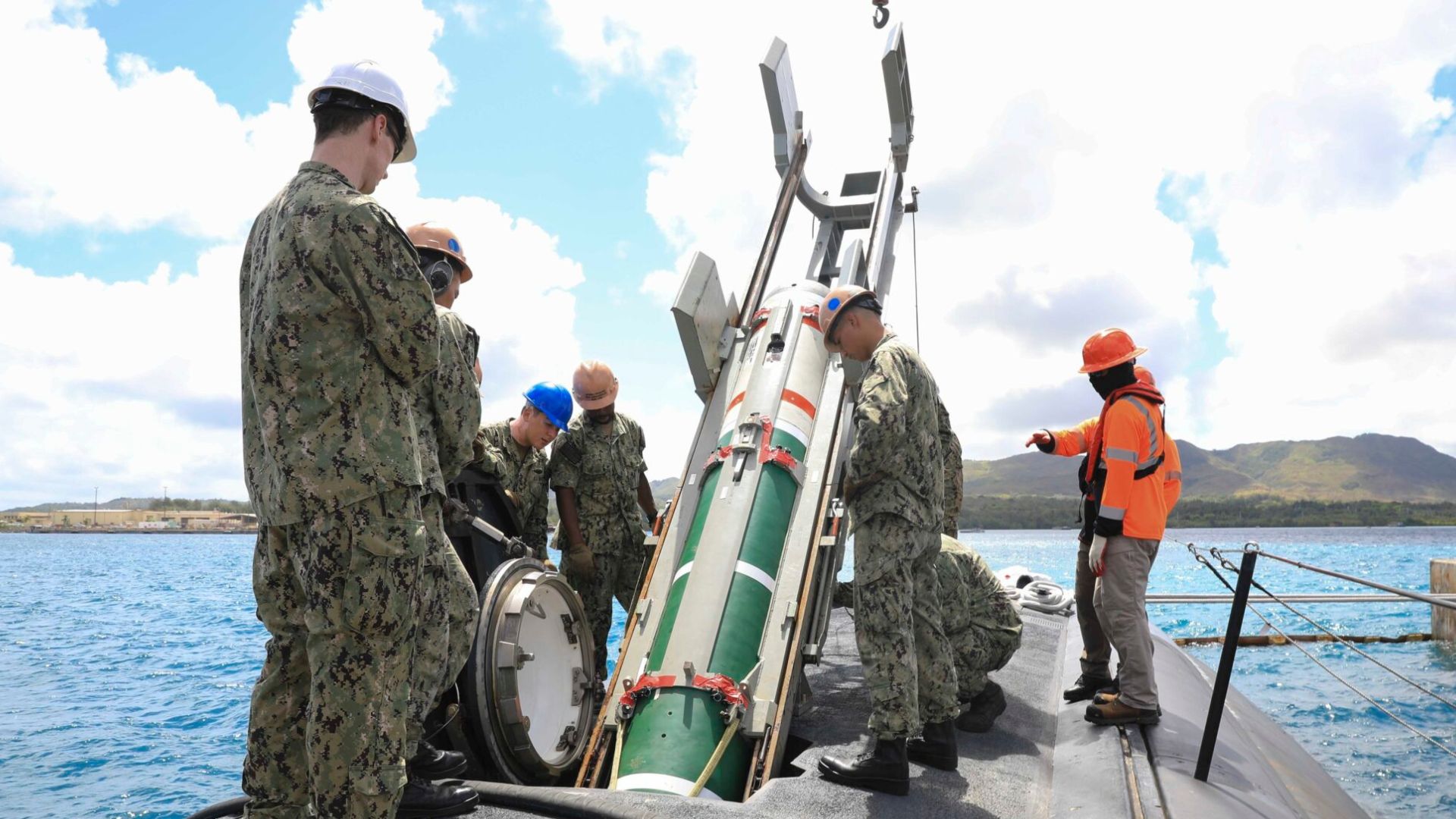
General Dynamics Mission Systems builds the Hammerhead, which is a self-contained mine system that sits on the sea floor. The device carries a torpedo and waits anchored at intermediate or deep-water depths. When its sensors detect an enemy submarine, it releases the encapsulated torpedo to automatically destroy the target.
READ ALSO: US Expands Hypersonic Program with Rocket Lab $190M Launch Agreement
The problem the Navy is solving involves aging equipment and new threats. The fleet currently relies on Cold War-era mine systems that may not work well against modern submarines. Air-dropped Quickstrike mines require aircraft to fly near dangerous areas, while submarine-launched mines use up limited torpedo space on attack boats. China’s navy is expanding quickly with new submarines and underwater drones.
How the Hammerhead Works
The system moors itself to the ocean floor and stays silent until it detects a submarine. It uses sensors to distinguish between friendly and enemy vessels. Once it confirms a target, it fires its torpedo at the submarine without human control.
READ ALSO: Georgia Tech’s SAIL Helps Robots Perform Tasks Faster than Their Human Trainers
The real-world use focuses on the Pacific region. The Navy could deploy these mines from unmanned underwater vehicles, such as the Orca drone, which was designed specifically for laying minefields. This would let American forces block critical sea lanes and chokepoints without risking submarines or aircraft. Such capabilities could prove crucial if the U.S. needs to prevent Chinese forces from reaching Taiwan or moving through narrow straits.
The current limitation is that large-scale mining still depends on older delivery methods. Submarines have limited space for mines, and aircraft must get close to drop them. The Navy is working on new unmanned systems to lay minefields from a safer distance, but these systems are still under development and testing.
WATCH ALSO: US conducts powerful and deadly strike against ISIS terrorists in Northwest Nigeria
American submarine commanders recently told Congress that Chinese attack submarines will become serious rivals in the coming years. Beijing is modernizing its fleet and expanding operations far beyond its coast. Having automated mine systems that can guard deep waters gives the Navy a way to counter a larger enemy fleet without needing more submarines and ships in every location.