Scientists at Fermi National Accelerator Laboratory have developed advanced quantum sensors that could boost the detection of high-energy particles and aid in the search for dark matter.
The research team includes experts from the California Institute of Technology, NASA Jet Propulsion Laboratory and the University of Geneva.
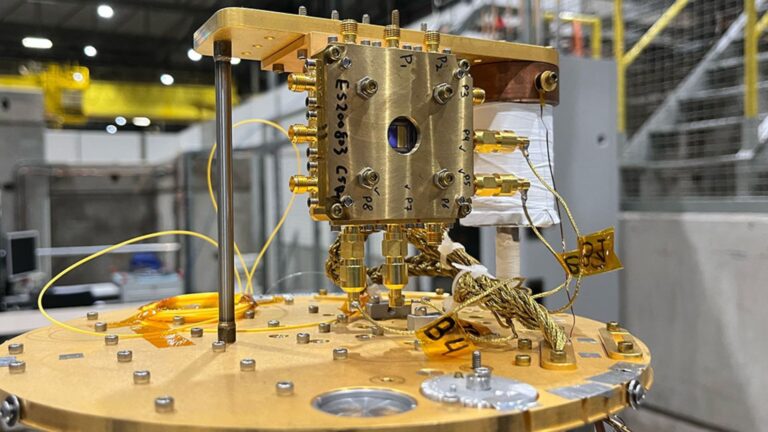
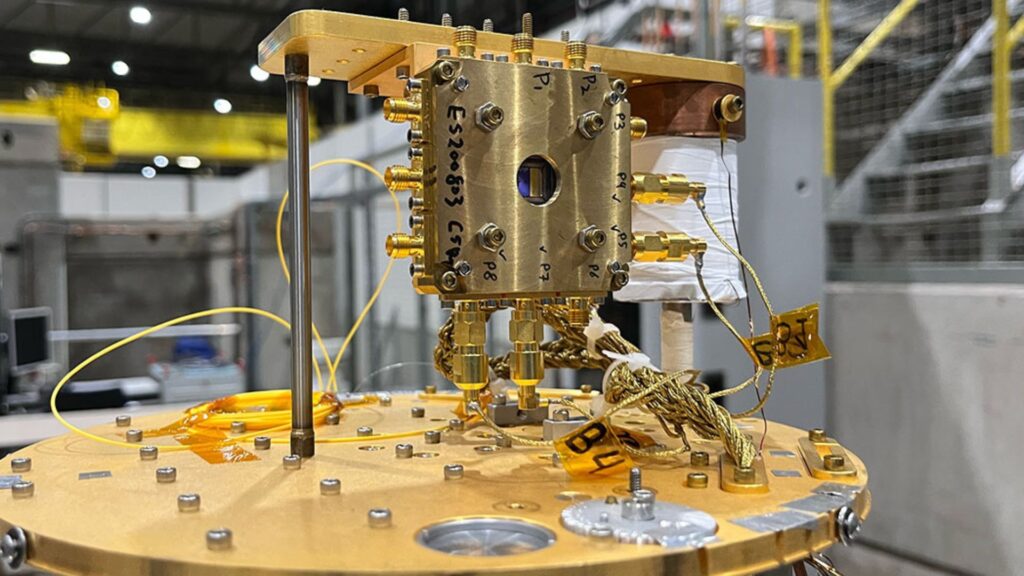
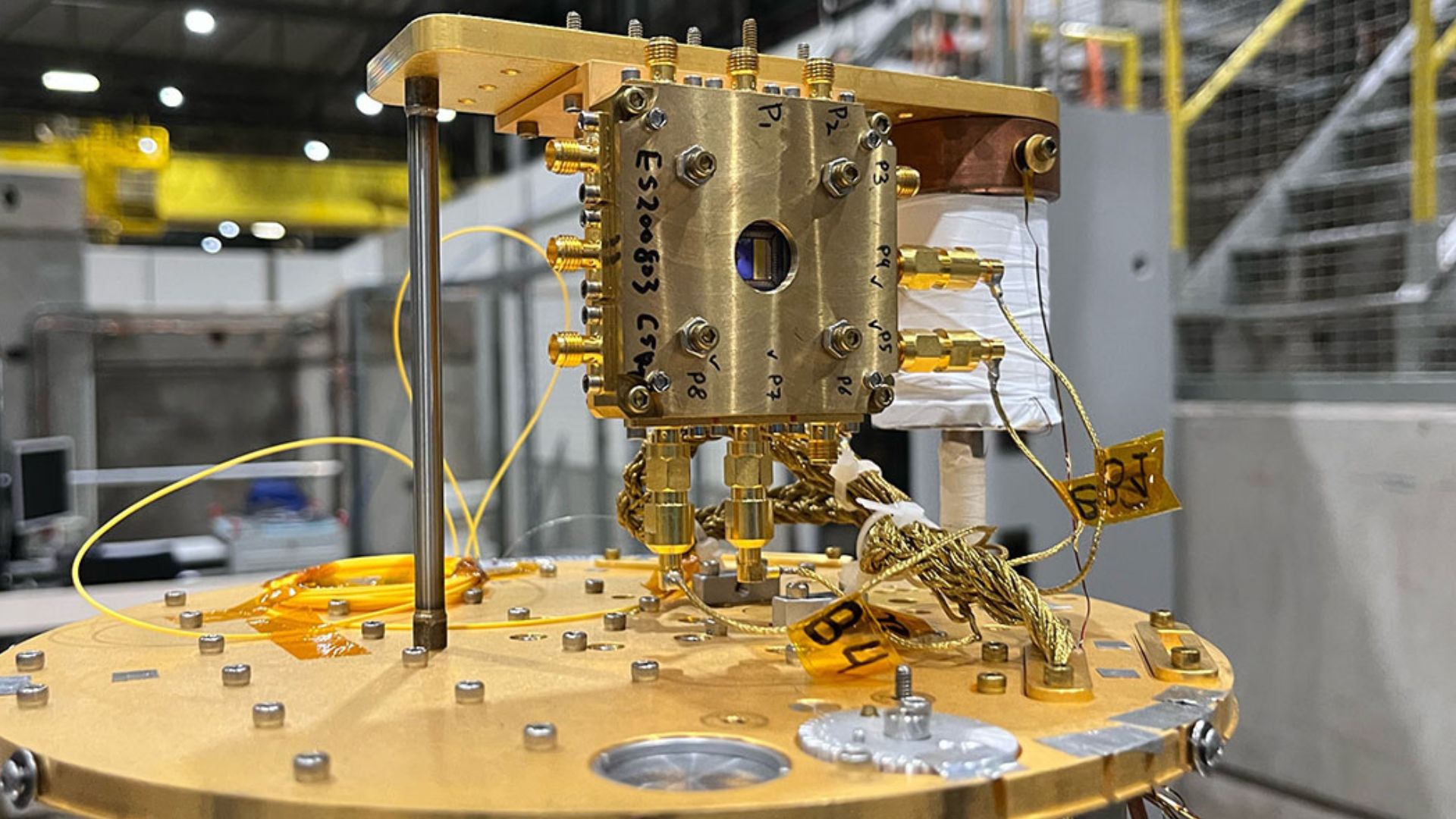
The team is working with a new device called a superconducting microwire single-photon detector (SMSPD). This quantum sensor can detect tiny bursts of energy from high-speed particles with high precision.
In earlier research, Fermilab scientists showed that SMSPD sensors could detect individual charged particles such as protons, electrons and pions.
WATCH ALSO: https://modernmechanics24.com/post/idaho-lab-receives-nuclear-reactor-fuel/
Now, a new study conducted at CERN has improved that performance. The team used sensors made with a thicker tungsten silicide film. The thicker wire absorbs more energy from high-energy particles. This improves detection capability and timing accuracy.
Cristián Peña, a scientist at Fermilab who led the study, said, “This research is significant because it shows improvement from our initial measurements using SMSPDs for charged particle detection.”
He added, “For the first time, we used SMSPDs to measure the detection capability of muons, possibly expanding their use for new directions of exploration.”
Muons are particles similar to electrons but about 200 times heavier. Scientists believe muons could play a key role in future particle physics experiments, including a possible high-energy muon collider.
Future colliders will produce millions of particle events every second. Detectors must track each particle in space and time with extreme precision. SMSPD sensors show strong potential to meet this demand.
READ ALSO: https://modernmechanics24.com/post/why-havoc-redefines-us-hypersonic-power/
Compared with traditional superconducting nanowire single-photon detectors (SNSPDs), SMSPDs have a larger active area. This makes them better suited to track charged particles in complex experiments.
The sensors will also help in the search for dark matter. Dark matter makes up most of the universe’s mass, yet it is still invisible and poorly understood.
In a separate study published in the Journal of Instrumentation, researchers conducted the first detailed temperature-dependent study of an SMSPD sensor array. The goal is to use these sensors in low-background dark matter detection trials, where even the minimal signal matters.
Si Xie, a scientist at Fermilab and joint appointee at Caltech, said, “We are continuing to make progress in developing these sensors with greater precision and greater efficiency to meet the needs of next-generation particle accelerators.”
He added, “We still have a lot of work to do, but this research shows we are progressing very well. We are excited to continue studying and improving these devices so they can help facilitate new physics discoveries.”
WATCH ALSO: https://modernmechanics24.com/post/rolls-royce-test-methanol-marine-engine-3/
When particle physics moves toward more powerful colliders and deeper study of dark matter, advanced quantum sensors like SMSPDs could become necessary tools. With additional research and international collaboration, these next-generation detectors will soon help unlock some of the universe’s biggest mysteries.