The US is advancing its air combat capabilities by upgrading the F-22 Raptor for modern battle conditions.
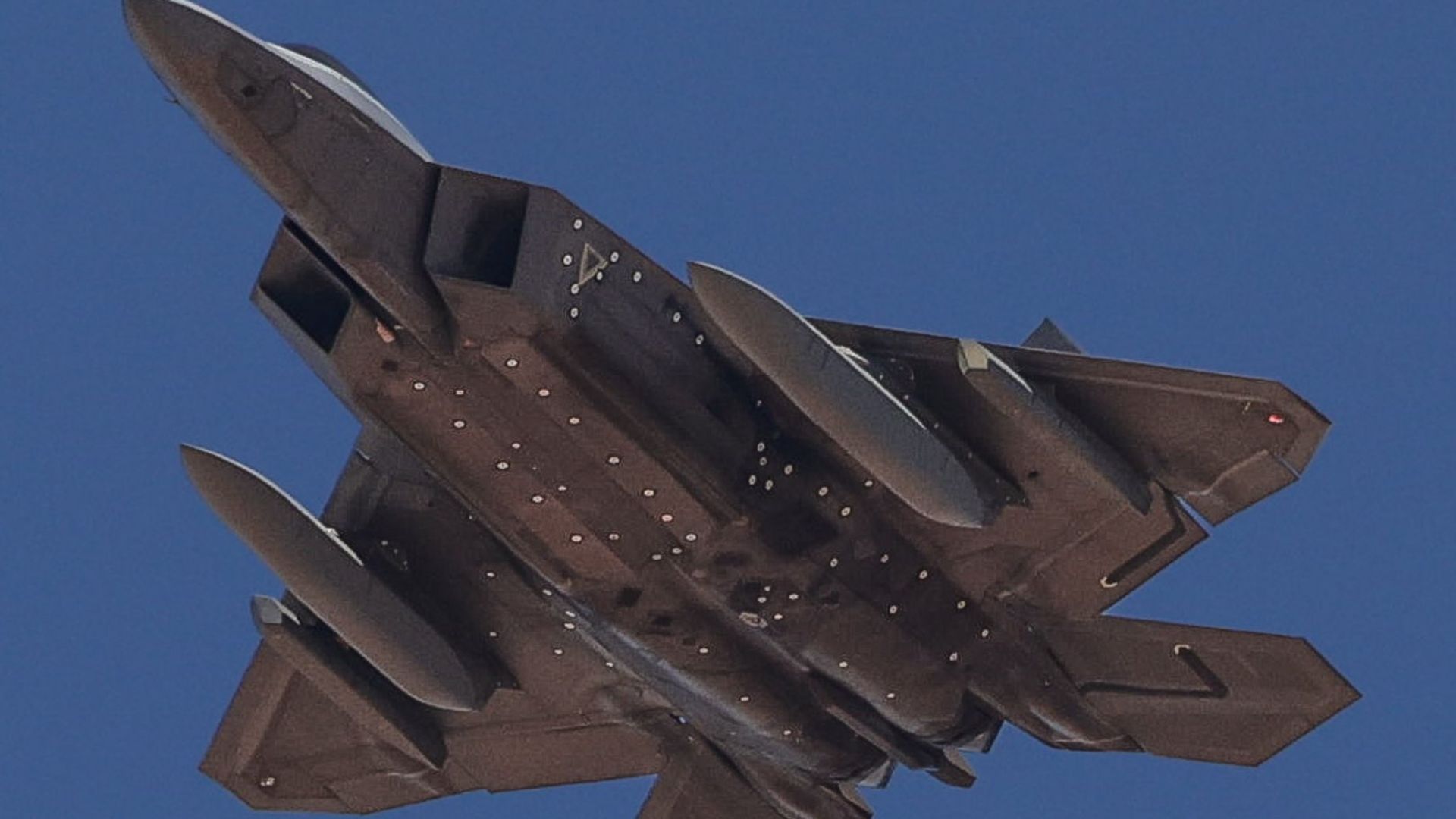
New developments show the aircraft flying with stealth-designed fuel tanks and advanced sensor pods, indicating a major shift in how it will operate in contested airspace.
These upgrades aim to improve two critical aspects of the aircraft: range and passive detection. Both are essential in today’s warfare environment, where long-range threats and advanced air defense systems dominate the skies.
Why the F-22 Still Matters
The F-22 Raptor remains the backbone of US air superiority. It combines stealth, high speed, and advanced avionics into a single platform. This allows it to detect enemies first, strike quickly, and exit before being tracked.
READ ALSO: Sun’s Hidden Engine Found 200,000 Kilometers Below Surface; Scientists Track Magnetic Mystery
The US Air Force has built its strategy around the idea of first look, first shot, first kill. The F-22 was designed to achieve exactly that.
However, as threats evolve, the aircraft must adapt as well. Two long-standing challenges, limited endurance and lack of strong passive sensing, are now being addressed.
Stealth Fuel Tanks Extend Combat Reach
One of the most important upgrades is the addition of stealth-shaped external fuel tanks. Traditionally, external tanks increase range but also make aircraft easier to detect. Because of this, pilots often discard them before entering combat zones.
The new tanks developed by Lockheed Martin are different. They are designed to maintain a low radar signature, allowing the aircraft to remain stealthy even with additional fuel.
WATCH ALSO: China commissions world’s largest open-sea offshore solar photovoltaic project
This means the F-22 can carry extra fuel into combat without compromising survivability. It no longer has to choose between range and stealth.
Modern warfare demands longer missions. Enemy missile systems now cover large areas, and support aircraft like tankers are increasingly at risk. In such conditions, fighters must operate independently for longer periods.
With stealth fuel tanks, the F-22 can stay in the air longer, patrol wider areas, and operate deeper into contested zones. It also gains flexibility in mission planning, allowing safer routes and extended time on station.
This is especially important in regions like the Indo-Pacific, where distances are vast, and in Europe or the Middle East, where air defenses are dense.
Another key upgrade is the addition of mission pods. One of these pods appears to include an infrared or electro-optical sensor.
This suggests the aircraft may now have enhanced passive detection capabilities. Unlike radar, passive systems do not emit signals.
They allow the aircraft to detect targets without revealing its own position. This is a major advantage in modern combat, where electronic warfare and detection systems are highly advanced.
READ ALSO: A Robot That Never Needs Charging? Meet Cranfield’s 3D-Printed WANDER-bot
Air combat is increasingly about who detects whom first. While radar is powerful, it can also expose an aircraft to enemy systems.
Passive sensors, such as infrared search-and-track, solve this problem. They detect heat signatures from aircraft without broadcasting signals.
With such capabilities, the F-22 can track and engage enemies while remaining hidden. This improves both survivability and combat effectiveness.
Expanding the Role of the F-22
The F-22 has traditionally been seen as a pure air superiority fighter. Its main role was to clear enemy aircraft from the skies. However, these upgrades suggest a broader mission profile.
With improved endurance and sensing, the aircraft can now perform long-duration patrols, act as a forward sensor platform, and support coordinated operations with other assets. This transforms the F-22 into a more versatile and networked combat system.
Bridging the Gap with the F-35
The F-35 Lightning II already features advanced electro-optical systems. It was designed with strong passive sensing capabilities from the beginning. In contrast, the F-22 focused more on speed, altitude, and radar performance.
The addition of sensor pods helps bring the F-22 closer to that level of sensing capability, without changing its core strengths.
These upgrades are part of a broader plan to keep the F-22 relevant in future conflicts. The aircraft is also expected to receive additional systems to improve survivability and combat effectiveness.
This ensures that the Raptor remains a key part of the US Air Force fleet while next-generation fighters are still in development.
The implications of these changes are significant. The US is not waiting for future technologies; it is improving its existing platforms now.
READ ALSO: Lenovo’s 1000Wh Battery Reveal Signals More Than Just Better Battery Life
For allies, this demonstrates a continued commitment to maintaining air superiority. For potential adversaries, it signals that the F-22 is evolving and becoming even more capable.
The combination of stealth fuel tanks and advanced sensor pods makes the F-22 more persistent, flexible, and difficult to detect. It can stay longer in contested airspace and detect threats without exposing itself. In modern warfare, where detection and timing are critical, these advantages can be decisive.
The latest upgrades show that the F-22 Raptor is far from outdated. Instead, it is adapting to meet the challenges of a rapidly changing battlefield.
By improving range and adding passive sensing, the aircraft becomes better suited for the complex demands of modern air warfare. An F-22 that can stay hidden longer and see more without being seen is not just an upgrade; it is a powerful statement of continued air dominance.