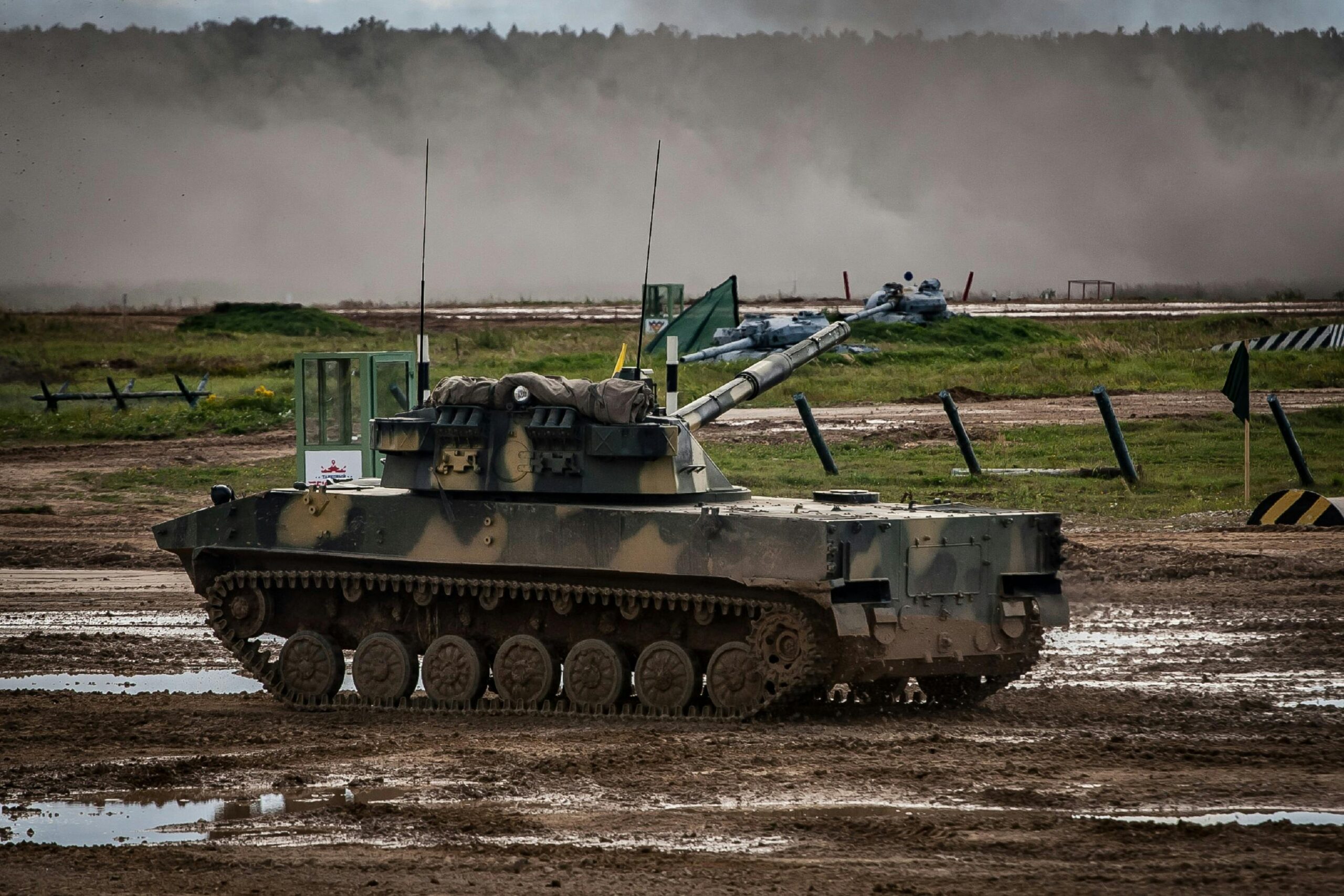
The US Army is putting its money where its modernization strategy is, allocating $386.4 million in Fiscal Year 2026 to push its next-generation infantry fighting vehicle from the drawing board into the metal-bending phase. This substantial investment in the XM30 Combat Vehicle program, the designated replacement for the iconic Bradley, funds the critical leap from digital designs to integrated prototypes, keeping the Army’s most important ground combat project on schedule.
This isn’t about ordering production vehicles just yet. According to the Department of Defense’s FY2026 budget request, this funding is squarely for Research, Development, Test, and Evaluation (RDT&E). The goal is to navigate the program through one of its most technically demanding phases: moving from a validated preliminary design to a finalized, prototype-ready blueprint. “We are transitioning from concept development into detailed engineering and integration,” explained a senior Army acquisition official. This means every weld, wire, and weapon system interface for the future of armored warfare is now being locked in.
The XM30 is being engineered not as a standalone vehicle, but as the digital and physical hub for a new kind of combat unit. Army Futures Command has mandated an open systems architecture, a tech term with profound implications. It means the XM30 must seamlessly connect with robotic combat vehicles, drone swarms, and AI-powered battlefield networks. The work funded in 2026 will rigorously test these digital handshakes and command interfaces. Essentially, the Army isn’t just building a new fighting vehicle; it’s building the quarterback for a dispersed, AI-augmented team.
READ ALSO: https://modernmechanics24.com/post/robot-companion-for-lonely-kids/
This phase follows the crucial Milestone B approval in June 2025, which greenlit the program into the System Development and Demonstration stage. The $386.4 million will power the effort toward a Critical Design Review (CDR). Think of CDR as the final exam before shovels hit the dirt; it’s the point where the Army signs off on every last technical drawing, confirming the design is ready to be turned into a driveable, shootable prototype. Success here sets the stage for physical prototype fabrication in FY2027 and a subsequent production decision, or Milestone C, targeted for early 2028.
A unique and strategically smart aspect of the program is its ongoing competition. Two industry giants are still in the race, each developing their vision under firm-fixed-price contracts. General Dynamics Land Systems is refining a design derived from its Griffin III technology demonstrator, while American Rheinmetall Vehicles is advancing a variant based on the Lynx KF41. This dual-track approach, sustained by the new funding, allows the Army to compare two mature, yet distinct, solutions head-to-head on metrics like survivability, lethality integration, and—critically—the ease of plugging in autonomous systems.
WATCH ALSO: https://modernmechanics24.com/post/iss-crew-new-year-2026-wishes/
“The funding preserves our competitive leverage and ensures we deliver the most capable, affordable, and integrable solution to our soldiers,” stated a program officer from Army Futures Command. By investing to keep both vendors in the game through prototype development, the Army avoids locking into a single design too early, fostering innovation and controlling costs. The coming year will see both teams putting their digital designs through the wringer to prove they can meet the Army’s ambitious vision.
With nearly $1.5 billion already invested since FY2023, the XM30 program is now accelerating from concept to concrete reality. The FY2026 funding is the catalyst that transforms lines of code and CAD models into hulls, turrets, and the digital nervous system of the Army’s future armored brigades. It’s a decisive step toward delivering a vehicle designed not for the last war, but for the complex, networked battlefields of the next generation.
READ ALSO: https://modernmechanics24.com/post/plant-hormone-controls-proteins-for-life/