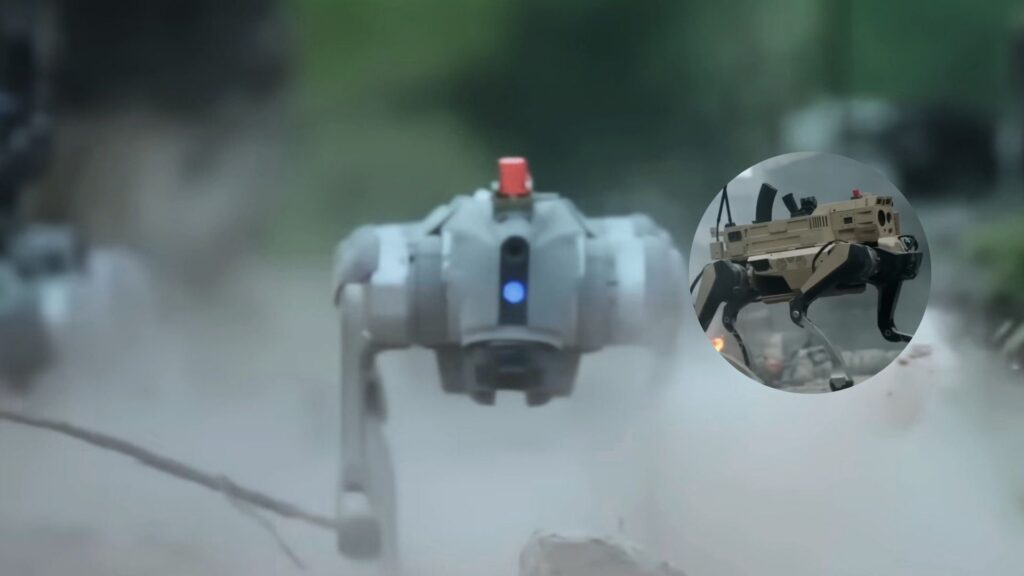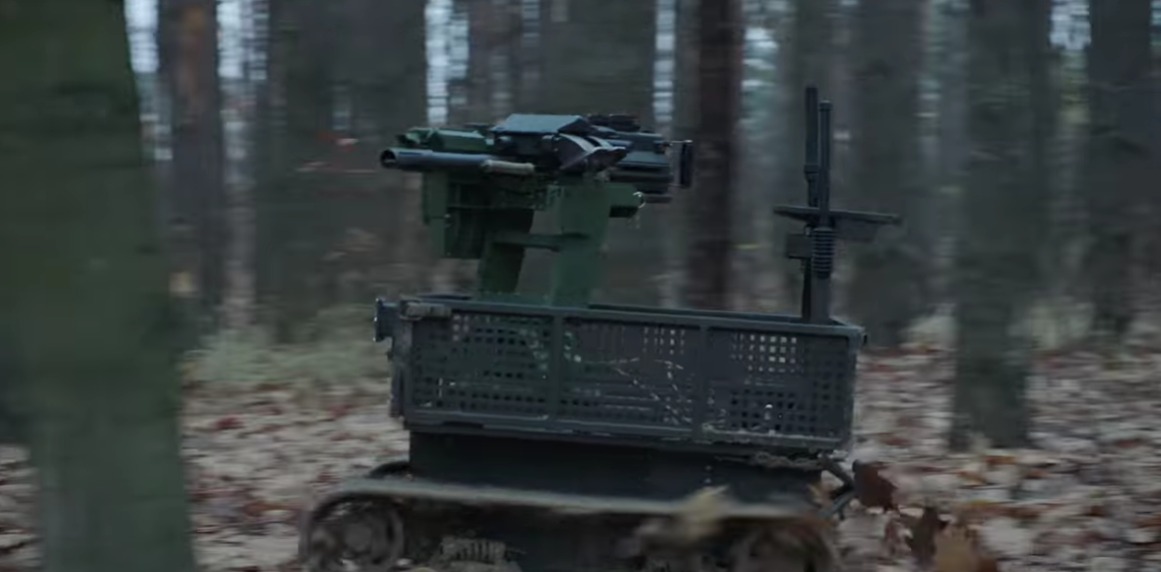
Ukraine introduced a new robotic ground combat vehicle to attack enemy positions without direct visual contact.
The system helps reduce risks to soldiers by keeping human operators out of harm’s way.
Ukrainian companies Frontline Robotics and BUREVII collaborated to develop the unmanned ground vehicle ARDAL.
ARDAL is equipped with a Burya robotic turret and an Mk 19 automatic grenade launcher. It gives the Robot the ability to launch powerful explosive rounds from concealed positions.
Apart from this integration in the system, the vehicle is capable of performing fire support, logistics, and casualty evacuation missions on a single mobile platform.
Ready for Indirect, Hidden Attacks
ARDAL is built to engage targets at long range while remaining hidden. This allows Ukrainian forces to maintain pressure on enemy positions without exposing soldiers or the vehicle itself to direct fire.
READ ALSO: https://modernmechanics24.com/post/massrobotics-5th-health-robotics-cohort/
The system does not need a direct line of sight to the target while firing grenades. Instead, ARDAL relies on digital targeting and onboard calculations to guide its fire.
A built-in ballistic calculator allows operators to select a specific location rather than a visible target. The system automatically calculates distance, firing angle, and projectile trajectory to deliver accurate strikes.
Multi-Mode Operation
ARDAL can operate in both autonomous and semi-autonomous modes. An operator can also remotely control it.
According to UGV’s creators, it can function for dozens of kilometres in both directions without continual human oversight.
It can operate in those areas where communications may be slow or nonexistent. Even if the operator momentarily loses control, the UGV can still accomplish its goal.
WATCH ALSO: https://modernmechanics24.com/post/ula-orbits-amazon-kuiper-third-satellite-batch/
Area-Fire, Pattern Attacks
ARDAL is capable of both single-target strikes and planned area-fire missions.
The system’s programmable area-fire modes enable explosions across pre-defined sectors, such as rectangles, lines, or elliptical zones. Integrated orientation sensors automatically correct for platform tilt during targeting.
The turret operates on the “coordinate–fire–impact” principle. It has an onboard ballistic computer. The device automatically determines firing settings before delivering a precise strike with a point on a digital map.
Precision on Rough Terrain
The position and tilt sensors help ARDAL in maintaining accuracy on uneven terrain. These sensors automatically adjust the target to account for surface irregularities and slopes.
Operators can revisit or re-engage known enemy positions thanks to the system’s capacity to store data for up to 256 targets.
ARDAL maintains accuracy within 3 meters (9.8 feet) at up to 2 kilometres (1.2 miles), according to its developers.
READ ALSO: https://modernmechanics24.com/post/paralysed-chinese-man-builds-smart-farm/
Quick Deployment, Long Endurance
ARDAL is designed for quick deployment. In less than three minutes,it can transition from transport mode to combat-ready mode.
It can operate continuously for up to 48 hours and stores data for up to 256 targets, depending on mission needs. This supports long frontline missions without frequent resupply.
The companies confirmed ARDAL’s operational use in Ukraine, but they have not disclosed information regarding large-scale production.
The ARDAL UGV is part of a growing arsenal of Ukrainian ground robots, with 15,000 deployed in the past year, enhancing combat capabilities and soldier safety in both reconnaissance and assault roles.
WATCH ALSO: https://modernmechanics24.com/post/an-unmanned-boat-has-completed-a-long-1-100-nautical-mile-voyage/