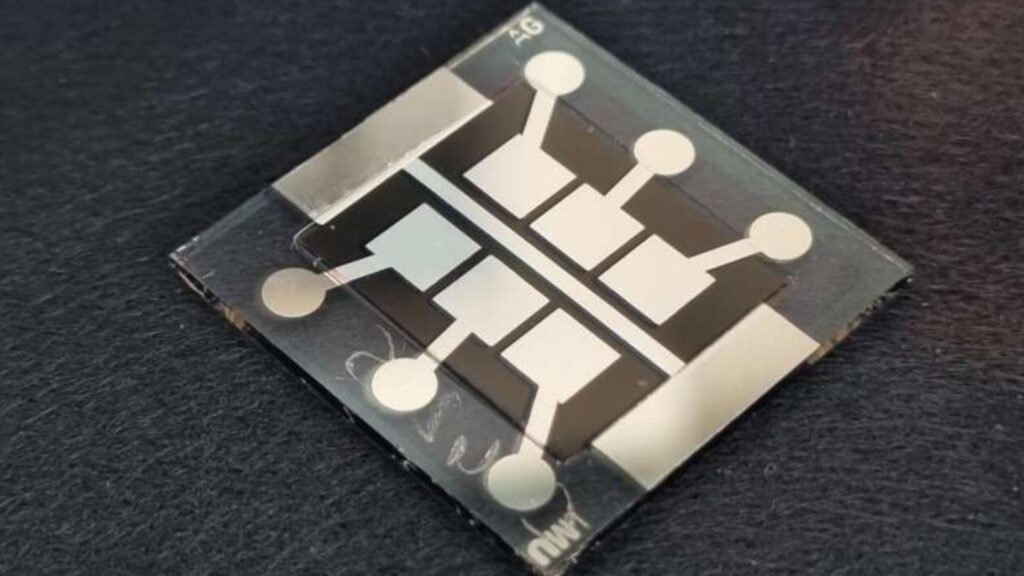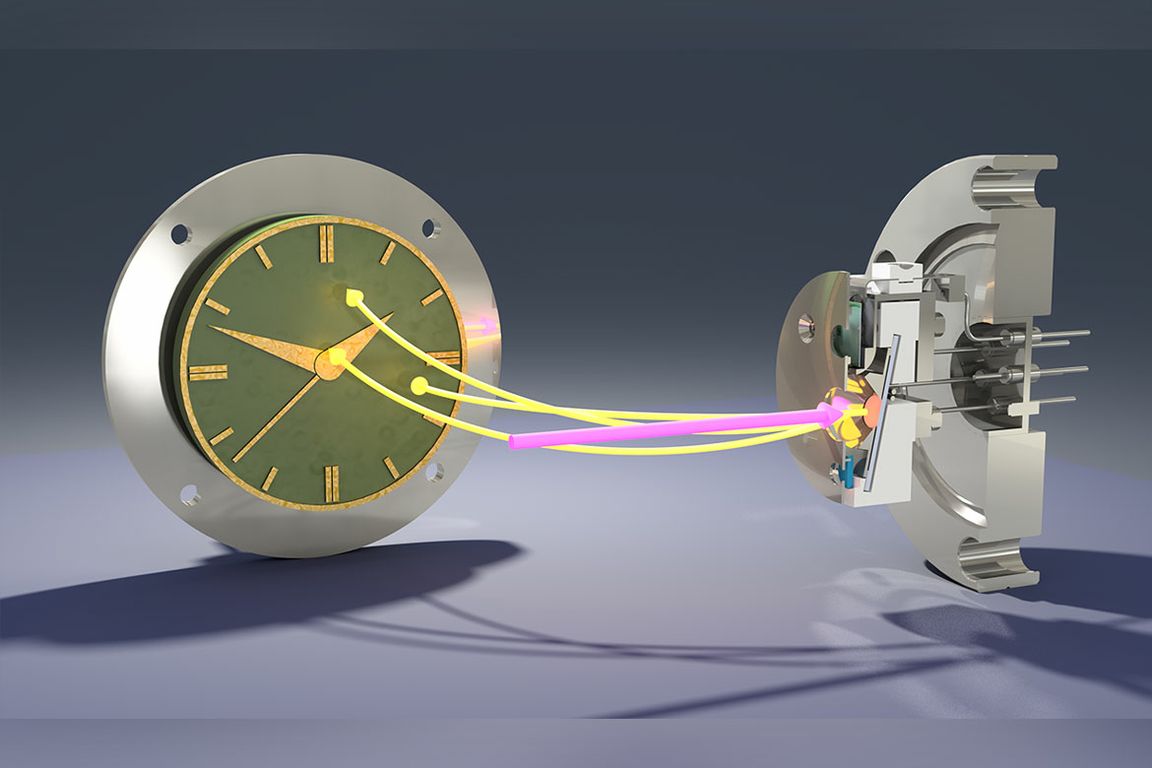
A collaborative team from UCLA, LMU Munich, and JGU Mainz has directly excited the thorium-229 atomic nucleus with laser light inside a solid, non-transparent material for the first time. This pivotal advance, published in Nature, shatters a critical material barrier, opening a direct path toward building the world’s most precise timepiece: an optical nuclear clock.
For decades, physicists have used lasers like master sculptors, deftly shaping the behavior of electrons in the atomic shell to create technologies like optical atomic clocks and quantum computers. But the atomic nucleus—the dense, tiny heart of the atom—has stubbornly resisted such precise optical control.
That is, until now. In a landmark achievement, researchers from the University of California Los Angeles (UCLA), Ludwig Maximilian University of Munich (LMU), and Johannes Gutenberg University Mainz (JGU) have crossed a fundamental threshold. They have successfully used laser light to excite the elusive thorium-229 nucleus within a material that isn’t even transparent to the light itself.
Why is this such a big deal? Until this point, reported Nature, exciting this specific nuclear isomer required the thorium atoms to be embedded in crystal-clear, transparent host materials that allowed the crucial 148-nanometer vacuum-ultraviolet laser light to pass through and reach the nuclei.
READ ALSO: https://modernmechanics24.com/post/space-based-air-traffic-control-worldwide/
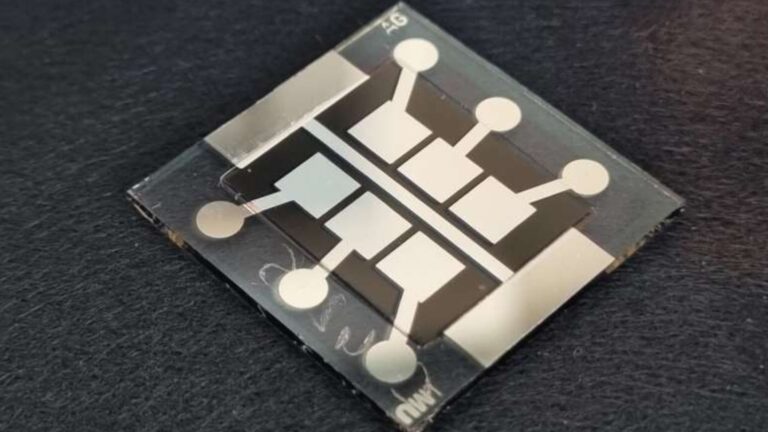
This limitation severely constrained the types of materials scientists could experiment with. The new breakthrough demolishes that wall. The team demonstrated excitation in a non-transparent host—a material that stabilizes the thorium atoms but largely blocks the laser light. It’s a counterintuitive triumph that massively expands the toolkit for nuclear laser spectroscopy.
“This success opens the door to a previously inaccessible area of nuclear physics,” explains Dr. Lars von der Wense of the Institute of Physics at JGU, who first proposed the experiment in 2017. “The fact that we can now also perform nuclear excitation in non-transparent materials enables completely new experiments—and brings us a significant step closer to realizing an optical nuclear clock.”
That goal—an optical nuclear clock—is the holy grail driving this research. While today’s most advanced atomic clocks use the orbiting electrons as their pendulum, a nuclear clock would use the nucleus itself. This makes it potentially the most stable time standard ever conceived, impervious to external electromagnetic fields that can perturb electrons.
WATCH ALSO: https://modernmechanics24.com/post/ubtech-world-first-robot-shipment/
According to Nature, such a clock could revolutionize technologies from satellite-based navigation and Earth observation to autonomous transport. It would also become a unparalleled sensor for fundamental physics, potentially detecting the subtle fingerprints of dark matter or measuring whether the universe’s fundamental constants are truly constant over time.
Beyond clocks, this work inaugurates an entirely new scientific tool: laser-based internal conversion (IC) Mössbauer spectroscopy. This technique will allow researchers to probe the intricate properties of atomic nuclei inside solid-state environments with unprecedented precision, offering fresh insights into nuclear structure and behavior.
The journey to this point has been meticulous. The first direct laser excitation of the thorium-229 nucleus was achieved only in 2024, marking the field’s infancy. The latest result is a quantum leap forward, proving that the path to control is not limited to ideal, see-through materials. By combining state-of-the-art laser technology with ingenious nuclear physics, the international team has not only solved a pressing experimental challenge but has also laid a broad and accessible foundation for the future of nucleus-based quantum technologies. The heart of the atom is finally ready for its close-up.
READ ALSO: https://modernmechanics24.com/post/plant-hormone-controls-proteins-for-life/