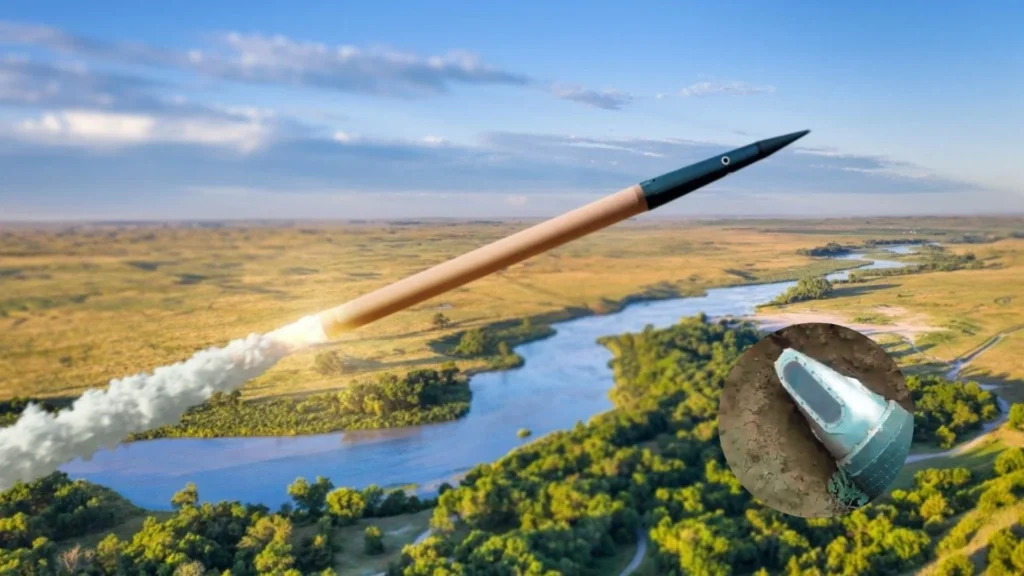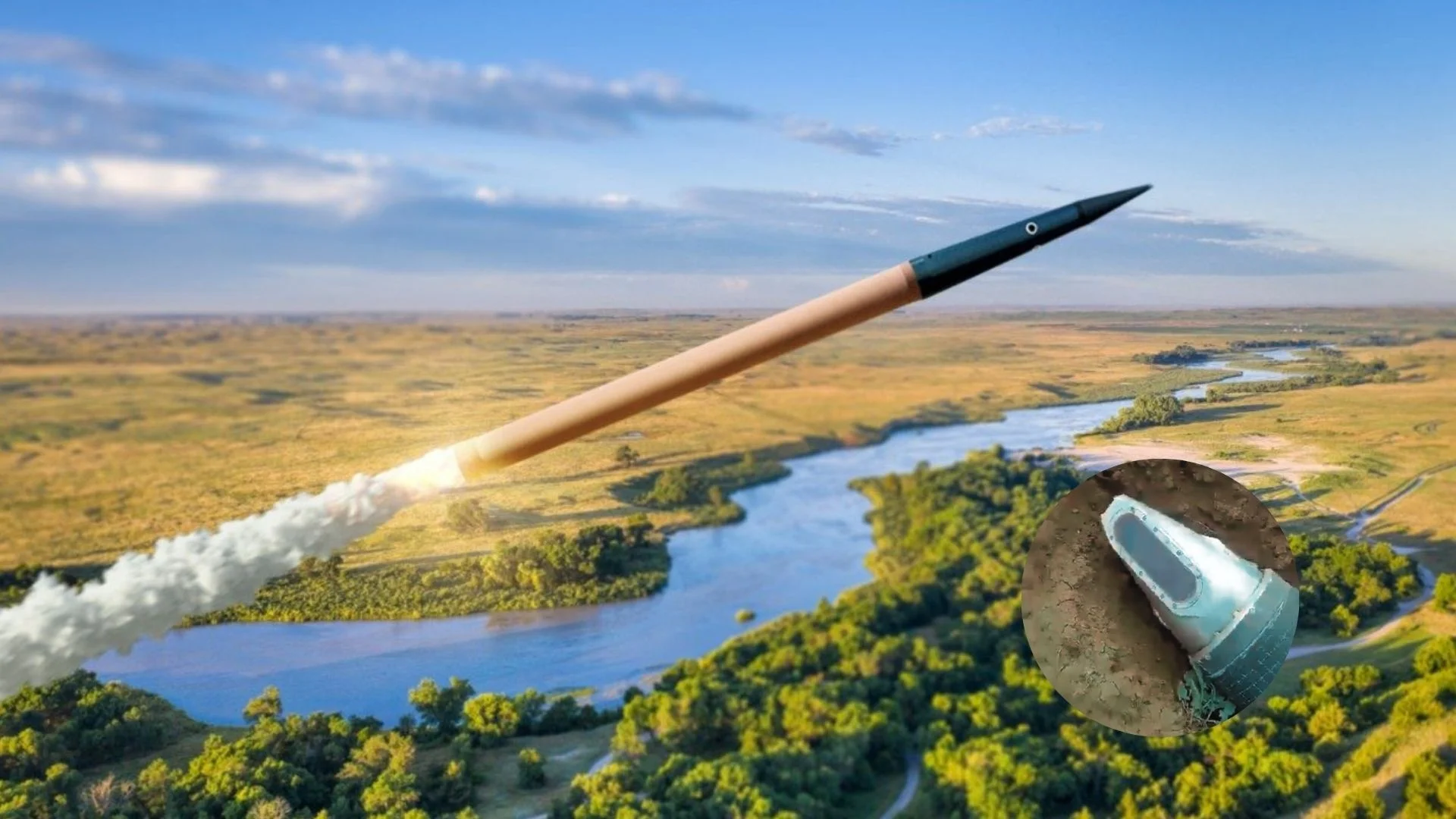
A striking video circulating online has brought global attention to what appears to be a rare and sensitive military discovery. Parts of a US-made Terminal High Altitude Area Defense (THAAD) interceptor, including its advanced infrared seeker, seem to have been recovered largely intact in Syria.
If verified, this incident could represent a significant intelligence setback. The recovered component is not just debris; it is one of the most critical and sophisticated parts of a missile defense system designed to intercept ballistic threats mid-air.
Experts say that such a recovery may allow adversaries to closely study the technology behind THAAD. This includes its tracking ability, targeting precision, and resistance to countermeasures.
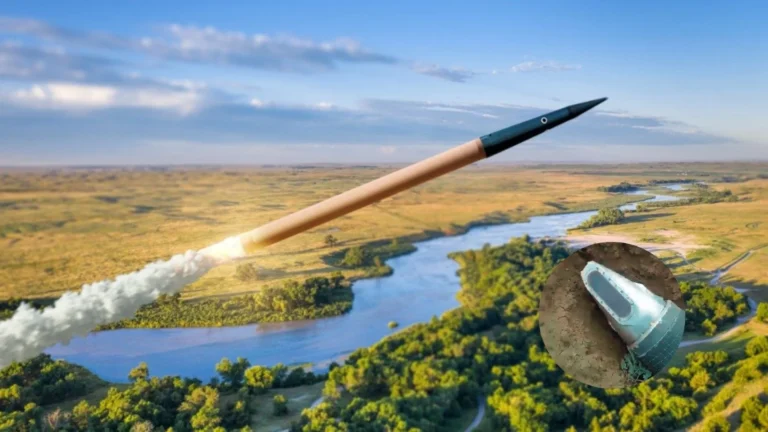
The video shows the remains of what appears to be a THAAD kill vehicle lying on the ground. Reports suggest that the footage was captured near the city of Suwayda in southwestern Syria.
READ ALSO: Artemis Mission’s Laser Communication Is Changing How NASA Sees the Moon
This area lies roughly 25 miles north of the border with Jordan and about 55 miles east of Israel. These locations are strategically important, especially as the US is believed to have deployed THAAD batteries in both Israel and Jordan.
While the exact origin and authenticity of the footage have not been independently confirmed, the geographical context aligns with ongoing military activity in the region.
Why THAAD Matters in the Region
The THAAD system plays a key role in modern missile defense. It is designed to intercept short-, medium-, and intermediate-range ballistic missiles during the final phase of their flight.
This system has been actively used in countering missile threats, particularly those linked to Iran. In recent conflicts, THAAD has been instrumental in reducing the impact of missile attacks targeting Israel.
Its ability to destroy incoming threats before they reach the ground makes it a crucial part of the US global defense network.
WATCH ALSO: China showcases new 40,000-ton amphibious assault ship Sichuan
Before launch, THAAD relies on powerful radar systems, such as the AN/TPY-2, or on external sensors connected through a command network called C2BMC. These systems detect and track incoming missiles.
Once launched, the interceptor separates into two parts. The rear booster falls away, and the front section, called the kill vehicle, continues toward the target.
A protective cover, or shroud, is released mid-flight. This exposes the infrared seeker, which is the eye of the system. It detects heat signatures from enemy missiles and guides the kill vehicle toward them.
Unlike traditional missiles, THAAD does not carry an explosive warhead. Instead, it uses a hit-to-kill method. This means it destroys targets purely through the force of impact at extremely high speeds.
Inside the Kill Vehicle
The recovered component appears to include the infrared imaging seeker and parts of the Divert and Attitude Control System (DACS). DACS is a highly advanced propulsion system. It uses multiple small thrusters to control the kill vehicle’s movement. These thrusters help adjust direction, stabilize the seeker’s view, and guide the interceptor precisely toward its target.
According to L3Harris, which manufactures this system, “The thrusters work together to stabilize the interceptor and keep the seeker focused on the target.” The company adds that “the system converts tracking data into quick movement commands, allowing accurate interception.”
In the video, several thruster ports are visible, suggesting that a significant portion of the kill vehicle remained intact after impact.
READ ALSO: Harvard, TU Wien Unveil Racetrack Laser Producing Stable Mid‑Infrared Frequency Comb
The biggest concern is not just the recovery itself, but what it could reveal. If adversaries gain access to this technology, they could study how THAAD detects and tracks missiles. This includes understanding its sensitivity, accuracy, and limitations.
Such knowledge can be used to develop countermeasures. For example, future missiles could be designed to evade detection or confuse the system. Countries like China and Russia already closely monitor US defense systems. Access to physical components would give them deeper insight than observation alone.
The implications go beyond missile defense. The materials and design of the kill vehicle are built to survive extreme conditions. These include hypersonic speeds, typically above Mach 5, and intense heat during flight.
Studying these materials could help other nations improve their own weapons, including hypersonic missiles or defense systems. It may also support reverse engineering efforts. In some cases, nations attempt to replicate advanced technologies once they have access to physical samples.
Incidents like this highlight a long-standing challenge in military operations. Using advanced weapons always carries the risk that technology will fall into the wrong hands. Even the most reliable systems can fail or be intercepted.
Global powers, including the US, maintain specialized programs to recover and study foreign military equipment. These efforts aim to understand enemy capabilities and improve their own systems. The same approach could now be applied to this THAAD component if it has indeed been recovered by a rival group or nation.
WATCH ALSO: China’s UBTech has started world’s first mass delivery of humanoid robots
There is still uncertainty surrounding the incident. It is not clear what caused the kill vehicle to land intact. Normally, these systems are destroyed upon impact. A malfunction or unusual interception scenario may have played a role. It is also unknown who currently has possession of the debris. The outcome will largely determine the extent of any intelligence risk.
As missile defense systems are used more frequently, similar incidents may occur again. The ongoing tensions involving Iran and its adversaries suggest that THAAD and similar systems will continue to be deployed and tested in real-world scenarios.
With each use, the risk of exposure to technology remains. This latest development serves as a reminder that in modern warfare, even success can come with hidden vulnerabilities.