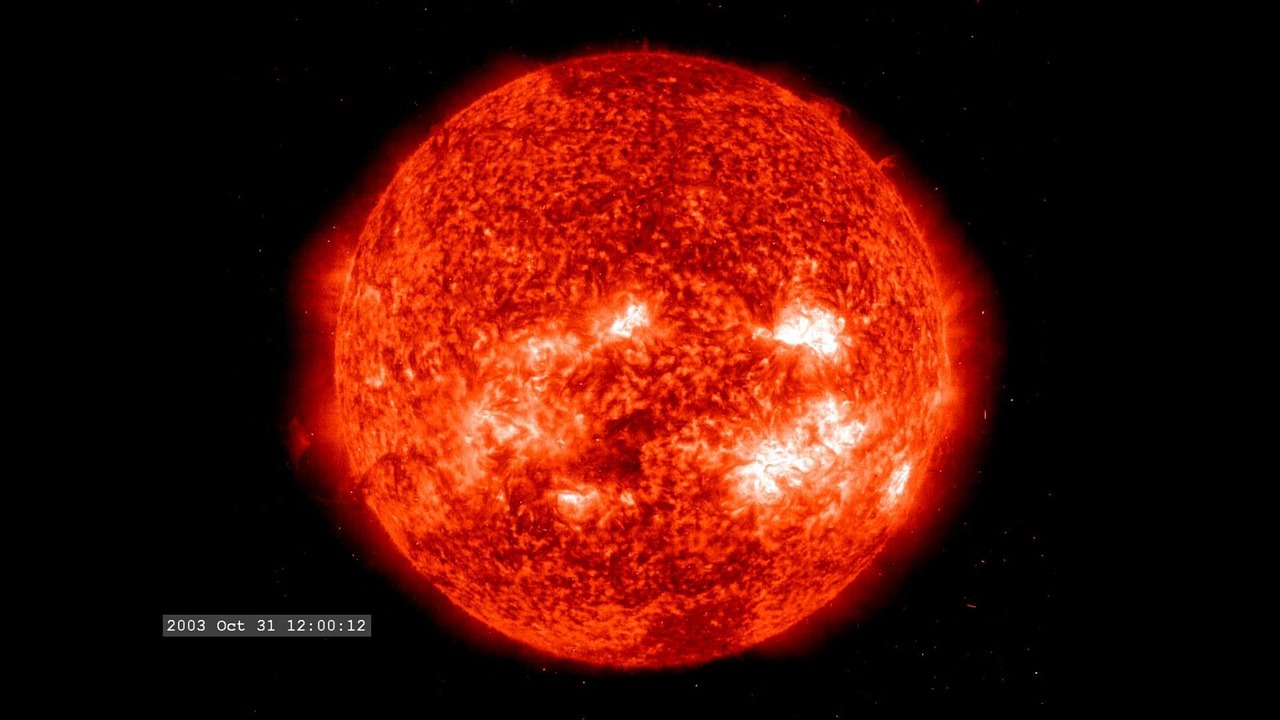
As intense radiation flooded Earth’s upper atmosphere, a strong X4.2-class solar flare on Wednesday disrupted radio communications in parts of western Africa and southern Europe.
Originating from an active sunspot region, AR4366, which has been producing frequent, strong flares over the past few days, the flare peaked at 7:13 a.m. EST (12:13 GMT).
X-class flares release intense radiation that can interfere with radio signals on Earth. Coronal mass ejections (CMEs), which are enormous clouds of solar plasma that can produce geomagnetic storms and breathtaking auroras, are occasionally also released by solar flares.
However, according to the NOAA Space Weather Prediction Center, no CME was detected after this latest flare.
So far, this sunspot region appears more dramatic than dangerous. Although it has produced several powerful flares, none has pushed large amounts of solar material toward Earth. Only an earlier X8.4 flare produced a slow CME, which reached Earth with only a slight impact.
READ ALSO: https://modernmechanics24.com/post/sustainable-polyurethane-toxic-isocyanates/
According to NOAA forecasters, small (G1) geomagnetic storm conditions could occur in the near future; therefore, this brief contact could have minor impacts.
Another massive sunspot region, AR4633, is also drawing attention. It is about 15 times Earth’s diameter and so large that it can be seen from Earth with proper solar-viewing glasses.
A close-up image of the active region was captured on February 1 by astrophotographer Mark Johnston in Arizona. He said in a letter that calm air conditions over an alpine lake helped create a very clear view of the Sun.
With these giant sunspots still facing Earth and remaining highly active, space weather experts continue to monitor the situation closely to see if stronger solar activity follows.
WATCH ALSO: https://modernmechanics24.com/post/idaho-lab-receives-nuclear-reactor-fuel/