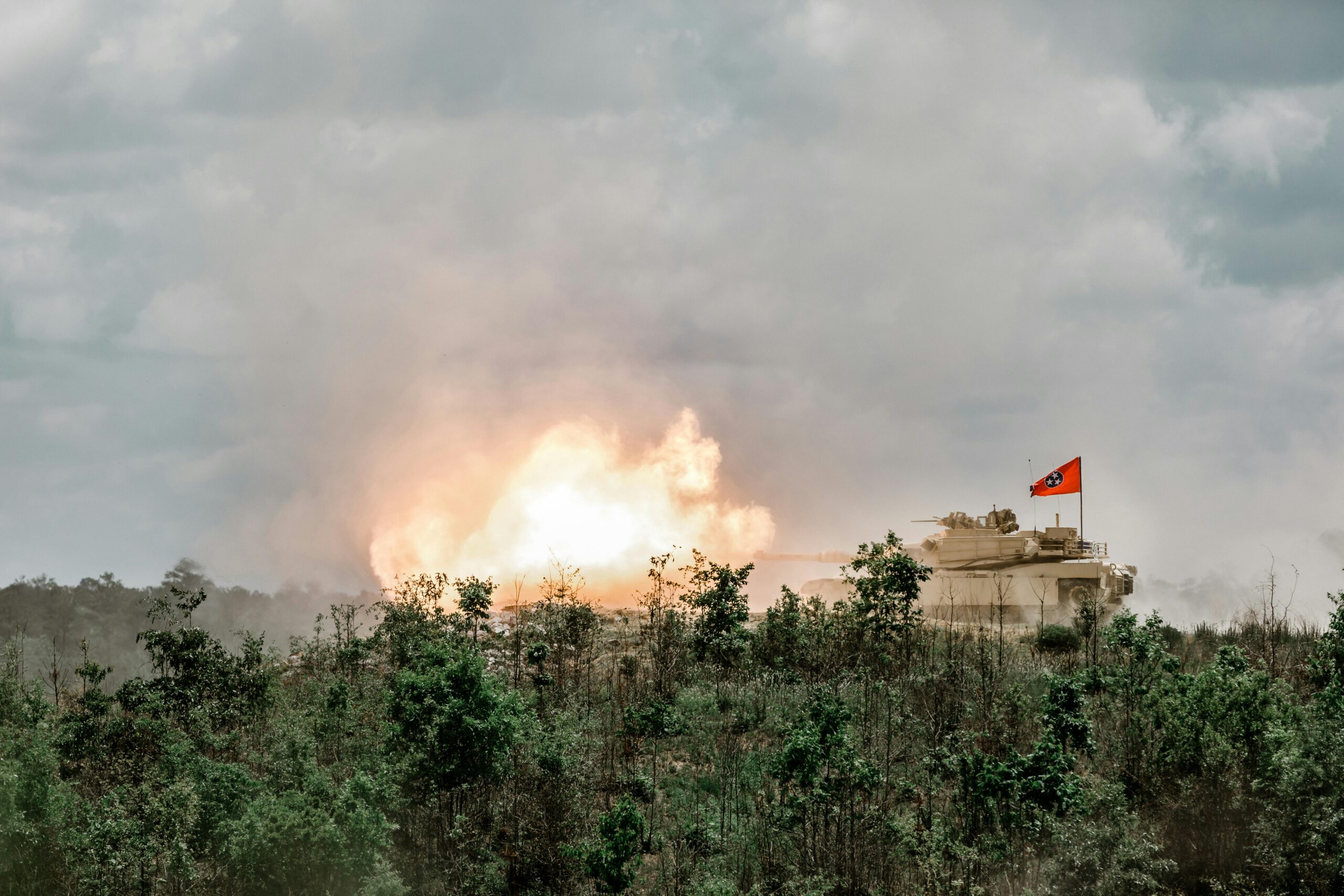
Soldiers of the U.S. Army’s 1-2 Stryker Brigade Combat Team have completed an intensive week of live-fire training at Yakima Training Center, Washington, using experimental Stryker vehicles armed with a powerful 30mm auto-cannon. The exercise integrated advanced digital tracking systems to refine crew performance in real-time, placing the brigade at the forefront of the Army’s mounted lethality modernization.
The thunder of a 30mm cannon is a new sound echoing through the ranges of the Yakima Training Center. For the 1-2 Stryker Brigade Combat Team, this isn’t just another gunnery exercise—it’s a hands-on test of a game-changing weapon system that could redefine how Stryker units fight. As only the second infantry brigade in the Army to train with this up-gunned Stryker variant, the soldiers are not just qualifying on a new weapon; they are helping write the manual for its future use. “We’re on the cusp of the Army’s modernization initiatives, helping to advance the force and change the way we fight,” said U.S. Army Capt. Jarid Prahl, assistant operations officer for 2nd Battalion, 3rd Infantry Regiment.
The training blended raw firepower with sophisticated digital tools. Each vehicle was outfitted with Instrumented Player Units (IPUs) as part of the Digital Range Training System, turning every engagement into a data-rich learning opportunity. This system tracked and recorded everything from shot accuracy and vehicle movement to crew communication timelines. 1st Lt. Derrick Eng, the officer in charge of the gunnery, emphasized the complexity, stating that coordinating the new platform with the supporting technology required “tight synchronization.” The payoff was immediate feedback; crews could review their performance between runs to correct errors on the spot, a significant leap from traditional after-action reviews.
READ ALSO: https://modernmechanics24.com/post/pv-redox-battery-solar-conversion/
For the soldiers inside the vehicle, the new system demands a fusion of old-school gunner skills and high-tech operator savvy. Spc. Nicolas Taylor, an infantryman with 2nd Battalion, 3rd Infantry Regiment, described the experience: “You feel a different kind of adrenaline… The 30mm gives you so much versatility—from airburst munitions to high-explosive rounds.” This versatility, managed through digital fire control software and optics, provides a massive increase in lethality over the Stryker’s legacy armament. Their platoon leader, 1st Lt. Catherine Ortiz, praised the crews for their dedication, noting their ability to “work through fatigue, adjust to a new Stryker, and still perform at a high level.”
The integration of the Operational Network (OPNET) was a force multiplier, streaming data between vehicles and range control. This connectivity provided crews with enhanced situational awareness, allowing for better decision-making without overwhelming them. Leaders found that the objective data from the digital systems provided clearer evaluations than observer reports alone, reinforcing critical skills like communication and adaptive thinking. By combining live-fire with experimental hardware and data analytics, the 1-2 Stryker Brigade Combat Team is not just training for today, but actively shaping the Army’s combat vehicle tactics for tomorrow.
WATCH ALSO: https://modernmechanics24.com/post/us-giant-robot-fights-wildfires/