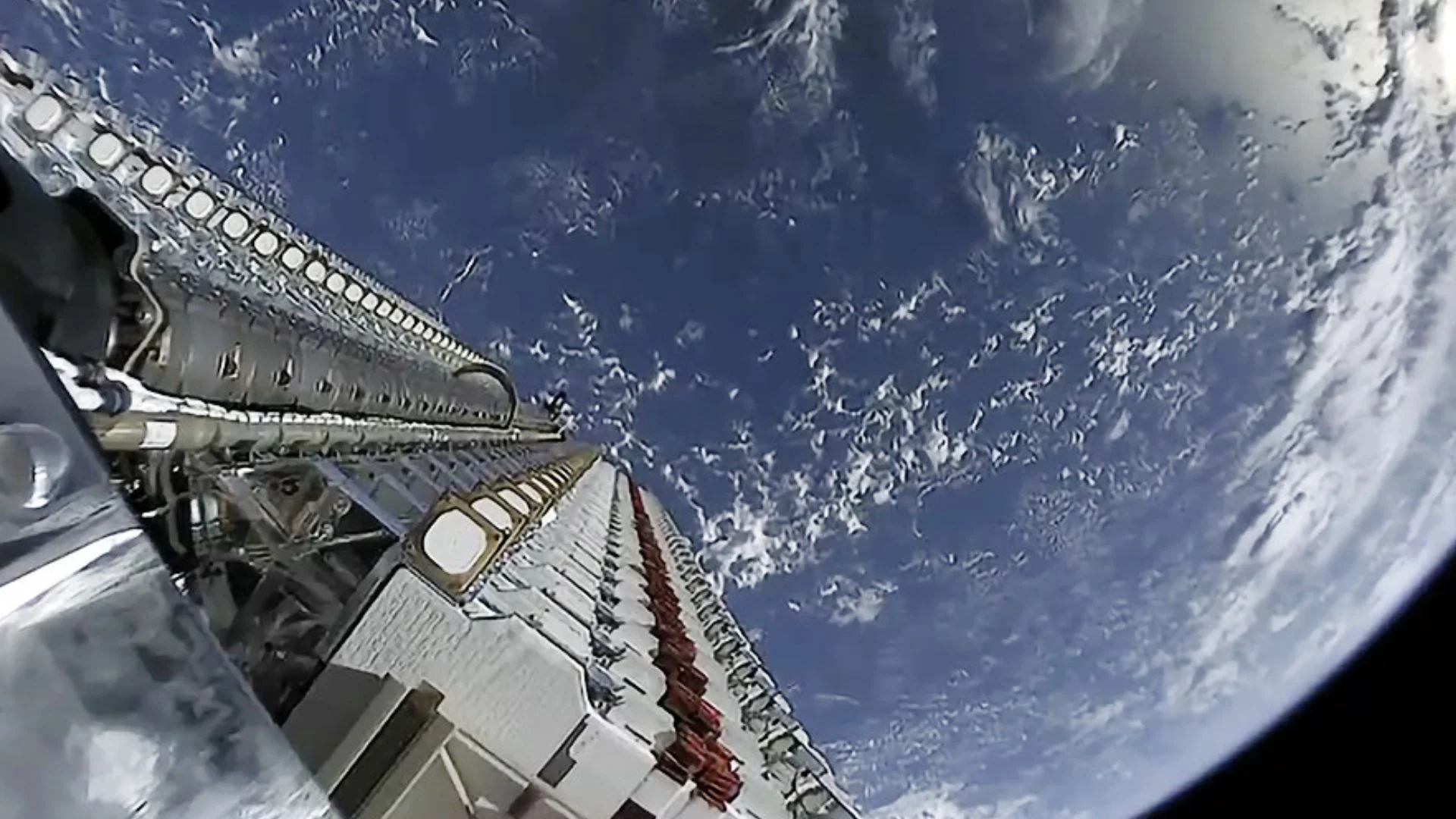
A SpaceX Starlink satellite has broken apart in orbit, creating tens of objects and raising fresh questions about satellite safety in low Earth orbit.
The company confirmed that it lost contact with one of its satellites, Starlink 34343, after an unexplained anomaly about 560 km above Earth. While there is no immediate danger to space missions, the incident marks the second such event in recent months.
Debris Detected Within Minutes
Tracking firm LeoLabs said its radar systems quickly picked up unusual activity.
The company stated, “We detected a fragment creation event involving SpaceX Starlink 34343 and immediately tracked tens of objects nearby.” The first detection occurred as the debris passed over radar stations near the Azores.
READ ALSO: AeroVironment Unveils LOCUST X3 Laser System to Fight Drones
LeoLabs added that more fragments may still be forming, and analysis is ongoing.
No Collision, But Something Went Wrong Internally
Initial assessments indicate the satellite did not collide with another object.
Instead, LeoLabs said the breakup was likely caused by an internal energetic source rather than a collision. This points to a possible onboard failure, such as pressure buildup, propulsion issues, or structural malfunction.
Despite the dramatic breakup, experts believe the debris will not stay in orbit for long. Because the event happened at a relatively low altitude, most fragments are expected to burn up in Earth’s atmosphere within weeks.
SpaceX Confirms Anomaly
SpaceX acknowledged the issue but avoided calling it an explosion.
In a statement, Starlink said, “The satellite experienced an anomaly in orbit, resulting in loss of communications.” The company emphasized that the situation does not threaten other space operations.
WATCH ALSO: South Korean company showcases its multi-purpose unmanned ground vehicle for military use
It confirmed there is no added risk to the International Space Station or its crew. It also stated that the incident does not impact upcoming missions, including Artemis II.
“We are actively tracking the satellite and any debris while working to determine the root cause,” SpaceX said.
This is not an isolated case. LeoLabs noted that a similar incident occurred on December 17, 2025. That event also created multiple fragments and was believed to have originated from an internal issue rather than an external collision.
At that time, SpaceX explained that the anomaly had caused a propulsion system issue. The satellite began venting, rapidly lost altitude, and released debris as it tumbled in space.
The company had then assured that engineers were implementing fixes to prevent future failures. However, the latest incident suggests that the issue may not be fully resolved.
Growing Traffic, Growing Risks
The incident comes at a time when space is becoming increasingly crowded. Starlink already operates thousands of satellites, forming one of the largest constellations in orbit. SpaceX has even outlined plans to expand dramatically in the future. With more satellites in space, even small failures can increase the risk of debris-related hazards.
READ ALSO: China’s Hybrid Drone Engine Switches Mid-Air: A New Edge in Stealth and Range
LeoLabs highlighted the need for faster detection and transparency. “These events show why rapid understanding of anomalies is critical to maintaining a safe space environment,” the company said.
The breakup follows another close call involving Starlink satellites. In December, a Chinese satellite passed within just 200 meters of a Starlink satellite. According to SpaceX officials, the launch lacked proper coordination, increasing the risk of collision.
Experts warn that such near-misses, combined with unexplained satellite failures, could complicate future space traffic management.
Despite the event’s dramatic nature, the risk to people on Earth remains extremely low. Starlink satellites are designed to burn up completely during reentry. SpaceX has emphasized that any remaining fragments would have negligible impact energy.
The company follows controlled deorbiting practices, usually directing satellites to fall over remote ocean areas. Even in unexpected failures, most debris does not survive the intense heat of reentry.
WATCH ALSO: Chinese robotic company Unitree has unveiled its new humanoid robot H2
For now, the exact cause of the breakup remains unclear. SpaceX says its teams are investigating both the recent anomaly and the earlier December event. The findings could shape future design and safety improvements across the Starlink network.
Until then, the incident serves as a reminder: even in a highly advanced space industry, unexpected failures still happen, and their consequences can spread far beyond a single satellite.