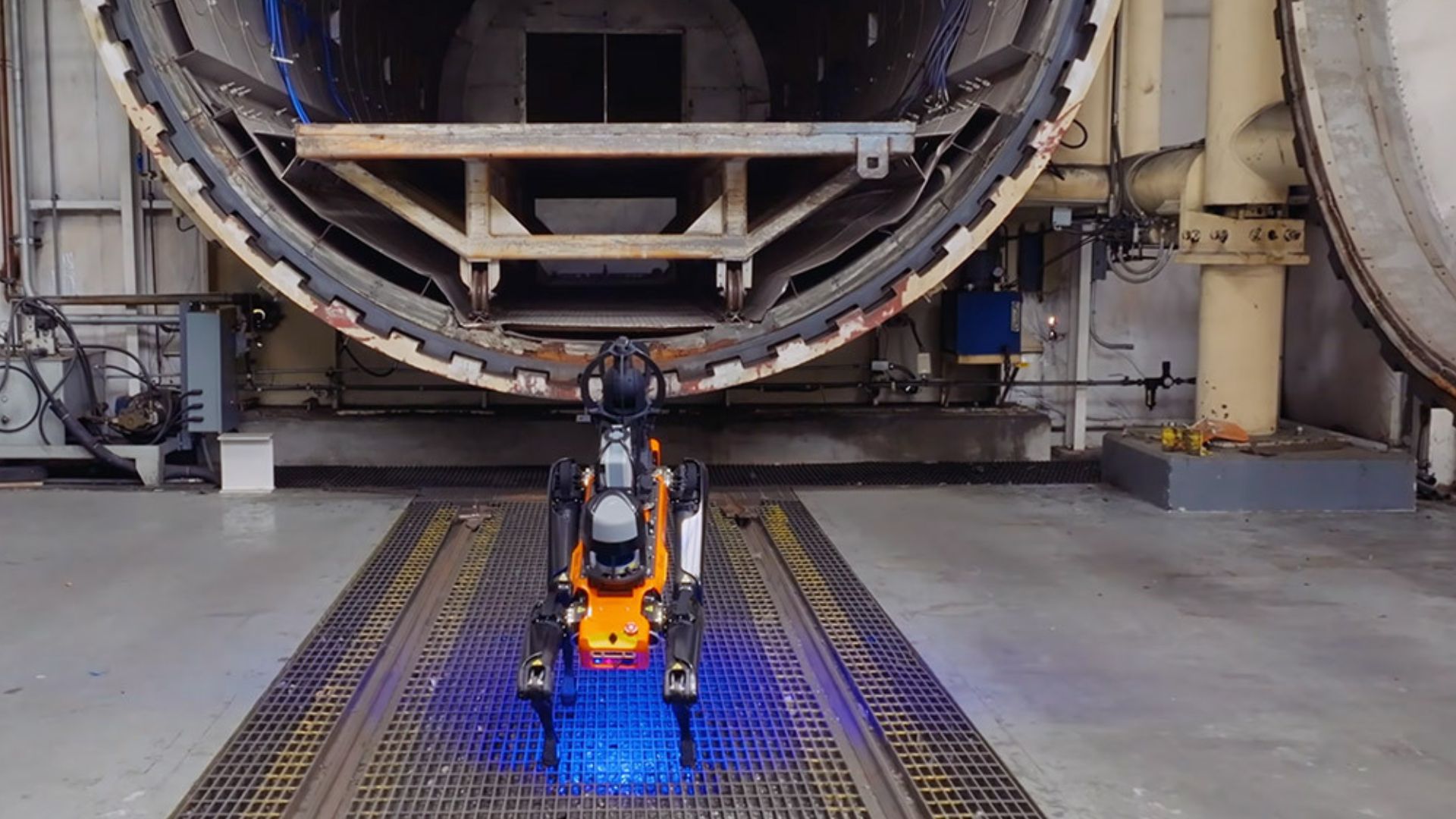
Boston Dynamics’ robotic dog is quietly transforming the way aircraft components are inspected at ST Engineering MRAS.
In a sprawling 1.5-million-square-foot aerospace facility in Maryland, a four-legged robot, Spot, is officially part of the workforce.
The plant manufactures thrust reversers and nacelle systems, essential components that help regulate engine thrust and reduce aircraft noise.
On the vast factory floor, hundreds of machines operate at high temperatures and high voltages, creating an environment where constant monitoring is essential but not always easy.
READ ALSO: https://modernmechanics24.com/post/us-air-force-b21-raider-bomber-produce/
That’s where Spot comes in.
Engineers program the agile robot to patrol the facility on a fixed schedule. Once deployed, it navigates independently through aisles, up staircases, and across uneven surfaces without human assistance.
During its rounds, Spot focuses on high-priority equipment that demands close observation.
Equipped with a thermal camera, the robot scans motors, electrical panels, and other machinery for unusual heat signatures. By detecting overheating components early, maintenance teams can intervene before breakdowns disrupt production.
Spot also carries an acoustic imaging sensor. The device captures “acoustic pictures.” It allows the robot to detect subtle anomalies such as air line leaks or bearings beginning to fail. That data feeds directly into the plant’s maintenance records, enabling predictive maintenance instead of reactive rep;airs.
WATCH ALSO: https://modernmechanics24.com/post/us-firm-sea-launcher-underwater-drones/
According to officials, this shift has improved reliability across the facility. Earlier, inspections could be delayed during busy shifts or emergency repairs, increasing the risk of overlooked issues. Now, even when human crews are tied up, Spot continues its scheduled inspections without interruption.
One of its most critical assignments involves monitoring autoclaves. Autoclaves are massive pressurized chambers used to cure composite materials under extreme heat and pressure. Any malfunction in these systems can be costly and potentially hazardous. Spot performs regular checks, collecting readings that might otherwise be missed in a fast-paced manufacturing environment.
The robot’s role extends beyond inspection. ST Engineering MRAS has integrated Spot with advanced 3D scanning technology using the Leica BLK ARC system. As the robot patrols, the scanner captures detailed 3D point clouds of the entire facility. The result is a continuously updated digital map that reflects structural changes, equipment relocation, and layout adjustments in near real time.
READ ALSO: https://modernmechanics24.com/post/neural-blueprint-human-like-soft-robots/
Engineers say this digital mapping process once required weeks of manual effort. Now, updates occur automatically during Spot’s weekly or quarterly runs. Teams can compare new scans with previous datasets to quickly identify changes, improving planning and operational efficiency.
The integration of robotics, artificial intelligence, and 3D imaging represents a broader trend in smart manufacturing. Rather than replacing workers, the technology supports them by handling repetitive, hazardous, or time-consuming tasks.
Spot has become more than a novelty in the Maryland plant. It is a dependable tool embedded in daily operations. While aerospace manufacturers seek safer, more efficient production methods, robotic inspectors like Spot are becoming standard across industrial facilities worldwide.