The growing race to dominate space is raising fresh concerns on Earth. Scientists are now warning that SpaceX could significantly disrupt astronomy if its latest plans move forward.
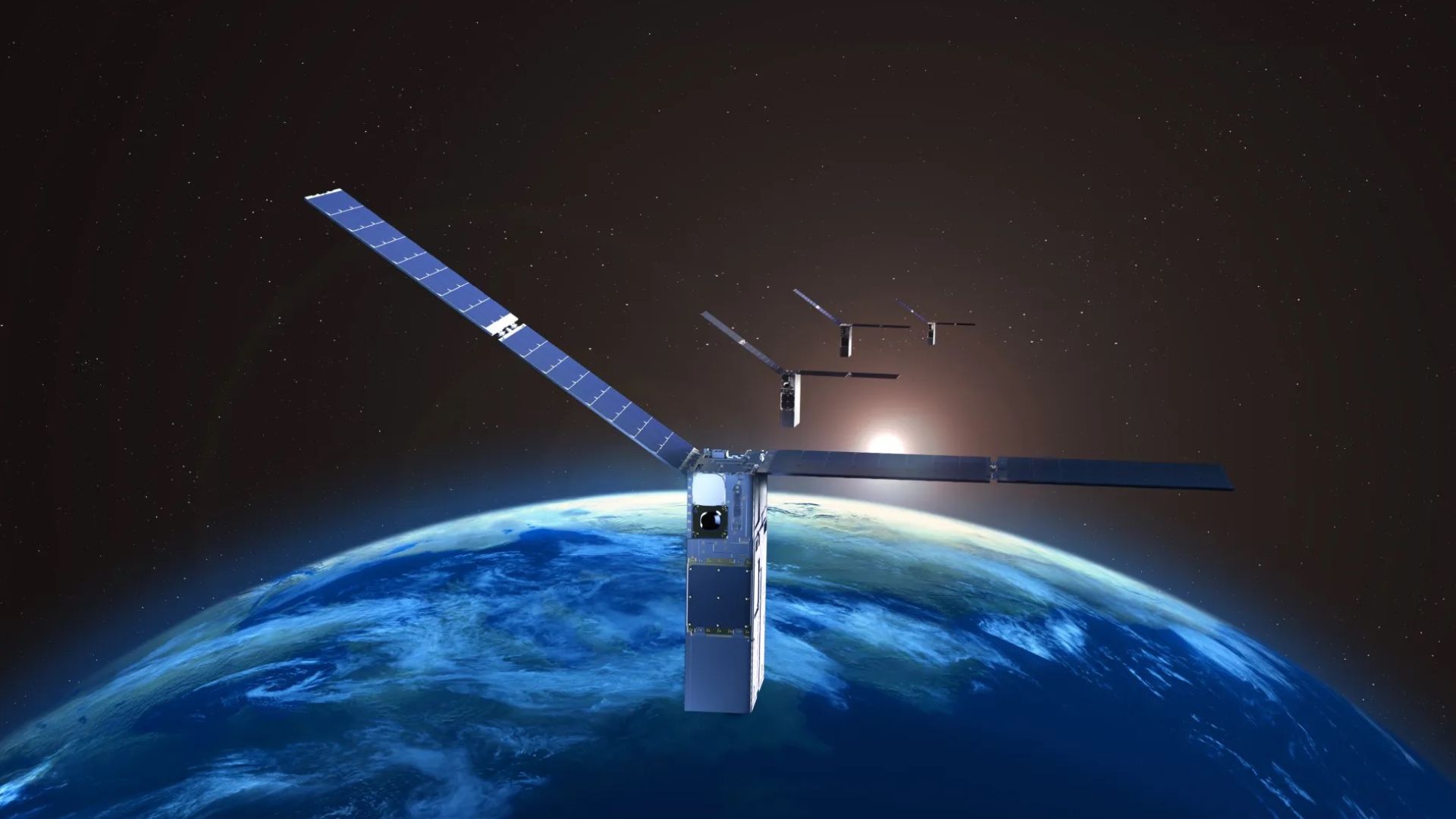
Earlier this week, a Falcon 9 rocket lifted off from Vandenberg Space Force Base, carrying 25 new Starlink satellites into orbit. The launch itself was routine. But it marked a major milestone.
According to Jonathan McDowell, SpaceX now has more than 10,000 active satellites circling the Earth. This is an unprecedented number. And for astronomers, it is becoming a serious problem.
READ ALSO: A 150-Year-Old Geometry Rule Just Failed; Mathematicians Found the Proof
A Sky That Is No Longer Dark
Astronomers say the night sky is no longer what it used to be. The increasing number of satellites reflects sunlight, creating bright streaks across telescope images.
In many cases, these satellites are visible to the naked eye. Some people even mistake them for UFOs.
SpaceX has tried to reduce the brightness. Newer satellites use darker coatings and special films. But scientists say the problem has not gone away. Now, the concern is much bigger.
WATCH ALSO: HMND-01 Alpha Shows How Simulations Fast-Track Humanoid Robots
One Million SpaceX Satellites?
In January, SpaceX submitted a proposal to the Federal Communications Commission (FCC). The plan is ambitious and alarming.
The company seeks approval to deploy up to 1 million additional satellites. These would not just provide internet. They would act as orbital data centers to support artificial intelligence systems.
The proposal has shocked the global astronomy community.
“It feels like this move is undoing the progress we made over the last few years,” said John Barentine in a report by Space.com.
He explained that earlier efforts had made the situation manageable, even if not perfect. But this new plan changes everything.
READ ALSO: YouTuber Built a 3D-Printed Fiberglass Dive Helmet and It Actually Works
A Brighter Night Sky Problem
Barentine warned that these new satellites could be even more disruptive. Unlike current ones, they may stay fully lit throughout the night.
“These satellites will remain illuminated even at midnight,” he said. “They will not stay hidden in Earth’s shadow.”
This means telescopes could be constantly interfered with. Observing faint stars and distant galaxies may become much harder. Astronomers say this is unlike anything they have faced before.
The risks are not limited to astronomy. Scientists are also worried about environmental damage. When satellites stop working, they are usually burned up in Earth’s atmosphere.
With potentially millions of satellites, this could happen very often. Barentine estimates that, in the future, one spacecraft could reenter the atmosphere every three minutes.
This process releases materials such as aluminum oxide and lithium into the upper atmosphere. Researchers fear this could change atmospheric chemistry.
WATCH ALSO: Boston Dynamics Atlas humanoid robot demonstrates remarkable mobility, balance
Some early studies suggest that it might even slow the recovery of the ozone layer.
SpaceX has said it will try to reduce environmental impact. But its filing offers few details. At the same time, the FCC appears to be moving quickly.
Brendan Carr announced that the agency is seeking public comments on the proposal just days after it was submitted. This fast-tracking has raised concerns among critics. Normally, such reviews take weeks or even months.
Public response has been strong. Reports suggest that nearly 1,000 comments submitted opposed the plan. Even Amazon has asked regulators to reject the proposal, adding another layer of competition and tension.
Experts say the issue goes beyond competition or technology. It is about the future of space itself.
Aaron Boley, from the Outer Space Institute at the University of British Columbia, said the rapid growth in satellite numbers is already a concern.
“We were worried when satellites reached 10,000,” he said. “This proposal goes far beyond that.”
READ ALSO: China Robot Learns Tennis From Amateur Moves, Returns Shots With 96.5% Accuracy
He warned that such large numbers could make space crowded and unsafe. It could also limit future access to space for research and exploration.
“By almost every measure, this is not a good idea for long-term space use,” he added.
The debate highlights a growing conflict between commercial space expansion and scientific research.
On the one hand, companies like SpaceX are pushing the boundaries of new technologies and global connectivity. On the other hand, scientists fear losing access to clear skies and a stable environment.
The outcome of this proposal could shape the future of space for decades. For now, astronomers around the world are watching closely and worrying about what comes next.