A recent study by researchers from the University of Basel, ETH Zurich, and the European Space Agency highlights a new way to explore distant worlds like the Moon and Mars.
The team has tested semi-autonomous robots that can make basic decisions independently, reducing the need for constant human control from Earth.
Published in the journal Frontiers in Space Technologies, the study shows how such robots can move faster across planetary surfaces, collect data more efficiently, and help scientists search for resources and signs of life beyond Earth.
Most space rovers today are controlled from Earth. Scientists send instructions, wait for the rover to act, and then receive data back. This process takes time, especially because signals travel across millions of kilometers.
READ ALSO: When AI Chooses Who Suffers: MIT’s SEED-SET Flags Ethical Blind Spots Inside AI Decisions
Rovers are also designed to be safe and energy-efficient. They move slowly to avoid damage. While this careful approach works, it limits how much ground they can cover. Because of these limits, exploring large areas or multiple locations takes a long time.
Robots That Act on Their Own
The new study tested a ‘semi-autonomous robotic explorer.’ This robot does not need constant human guidance. Instead, it can move, scan, and collect data on its own within a set of instructions.
Gabriela Ligeza, a researcher at ESA and co-author of the study, explained that the project combined robotics and geology. The team had to imagine how such a system would work on the Moon or Mars.
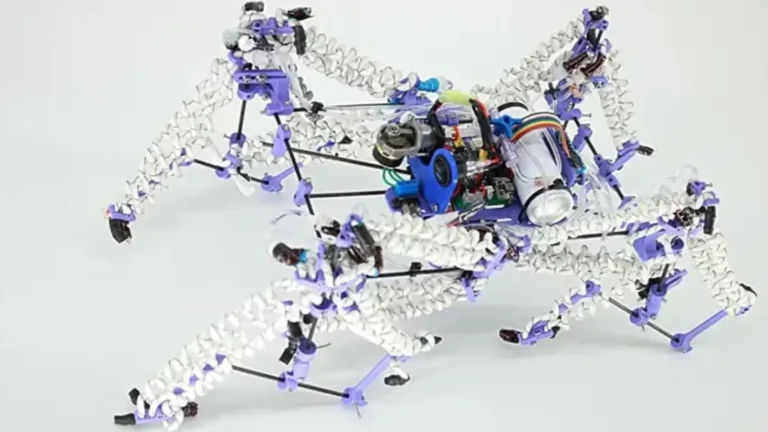
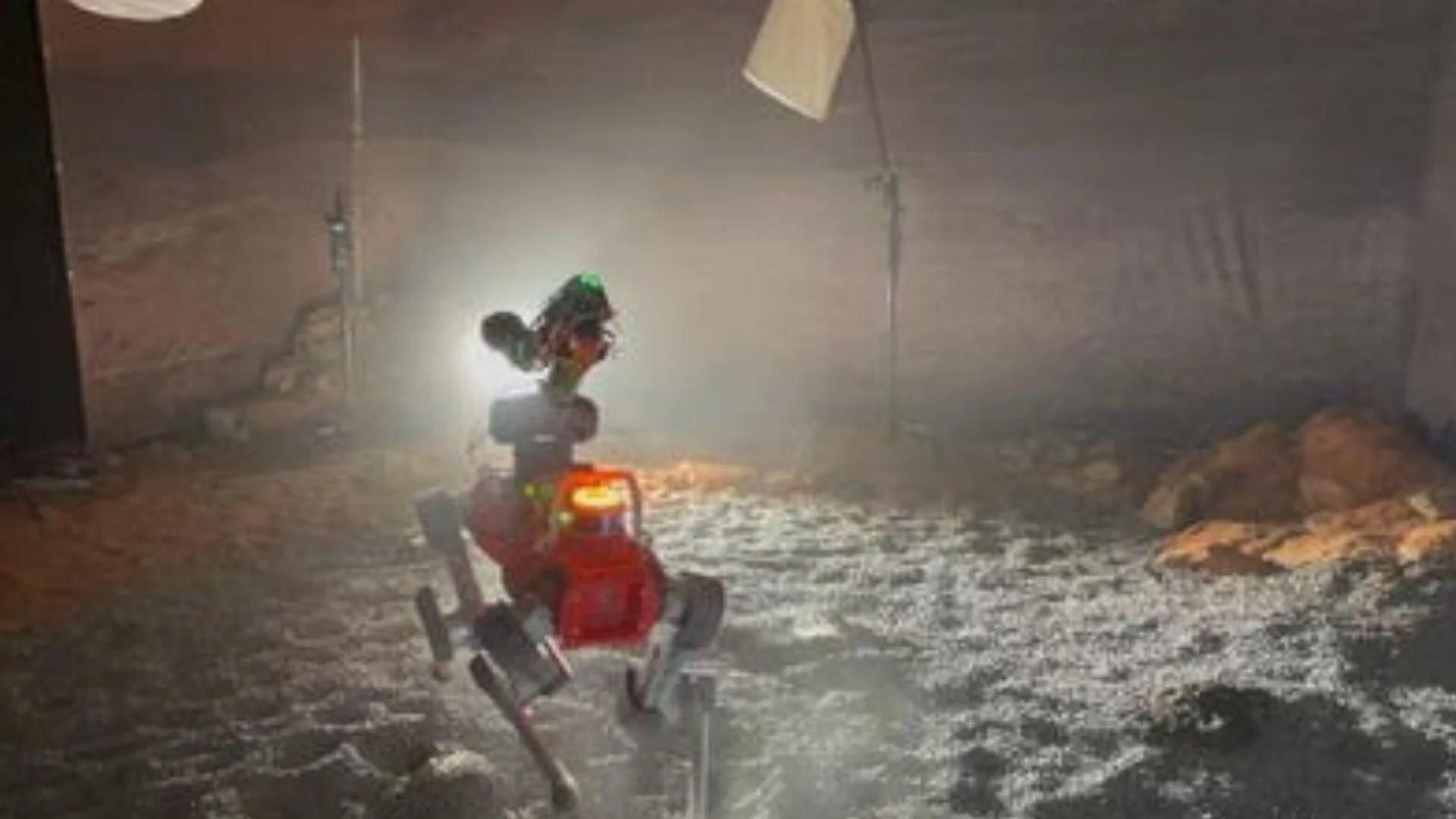
The robot they used has four legs and a robotic arm. It also carries scientific tools, including a camera and a spectrometer. These tools help it identify different materials on the surface.
Once programmed, the robot can travel to different targets, study them, and send data back all without being told exactly where to go each time.
To test the robot, researchers used the Marslabor facility at the University of Basel. This lab recreates conditions similar to the surface of Mars, including rocky terrain and special lighting.
WATCH ALSO: China commissions world’s largest open-sea offshore solar photovoltaic project
The robot moved through this environment and searched for specific targets, such as certain types of rocks hidden across the landscape..When it found a target, it used its robotic arm to place instruments and collect data. It then sent images and information back for analysis.
This process allowed scientists to see how well the robot could perform without step-by-step human control.
When the robot handled multiple targets on its own, it completed tasks in just 12 to 23 minutes. In comparison, missions guided directly by humans took about 41 minutes to achieve similar results.
This shows that semi-autonomous systems can save time and increase efficiency. Researchers also noted that such robots could speed up the search for ‘biosignatures’, evidence of life on other planets.
Most current rovers use wheels. While wheels work well on flat surfaces, they struggle in rough or steep terrain. This is where legged robots offer an advantage.
On the Moon, valuable resources may be located in difficult-to-reach areas, such as steep crater walls. Wheeled machines may not reach these places easily. Legged robots can walk, climb, and adapt to uneven surfaces. This makes them more flexible and able to explore new regions.
Ligeza said that these robots could move faster than humans and handle challenging terrain while scanning for scientific targets.
The idea of smarter robots comes at an important time. Space agencies, including NASA, are planning future missions to establish a long-term human presence on the Moon.
READ ALSO: China Builds Artificial Floating Island to Unlock Secrets Hidden in Deep Seas
Programs like Artemis II are part of this effort. While Artemis II itself will not use a lunar rover, future missions are expected to rely more on robotic systems.
Scientists believe semi-autonomous robots can help prepare the ground before humans arrive. They can map areas, locate resources, and test conditions. This will make human missions safer and more efficient.
AI Is Already Playing a Role
NASA has already started using artificial intelligence in space missions. In December, the agency tested AI systems to guide its Mars rover, Perseverance. The system helped the rover navigate obstacles and travel about 1,500 feet without problems.
The team used Anthropic’s AI models for these tests. This shows that autonomy in space exploration is not just an idea; it is already being put into practice.
The study highlights a shift in how humans may explore other worlds. Instead of controlling every movement from Earth, scientists are now building machines that can act more independently. These robots still follow human instructions, but they can handle tasks independently.
WATCH ALSO: Chinese humanoid robot plays basketball with almost human-like accuracy
Their autonomy includes movement, navigation, instrument use, and data transmission. This balance between control and independence could transform how we explore space.
As plans for Moon bases and Mars missions grow, the need for efficient exploration tools becomes more urgent. Semi-autonomous, legged robots may play a key role in this future.
They can reach difficult areas, collect data faster, and reduce the burden on human operators. Most importantly, they bring us one step closer to understanding distant worlds and possibly finding signs of life beyond Earth.