The UK’s offshore wind sector has reached a new milestone as RWE and Siemens Gamesa roll out recyclable rotor blades on a large scale at the Sofia Offshore Wind Farm. This initiative not only advances renewable energy technology but also sets new standards in sustainability by addressing one of the industry’s most pressing challenges: turbine blade recycling.
Breaking New Ground in Blade Technology
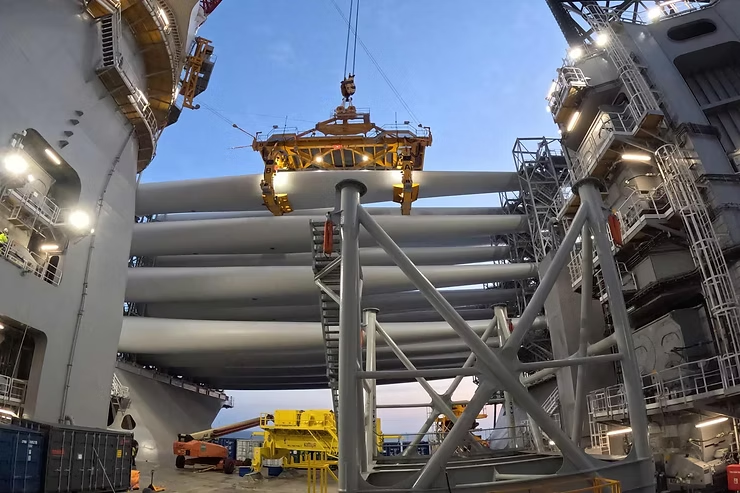
Half of Sofia’s 100 offshore wind turbines are being fitted with 150 recyclable blades, designed and manufactured by Siemens Gamesa. These blades, produced at the company’s state-of-the-art factory in Hull, UK, are made with an innovative resin system that allows them to be broken down into their component materials at the end of their operational life. Unlike conventional blades, which are notoriously difficult to recycle, these can be repurposed into new products such as automotive components, bicycle helmets, and luggage—supporting a truly circular economy.
This cutting-edge design represents a turning point for the offshore wind industry. While traditional blades often end up in landfills after decommissioning, the recyclable variant provides a long-term solution to waste management. It demonstrates how technological innovation can align with sustainability goals while strengthening the clean energy transition.
READ ALSO: Astronomy Meets AI: New Supernova Class Comes to Light
The Sofia Offshore Wind Farm Project
Located off the northeast coast of England on Dogger Bank in the central North Sea, Sofia is one of RWE’s most ambitious offshore wind projects to date. Once completed, it will boast a maximum installed capacity of 1.4 gigawatts (GW), capable of supplying enough renewable electricity to power 1.2 million typical UK homes.
The project involves 100 Siemens Gamesa SG 14-222 turbines, each equipped with blades stretching 108 metres in length and a rotor diameter of 222 metres—among the largest turbines currently in use. With installation already halfway complete, Siemens Gamesa will continue fitting recyclable blades across 50 turbines throughout 2025, aiming for full completion by 2026.
A Commitment to Circularity
For RWE, the deployment of recyclable blades at Sofia demonstrates a broader strategy of embedding sustainability across its renewables portfolio.
Thomas Michel, Chief Operating Officer of RWE Offshore Wind, described the milestone as a defining moment:
“This installation represents an important moment for RWE and Sofia. Deploying recyclable blades at this scale is an indicator of RWE’s drive to deliver sustainability across its renewables fleet. By working with partners like Siemens Gamesa, we are setting a new sustainability benchmark for renewables development and helping significantly improve the circularity of offshore wind technology.”
The project not only tackles waste reduction but also reinforces RWE’s role in driving the energy transition. By adopting recyclable blades, the company is making a clear statement about the future direction of offshore wind development.
READ ALSO: General Dynamics to upgrade Virginia-class submarines with new contract
READ ALSO: LONGi Unveils World’s First 700W HIBC Solar Module with 25.9% Efficiency and Record Power Density
Industry Collaboration for a Net-Zero Future
Siemens Gamesa, which pioneered the recyclable blade design, sees the project as a landmark achievement for both the UK and the global offshore wind industry.
Darren Davidson, Vice President of Siemens Energy UK&I and Siemens Gamesa UK, emphasized the collaborative nature of the achievement:
“Seeing the first recyclable blades being installed in UK waters is a major landmark moment. This is a great example of how we can share knowledge and work together to deliver on both energy security and a net zero future. Our Hull factory is at the cutting edge of blade technology development and manufacturing. As a global leader in energy technology, we’re proud to be partnering with RWE on Sofia, one of the largest offshore wind farms in the world.”
This partnership underscores how collaboration between developers and manufacturers can accelerate the pace of innovation. By combining RWE’s scale and project expertise with Siemens Gamesa’s technological advancements, the two companies are reshaping the future of offshore wind.
Building on Past Success
The Sofia project builds on lessons learned from RWE’s Kaskasi Offshore Wind Farm in Germany, where Siemens Gamesa’s recyclable blades were installed for the first time in 2022. That pilot deployment proved the concept and opened the door for scaling up in the UK.
By moving from pilot projects to large-scale implementation, RWE is demonstrating confidence in the technology and laying the foundation for wider adoption across the industry.
READ ALSO: General Atomics is integrating new capabilities onto its MQ-9B drone
Progress at Sea
Offshore construction at Sofia is advancing steadily. Siemens Gamesa is carrying out the installation using the specialist vessel Wind Peak, operated by Cadeler from the Port of Hull. This logistical hub has been instrumental in supporting both the manufacturing and deployment of the blades, further anchoring the UK’s role as a leader in offshore wind development.
A Blueprint for the Future
The recyclable blade initiative at Sofia represents far more than a technological upgrade—it’s a glimpse into the future of renewable energy. By addressing the challenge of blade recycling head-on, RWE and Siemens Gamesa are setting a global precedent for sustainable offshore wind development.
As the UK strives toward its net-zero targets, projects like Sofia highlight how innovation, collaboration, and commitment to sustainability can drive the energy transition. With 1.4 GW of capacity and pioneering recyclable blade technology, Sofia will not only supply clean power to millions but also help redefine how offshore wind farms are designed, built, and decommissioned.