Researchers from the University of Chicago, UC San Diego and LG Energy Solution have developed a better way to build sulfur cathodes. The new method brings cheap, high-capacity batteries closer to reality for electric vehicles.
A team of scientists has found a way to make sulfur-based cathodes work much better in solid-state batteries. By changing how materials are mixed and ground together, they achieved a discharge capacity of about 1500 milliampere-hours per gram of sulfur. That is very close to sulfur’s theoretical limit of 1675 mAh per gram. The team also built the battery in a practical pouch-cell format, showing it can be scaled up for real-world use.
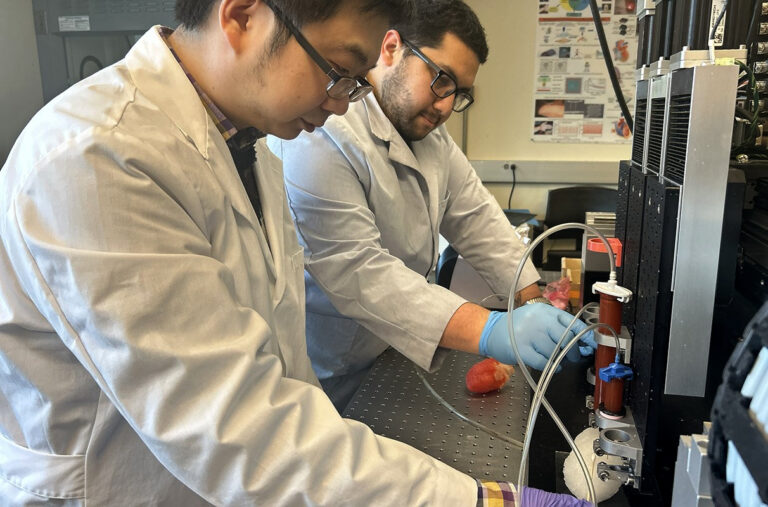
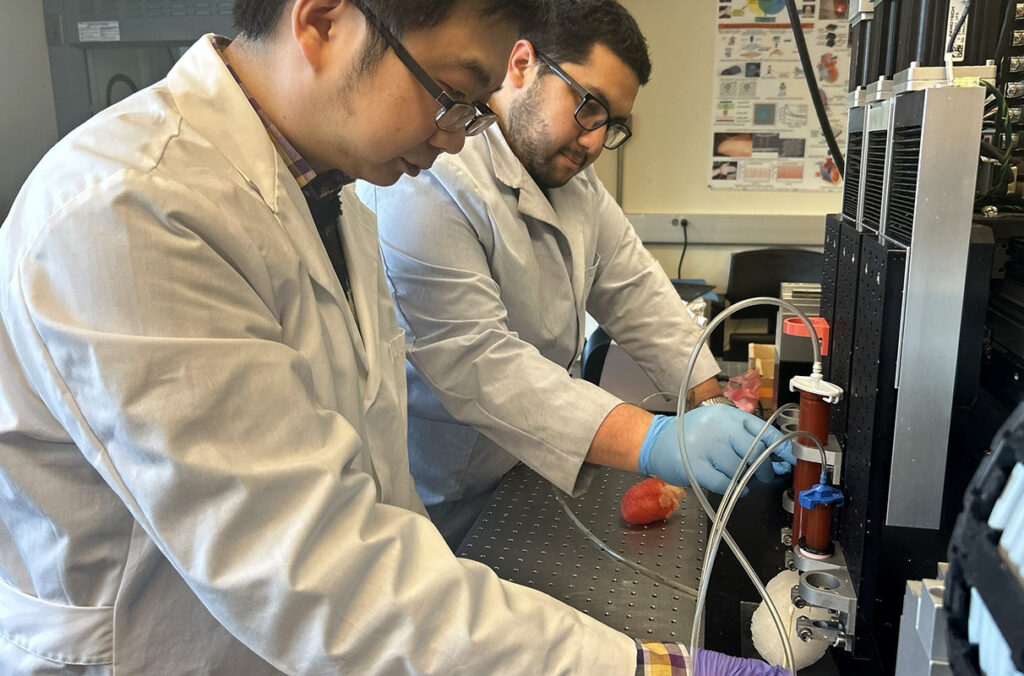
Chen-Jui (Ben) Huang, a postdoctoral researcher at the University of Chicago Pritzker School of Molecular Engineering and UC San Diego, co-authored the study published in Nature Communications. He worked with Seung Bo Yang, a Senior Researcher at LG Energy Solution, and Prof. Shirley Meng from UChicago PME, the first corresponding author. The work is part of an ongoing partnership with South Korean battery-maker LG Energy Solution through its Frontier Research Lab program.
READ ALSO: https://modernmechanics24.com/post/hardox-hiace-steel-heat-wear-corrosion/
Global demand for lithium-ion batteries is expected to more than double by 2030, driven by electric vehicles and electric aviation. New batteries need to be powerful but also cheap enough for mass production. Sulfur is low-cost and abundant, with high theoretical capacity, but it has a major flaw: sulfur itself is insulating. It does not conduct electricity or ions well, so much of it stays unused in traditional battery designs.
The team focused on particle size and mixing technique. They found that solid electrolyte particles need to be at the micron level for best results. Using a one-step milling process, they ground all materials together into a fine powder. This created a uniform blend and formed a special interphase that partially reacts the sulfide electrolyte with the sulfur, actually improving performance. The method works without adding new materials or coatings.
The battery delivers high capacity in a practical pouch-cell format, which uses sheet electrodes that can be scaled to larger areas. This makes it suitable for electric vehicle designs. Seung Bo Yang said the research points toward batteries that could let EVs travel significantly longer distances. The approach keeps costs low while pushing performance higher.
Sulfur-based electrodes “breathe” as they charge and discharge, expanding and contracting in a way that adds stress over time. The team has a plan to offset this by pairing a silicon negative electrode with a lithium sulfide positive electrode. When one side swells, the other shrinks, reducing the net change in thickness. This helps the battery stay mechanically stable, but the technique still needs more testing in long-term use.
WATCH ALSO: https://modernmechanics24.com/post/ubtech-world-first-robot-shipment/
The work shows that low cost and high performance can go together. Prof. Shirley Meng said high-performing batteries sitting in labs help no one; they need to be affordable at scale to meet energy and climate goals. This industry-academia partnership continues to prove that simple changes in manufacturing, not expensive new materials, can unlock the potential of sulfur and bring better EV batteries to the real world.