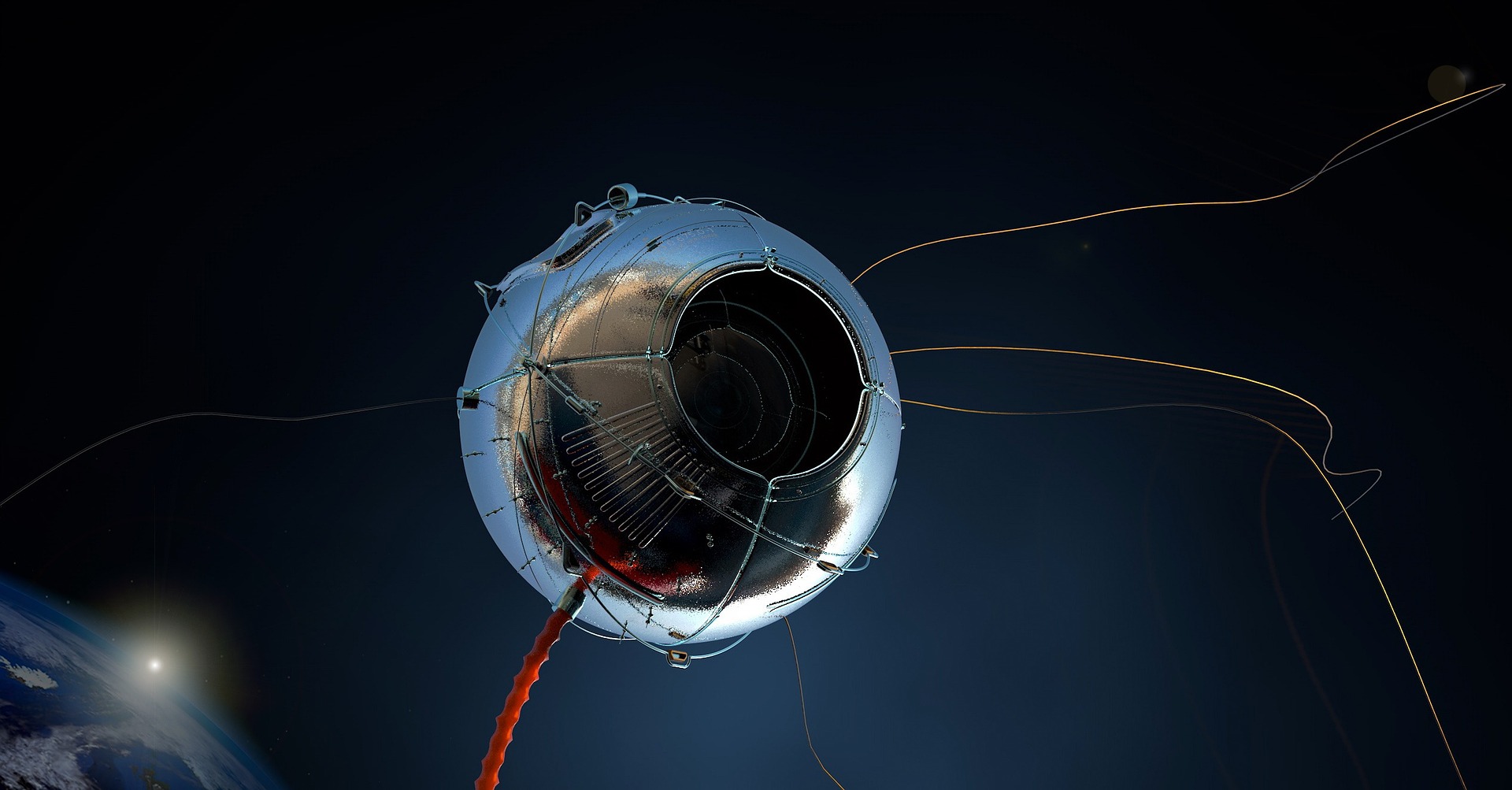
European security officials report that two Russian space vehicles, Luch-1 and Luch-2, have intercepted communications from at least 17 key European satellites over the past three years. This clandestine operation, detailed by intelligence sources, exposes a critical vulnerability in unencrypted command links, raising fears that Moscow could manipulate, disable, or crash vital orbital infrastructure.
A silent, high-stakes game of cat and mouse is playing out 36,000 kilometers above Earth. European intelligence and space commands are sounding the alarm over two sophisticated Russian satellites that have spent years sidling up to the continent’s most important communications hubs in geostationary orbit. This isn’t science fiction; it’s a coordinated espionage campaign with the potential to paralyze modern society. The product of this mission—the Luch-class satellites—serves to solve a critical intelligence problem for the Kremlin: gaining intimate access to the West’s satellite command and control systems to map vulnerabilities and gather sensitive signals.
The basic function of these vehicles is signals intelligence, or “sigint.” They perform risky rendezvous and proximity operations, maneuvering to park within the narrow data beams that ground stations use to communicate with satellites. From this vantage point, they can eavesdrop. Major General Michael Traut, head of Germany’s space command, confirmed the satellites are “doing sigint business.” The primary target appears to be the “command link”—the channel used by ground controllers to steer the satellite, make orbital adjustments, and manage its systems. A senior European intelligence official disclosed a shocking weakness: much of this command data is transmitted completely unencrypted from older satellites.
READ ALSO: https://modernmechanics24.com/post/rolls-royce-test-methanol-marine-engine/
This widespread lack of encryption points to a major limitation in both the defending and attacking systems. For Europe, it’s a glaring security flaw born of an era when space was considered a benign environment. For Russia, while the Luch satellites are advanced, analysts believe they likely lack the inherent capability to directly jam or physically destroy their targets. Their power is in information gathering, not immediate kinetic attack. However, the intelligence they collect on satellite operations is precisely what would be needed to craft such an attack in the future.
The potential consequences are severe. With intercepted command codes, an adversary could mimic legitimate ground control. As analysts warn, false commands could be beamed to a satellite, firing its thrusters to knock it out of alignment, send it crashing to Earth, or drift it into a useless orbit. German Defense Minister Boris Pistorius has called satellite networks “an Achilles heel of modern societies” and labeled Russian activities “a fundamental threat.” The overall summary is that these operations represent a profound shift in hybrid warfare, extending sabotage and destabilization tactics into the orbital domain, threatening everything from broadcast television to military communications across Europe, Africa, and the Middle East.
WATCH ALSO: https://modernmechanics24.com/post/india-zorawar-light-tank-missile-test/
The campaign is intensifying. Tracking data from companies like Slingshot Aerospace and Aldoria shows Luch-2, launched in 2023, has approached 17 European satellites. It is currently loitering near Intelsat 39, a major communications satellite. Furthermore, Russia appears to be expanding its fleet, having launched two new maneuverable satellites, Cosmos 2589 and Cosmos 2590, last year. The innovator behind this aggressive strategy is the Russian military and intelligence apparatus, while the engineers who built and operate these sophisticated, stealthy orbital platforms are within Russia’s advanced state space program.
Reported by the Financial Times, this activity coincides with a rise in Russian hybrid attacks on ground-based infrastructure like subsea cables. Space is now clearly part of that battlefield. While the recent apparent fragmentation of Luch-1 in January may have sidelined one asset, the mission continues. The message to Western nations is clear: the next crisis may not begin on land, sea, or air, but in the silent, vulnerable space upon which daily life unknowingly depends.
READ ALSO: https://modernmechanics24.com/post/worlds-largest-accelerator-heats-homes/