Carnegie Mellon University (CMU) researchers have developed a system using AI models and cameras to animate ordinary household items, allowing mugs, trivets, and staplers to autonomously roll to you when needed. The project, led by Violet Han, a Ph.D. student at CMU, and Professor Alexandra Ion, explores a future where your environment anticipates your actions, creating a seamless, responsive space without humanoid robots.
Imagine you’re juggling a hot baking tray fresh from the oven, and you realize there’s no trivet on the counter. Before panic sets in, you watch as one quietly rolls out from its storage spot, positioning itself perfectly for your tray. This isn’t a scene from an animated film; it’s a tangible vision of a near-future kitchen being built in Pittsburgh. Scientists at Carnegie Mellon University’s Human-Computer Interaction Institute are asking a provocative question: what if the objects themselves became helpful robots?
“Instead of bringing additional robots into our existing environments, what if the objects that are already there in our homes that we’re already familiar with can be both intelligent and robotic?” said lead author Violet Han in an interview with CNET. This approach sidesteps the complexity and unease often associated with humanoid robots. Why build a costly, dexterous android to fetch a stapler when the stapler could simply come to you? The team’s research, presented in a recent paper, demonstrates this principle by fitting everyday items with simple, wheeled platforms controlled by a central AI “brain.”
READ ALSO: https://modernmechanics24.com/post/worlds-longest-expressway-tunnel/
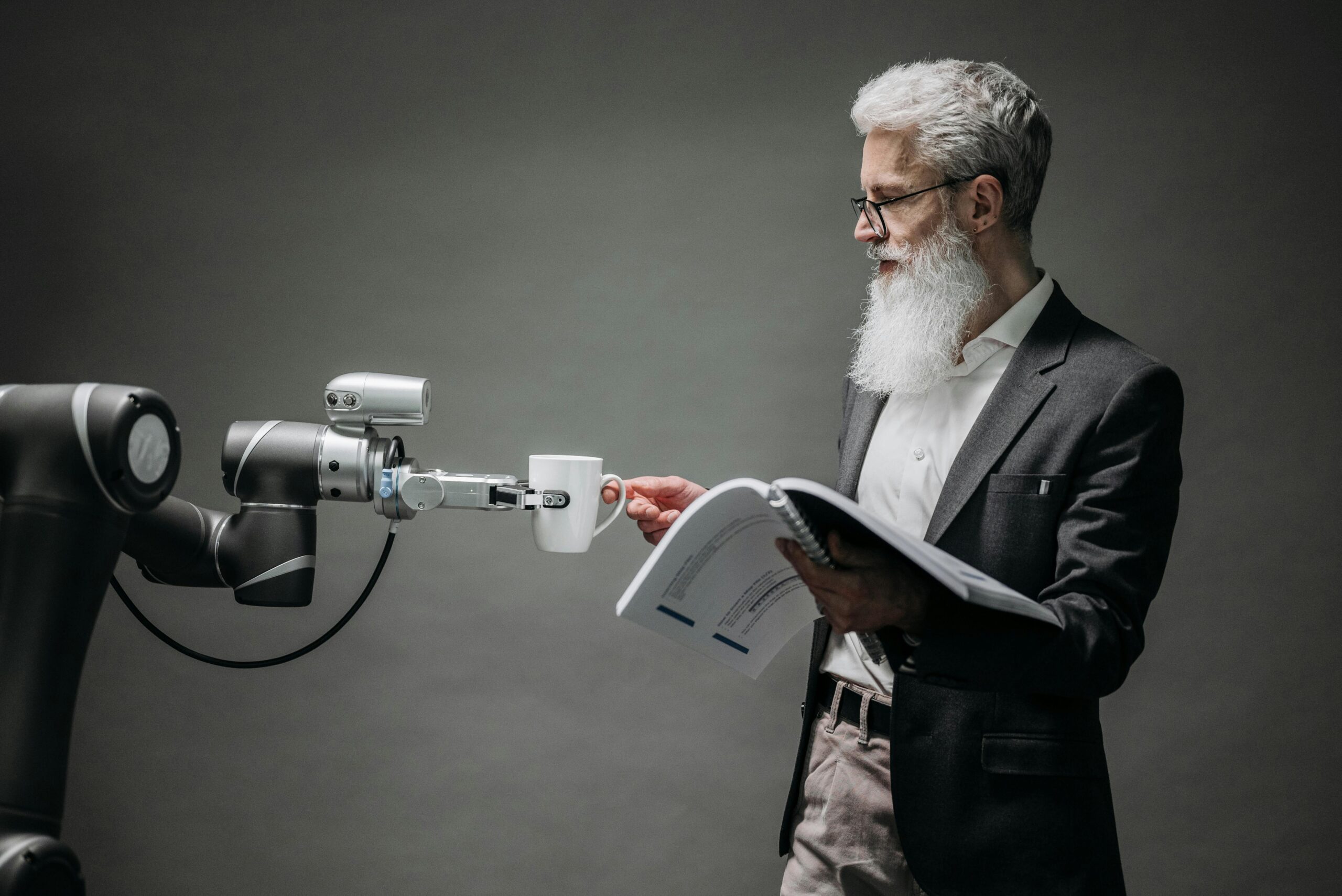
The magic isn’t in the objects themselves—a coffee mug sits on a small, round platform with tiny motors, wheels, and a battery—but in the networked intelligence observing the room. A ceiling-mounted camera streams video to a suite of AI models that work in concert. One identifies people and objects, another interprets human actions, and a large language model (LLM) with reasoning capabilities predicts what should happen next. The system knows that if you pick up a document, you might need a stapler, reported CNET. It also understands practical etiquette: “If a mug moves toward me, it’s more convenient for me if the handle is toward me,” Han explained.
This predictive assistance extends beyond dramatic saves. A key tray could jingle to remind you not to leave home without them. A lost remote could scoot into view. You could even ask your smart home to send an item over. The potential for creating fluid, intuitive workspaces and homes is significant. Professor Ion, who leads the Interactive Structures Lab, noted the technical feasibility is closer than we think. “The technology itself is ‘not that far off,’” Ion told CNET, though she highlights a major hurdle: consumer comfort with pervasive surveillance.
The core tension lies in the trade-off between convenience and privacy. A system this responsive requires constant visual monitoring. “If you are OK with overhead cameras, that’s much faster to deployment,” Ion said, “but personally, I wouldn’t be OK with that.” Solutions could include stronger data regulations or systems that process everything on local, offline hardware to prevent sensitive video from ever leaving the home.
WATCH ALSO: https://modernmechanics24.com/post/iss-crew-new-year-2026-wishes/
Safety and intentional design are also paramount in this animated object future. The researchers have already grappled with these questions. They built a moving knife platform but programmed it so the blade always faces away from a person. It forces a crucial discussion, Ion suggests: “Do we just not want to have these types of objects at all being actuated?” The goal is to ensure automation aligns with human desire and safety. As Han puts it, assistance must be contextual. “It’s important for the robots not only to be capable but also to understand what the user wants and how they may best assist the users.”
Ultimately, this CMU project isn’t about replacing our beloved tools but subtly empowering them. It presents an alternative robotic future—not one dominated by metal servants, but one where our familiar environment quietly comes to life, anticipating needs in the background. Your coffee cup might just sense your afternoon slump and begin its gentle journey across the desk, handle turned politely in your direction.
READ ALSO: https://modernmechanics24.com/post/paralysed-chinese-man-builds-smart-farm/