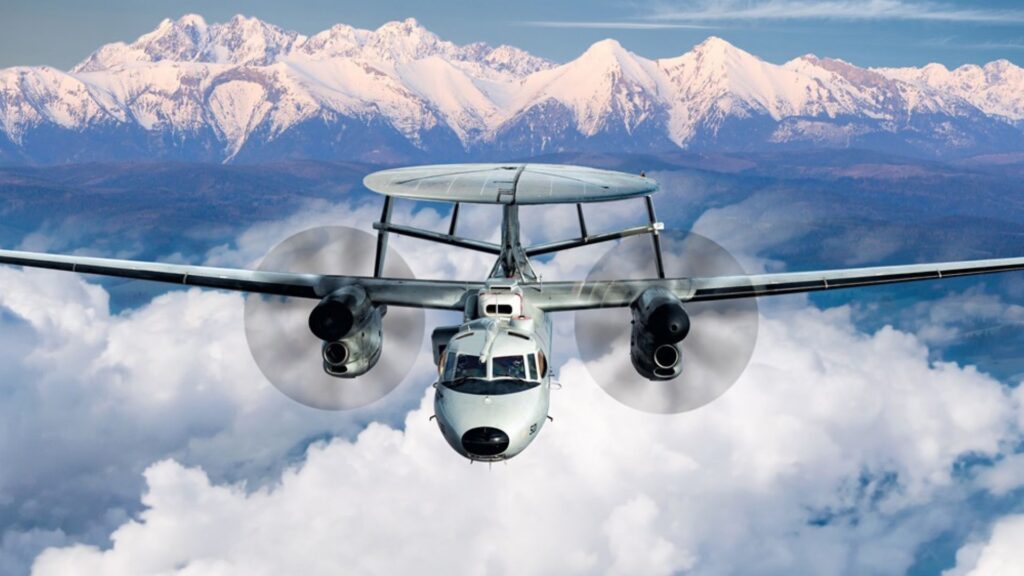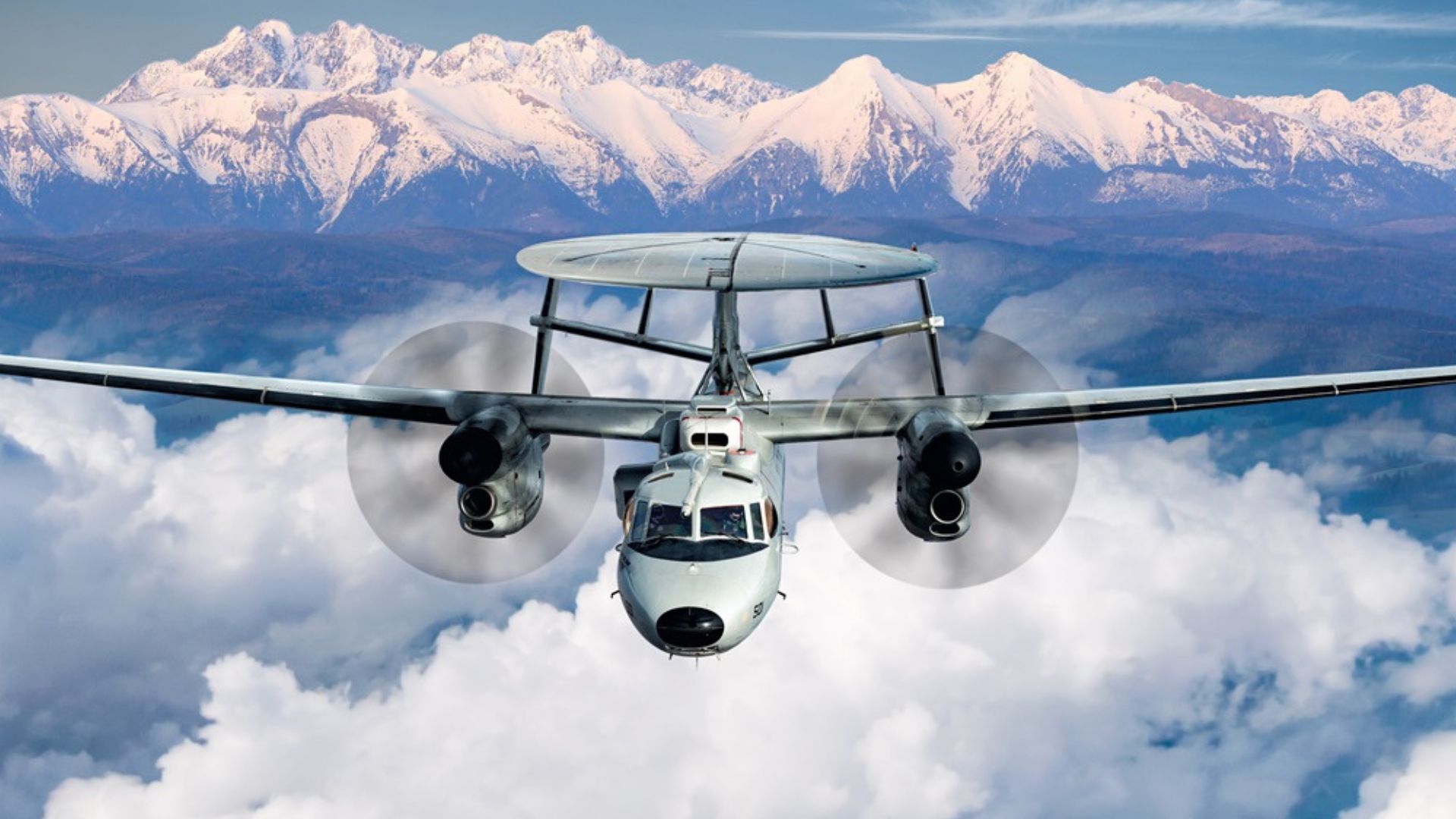
The US has rapidly moved a group of its advanced E-2D Hawkeye aircraft toward the Middle East, highlighting growing security concerns in the region.
At least five of these airborne early warning and control aircraft crossed the Atlantic Ocean and stopped at Lajes Air Base in the Azores, a key transit hub for US military deployments.
This kind of movement is rare for the E-2D fleet, which is typically deployed from aircraft carriers. However, the urgency of the situation in the Middle East appears to have prompted this decision.
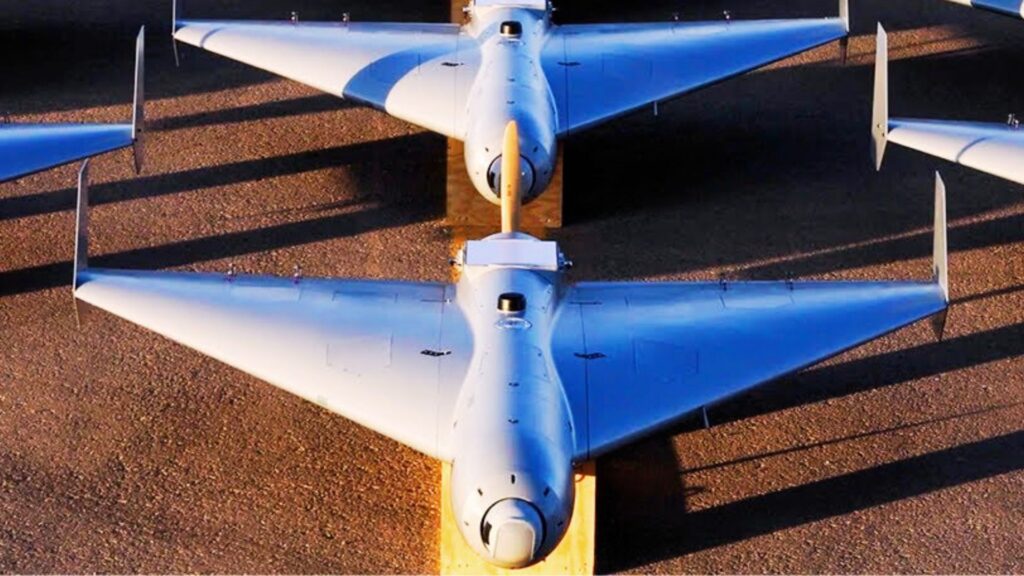
The region has seen a rise in drone and missile attacks, especially from Iranian-backed operations targeting Gulf nations and strategic waterways.
Why E-2D Hawkeye Deployment Matters
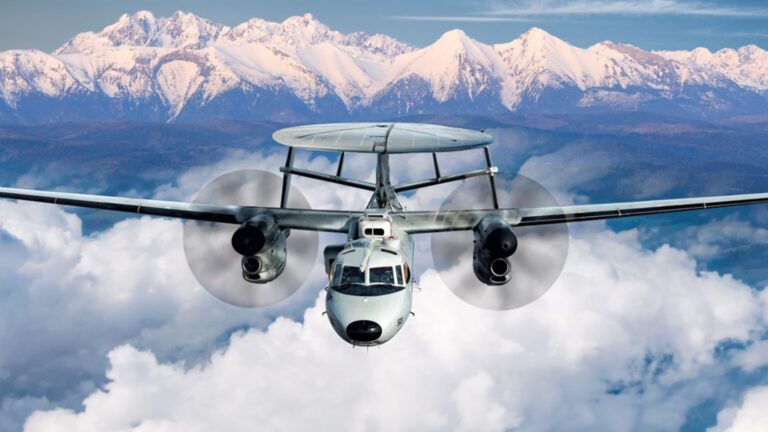
The E-2D Hawkeye is one of the most advanced surveillance aircraft in the US military. It is designed to detect and track threats over long distances, especially those flying at low altitudes. These include drones, cruise missiles, and even small boats carrying explosives.
WATCH ALSO: Rolls-Royce tests world’s first high-speed marine engine powered by methanol
The aircraft is already operating in limited numbers in the region from US Navy carriers. However, the arrival of additional Hawkeyes suggests that existing assets may not be sufficient to address the rising threat levels.
Recent developments show that Iranian drones and missiles have impacted several countries across the Middle East. There are also concerns over maritime security, particularly in the Strait of Hormuz, a critical global trade route.
In this scenario, deploying additional surveillance aircraft is essential to maintain situational awareness and ensure a quick response.
Inside the E-2D: Radar, Networking, and Combat Role
What sets the E-2D Hawkeye apart is its powerful radar system. The aircraft uses an advanced electronically scanned radar that can detect targets flying very close to the ground or sea surface. This look-down capability is essential because many modern threats are designed to avoid detection by staying low.
The radar can track multiple targets at once and provide real-time data to military commanders. This enables faster, more accurate decision-making during operations.
READ ALSO: Belgium’s University of Liège Finds Genetic Switch That Keeps Organs Healthy
Beyond radar, the E-2D functions as a flying command center.
It is equipped with advanced communication systems that link ships, fighter jets, and ground forces into a unified network. This system enables coordinated operations and improves overall battlefield awareness.
The aircraft is also integrated into systems that allow naval ships to engage targets beyond their radar range. For example, it can guide long-range missiles toward incoming threats, significantly enhancing defensive capabilities.
Another key feature is its ability to refuel mid-air. The deployed Hawkeyes are equipped with refueling probes, allowing them to stay airborne for extended periods. During their journey, they were supported by US Air Force KC-46 Pegasus tankers, which provided long-range aerial refueling.
The Hawkeyes’ deployment route reflects a well-planned, urgent mission.
The aircraft departed from Naval Air Station Norfolk, stopped at Bangor, Maine, and then crossed the Atlantic to the Azores. This route is commonly used for rapid deployments to Europe and the Middle East.
WATCH ALSO: China’s new massive battle tank takes part in live-fire test
Markings on the aircraft indicate that some belong to Carrier Airborne Early Warning Squadron 121 (VAW-121), based in Norfolk. These units are usually part of carrier air wings, but the current mission suggests a possible shift to land-based operations for added flexibility.
The demand for platforms like the E-2D has increased as low-cost drones are increasingly used in warfare. These drones are difficult to detect and can carry out precision attacks. The Hawkeye’s advanced sensors make it one of the best tools to counter such threats.
In recent years, the aircraft has performed similar roles in the Red Sea, supporting surveillance and defense operations. Its ability to operate from shorter runways and with a smaller support system makes it suitable for rapid deployment in different environments.
At the same time, the deployment raises broader questions about the future of airborne early warning systems. The US Air Force has been working to replace its aging E-3 Sentry fleet, with options like the E-7 Wedgetail under consideration.
However, the E-2D continues to prove its value due to its versatility and advanced capabilities.
READ ALSO: Is UK’s Nuclear Shield Too Dependent on the US? Ed Davey Sparks Major Defense Debate
Since tensions in the Middle East continue to rise, the arrival of additional E-2D Hawkeyes provides a significant boost to surveillance and defense efforts. These aircraft act as the ‘eyes in the sky,’ helping detect threats early and coordinate responses effectively.
In a rapidly evolving conflict environment, where speed and precision are vital, platforms like the E-2D Hawkeye play a vital role. Their deployment signals a strong commitment to maintaining security and stability in one of the world’s most sensitive regions.