University of Oxford scientists have, for the first time, successfully engineered quantum mechanical processes inside custom-designed proteins, creating a new class of c. Led by Associate Professor Harrison Steel from Oxford’s Department of Engineering Science, the breakthrough moves quantum biology from observation to intentional design, opening a frontier for medical imaging and diagnostic technologies.
Think of the most precise navigation system on the planet, and you might imagine GPS satellites. But many birds possess a built-in, biological quantum compass that senses Earth’s magnetic field—a natural marvel scientists have long admired. Now, what if we could harness that quantum sensitivity and engineer it into a tool to see inside living cells? A team at the University of Oxford has done just that, turning a phenomenon of nature into a platform for innovation. They’ve created a new family of biomolecules called magneto-sensitive fluorescent proteins (MFPs) that can be controlled with magnetic fields and radio waves, thanks to quantum interactions engineered right into their structure.
“What blows me away is the power of evolution,” said Gabriel Abrahams, first author and DPhil student in the Department of Engineering Science, in the university’s report. “We don’t yet know how to design a really good biological quantum sensor from scratch, but by carefully steering the evolutionary process in bacteria, Nature found a way for us.” The team used a technique called directed evolution, introducing random mutations to a protein’s DNA and then selecting the variants that performed best over many generations. The result was a protein with a dramatically improved sensitivity to electromagnetic fields, a capability that simply didn’t exist before in a designed biomolecule.
READ ALSO: https://modernmechanics24.com/post/dlr-rotor-blade-helicopter-noise-reduction/
The potential applications are profound, particularly in biomedicine. As reported by the University of Oxford, the team has already built a prototype imaging instrument that operates on a principle similar to hospital MRI scanners. However, this system could track specific, genetically tagged cells or monitor gene expression in real time inside a living organism. Imagine watching how a tumor responds to a new drug at a molecular level or guiding a targeted therapy precisely to its destination—this is the future MFPs could enable.
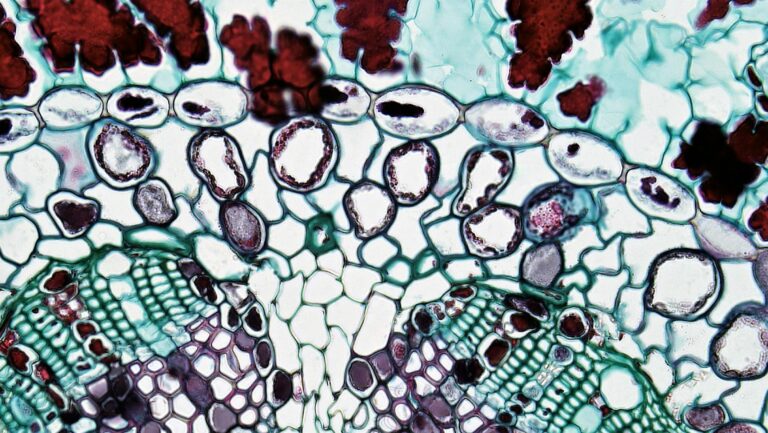
This achievement is a testament to interdisciplinary science, merging Engineering Biology, Quantum physics, and Artificial Intelligence. “Our study highlights how difficult it is to predict the winding road from fundamental science to technological breakthrough,” explained senior author Associate Professor Harrison Steel. He noted that their understanding relied on decades of research into avian navigation, while the starting protein for their engineering journey came from an unexpected source: the common oat.
WATCH ALSO: https://modernmechanics24.com/post/humanoid-robots-no-human-control/
The research, published in the prestigious journal Nature, represents a significant paradigm shift. While quantum effects have been observed in biology, this is the first time they have been engineered to create a practical technology from the ground up. The MFPs work by being excited with light; they then emit fluorescent light of a different color. Critically, the intensity of this fluorescence can be modulated by applying specific magnetic or radio frequency fields, creating a detectable signal that carries quantum information.
Following this success, the Oxford-led team is accelerating work to realize these applications. They are part of a major new project to further explore quantum effects in nature and translate them into usable technologies. The journey from a fundamental curiosity about bird navigation to a engineered protein that could revolutionize medical imaging is a powerful reminder that the next great leap in technology might already be written in the language of life, waiting to be decoded and directed.
READ ALSO: https://modernmechanics24.com/post/early-universe-more-soupy-than-thought/