A significant energy transition is underway across Europe, as balcony solar panels emerge as a practical solution for decentralized renewable energy.
In urban areas, especially, these compact plug-and-play solar systems are reshaping how households generate electricity without permits, rooftops, or high installation costs.
Plug-In Solar, Made Simple
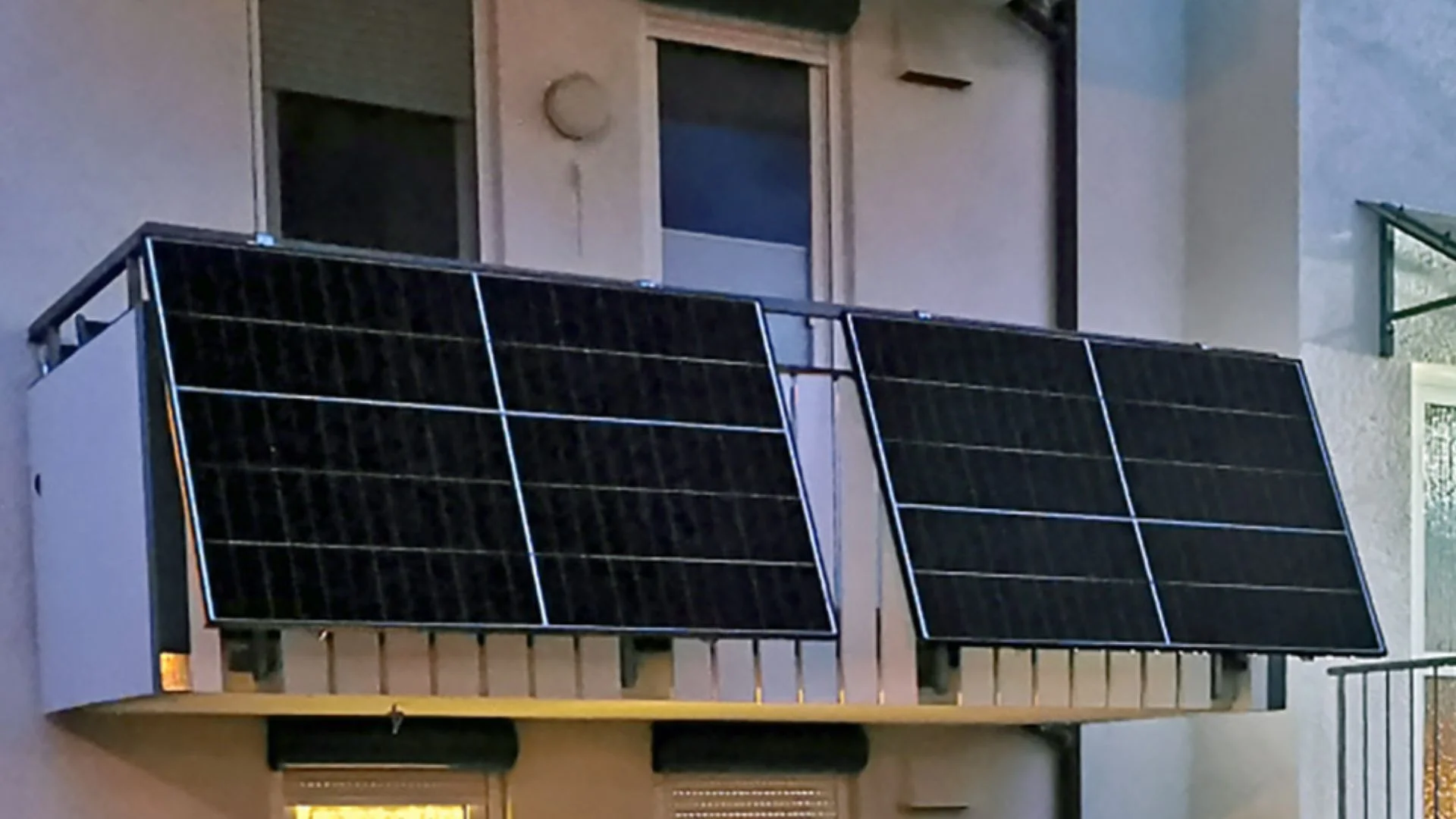
The concept is surprisingly straightforward. People mount one or two solar panels on their balconies using brackets or stands. The panels connect to a small inverter, which is then plugged into a regular household socket.
READ ALSO: No Seismometers: Lightweight Fiber-Optic Cables to Track Moonquakes for Artemis Missions
When sunlight hits the panels, they produce electricity. The inverter converts it into usable power and feeds it directly into the home’s electrical system: no drilling, no contractors, and no major setup required.
The trend is strongest in Germany, where adoption has surged rapidly. More than a million such systems are already in use, though the real number may be higher due to unregistered installations.
Cities like Berlin and Munich have even introduced financial incentives to encourage adoption. Residents, both renters and homeowners, are embracing the idea, especially as electricity prices continue to rise.
What began as an experiment has quickly become practical. Early users found that even small setups could power everyday appliances. A single system can run a refrigerator during the day, charge laptops, or keep lights on. Mobile apps allow users to track energy generation in real time.
WATCH ALSO: Chinese firm’s humanoid robot can perfectly pick up tennis ball
Many report noticeable reductions in electricity bills within weeks. Some even recover their investment within a few years. Retailers like Lidl have started selling complete kits, making the technology accessible to ordinary households.
A major turning point came in 2017, when German regulators simplified the rules for small solar systems.
Officials decided that low-capacity setups should not be treated like full rooftop installations. They capped feed-in power at around 800 watts, roughly equal to a household appliance, to protect wiring.
Panels can generate more energy, but any excess is either used instantly or stored in optional batteries. Later reforms made registration easier and, importantly, allowed tenants to install systems without needing landlord approval in many cases.
At first, there were concerns about safety. But widespread use has helped ease those fears. Modern micro-inverters include built-in protections. Output limits ensure older wiring isn’t overloaded. Residual current devices, already common in homes, add another layer of safety.
READ ALSO: Lenovo’s 1000Wh Battery Reveal Signals More Than Just Better Battery Life
So far, large-scale issues have not emerged. The systems have proven reliable under everyday conditions.
The success in Germany has sparked interest elsewhere. Similar balcony solar setups are now appearing in Spain, France, and Belgium.
What was once a niche solution is becoming a common sight; panels quietly hanging from railings, generating clean energy in urban spaces.
For years, the US lagged behind due to strict regulations. Even small systems required permits, paperwork, and professional installation.
That began to change in 2025. States like Utah introduced laws allowing systems under 1,200 watts without complex approvals. Virginia followed with similar measures. Meanwhile, California is exploring rules to ease restrictions on plug-in solar devices.
Major players are taking notice. Companies like Anker and Jackery are developing balcony-friendly solar kits designed for global markets. Non-profits such as Bright Saver are also working to ensure these systems meet safety standards and comply with regulations.
WATCH ALSO: Tesla’s Optimus humanoid robot steals spotlight at ‘Tron: Ares’ premiere
Balcony solar is not about massive infrastructure or sweeping policy changes. It’s about small, personal systems that fit into everyday life.
By lowering costs, simplifying installation, and removing barriers, Europe has shown how clean energy can become accessible to nearly everyone, even those without a rooftop. And as the idea spreads, the humble balcony may become one of the most important spaces in the future of energy.