Chief of Naval Operations Adm. Daryl Caudle is championing a modular “distributed shipbuilding” strategy, inspired by submarine construction, to dramatically speed up production of the Navy’s new FF(X) frigate. This industrial shift aims to leverage smaller domestic yards and even foreign partners to close the U.S.’s vast shipbuilding gap with China.
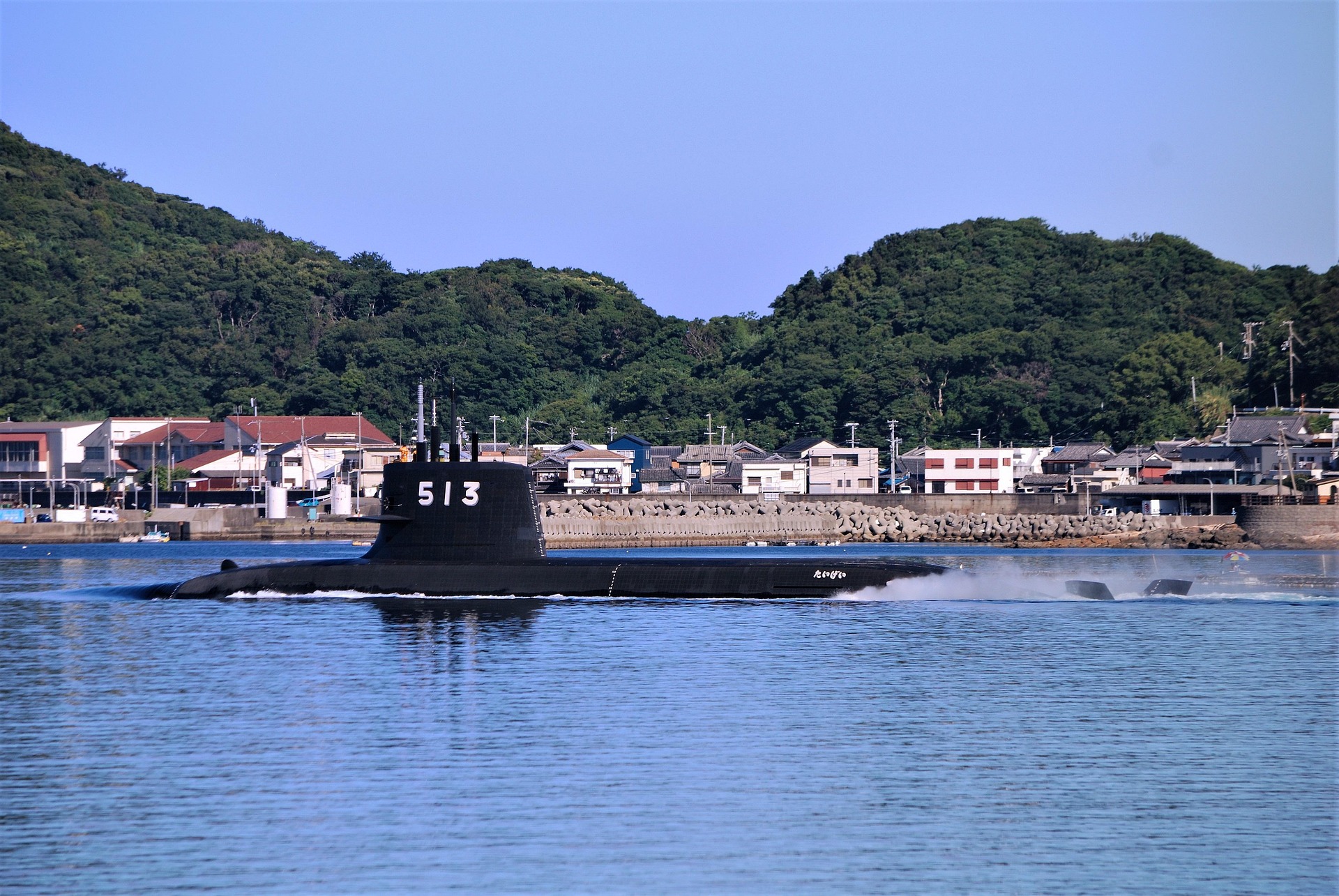
Imagine a future U.S. Navy frigate not built from the keel up in one massive shipyard, but assembled like high-tech Lego—with entire sections, like a complete command center, arriving pre-built from specialized factories across the country. That’s the vision Adm. Daryl Caudle, the Chief of Naval Operations (CNO), is pushing after a recent visit left a profound impression. Touring the Austal USA shipyard in Mobile, Alabama, he saw the future of naval construction: a Command and Control Systems Module (CCSM) for a Virginia-class submarine, reported The War Zone. “It’s like walking into a Virginia class submarine control room. The thing is completely done,” Caudle described. This module, built by Austal, will be shipped to a main yard for final assembly, a process that “offloaded hundreds of thousands of man-hours” from primary contractor Electric Boat.
This process, called distributed shipbuilding, isn’t new for complex vessels like submarines and destroyers, but applying it to the FF(X) frigate program represents a major paradigm shift. The urgency is clear. The U.S. is struggling to match the sheer output of China’s shipbuilding industry, which boasts a capacity estimated to be 200-times larger. To catch up, the Navy must innovate not just in technology, but in industrial workflow. “We are, I think, at just the tip of the iceberg on how we’re starting to utilize modularity more effectively,” Adm. Caudle stated at the Surface Navy Association (SNA) symposium.
READ ALSO: https://modernmechanics24.com/post/china-develops-quantum-warfare-weapons/
The plan for the FF(X) is ambitious. The first ship, awarded to HII/Ingalls on a sole-source basis, is scheduled for launch in 2028 and will be built using traditional methods. But for the follow-on vessels, the Navy wants to disperse the work. “Nothing prevents other Gulf Coast shipyards—which there are many, I want to say there’s probably 20 plus—from being in the business of building some part or whole of a module for that frigate,” Caudle explained. This approach turns the lead yard into an assembly hub, speeding construction, keeping more yards in business, and strategically spreading the economic benefits across numerous congressional districts to bolster political support.
Perhaps more provocatively, Adm. Caudle is openly looking overseas for help. “Certainly I do think there’s a role for foreign yards to play in our shipbuilding initiatives to add capacity,” he said. He pointed to allies like South Korea and Japan, which already build advanced warships, including derivatives of the U.S. Arleigh Burke-class destroyer. These partners could build entire auxiliary ships or major combatant modules. “I view it as a bridging strategy till we get our industrial base where it needs to be,” Caudle noted, aligning with broader interest in using foreign construction to quickly address the fleet size shortfall.
WATCH ALSO: https://modernmechanics24.com/post/swiss-robot-brain-autonomy/
However, this international path is fraught with complexity. Integrating foreign yards into the U.S. defense supply chain is a monumental challenge. “When you work with a foreign partner, they either had to have exquisite access to our supply system… or they’re going to use their own indigenous system,” Caudle cautioned. Differing technical standards, language barriers, and security concerns all create friction. The goal is to use foreign capacity as a temporary catalyst while reviving the dormant U.S. industrial base to ultimately “do it organically.”
The FF(X) program itself is a pragmatic, if controversial, response to earlier failures. It’s based on the U.S. Coast Guard’s Legend-class National Security Cutter design, chosen for its proven hull and potential for rapid production. Yet, it has drawn criticism for lacking a vertical launch missile system, limiting its firepower compared to peers. Despite this, the Navy sees it as a vital near-term solution, and Adm. Caudle believes distributed construction is the key to building it fast enough to matter. By rethinking how ships are built—from a single-yard monument to a networked, modular enterprise—the U.S. Navy is fighting to regain its industrial footing in a race where time and numbers are critical.
READ ALSO: https://modernmechanics24.com/post/norway-launches-panoramic-night-train/