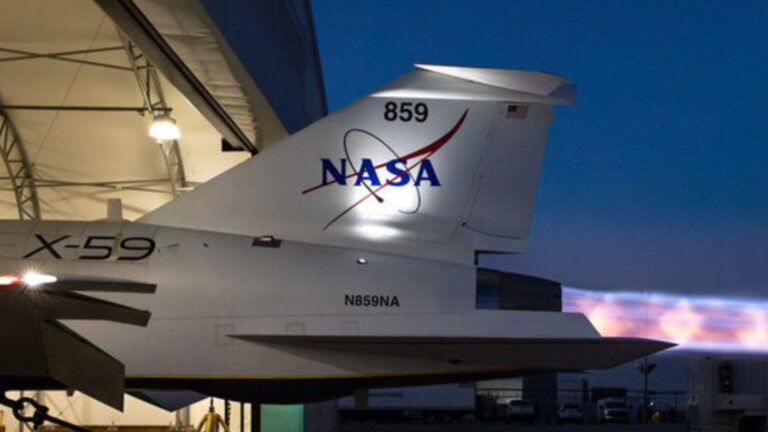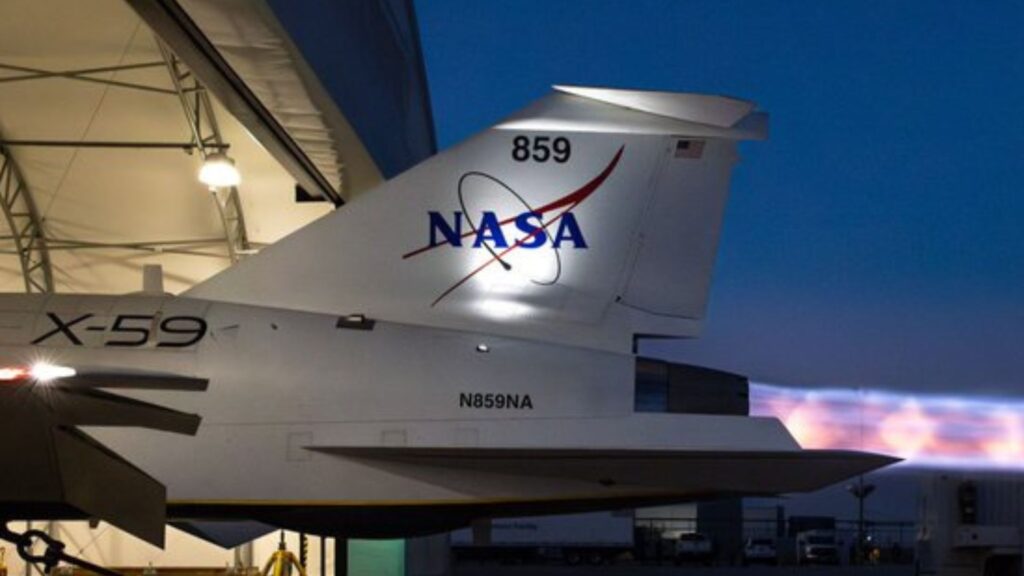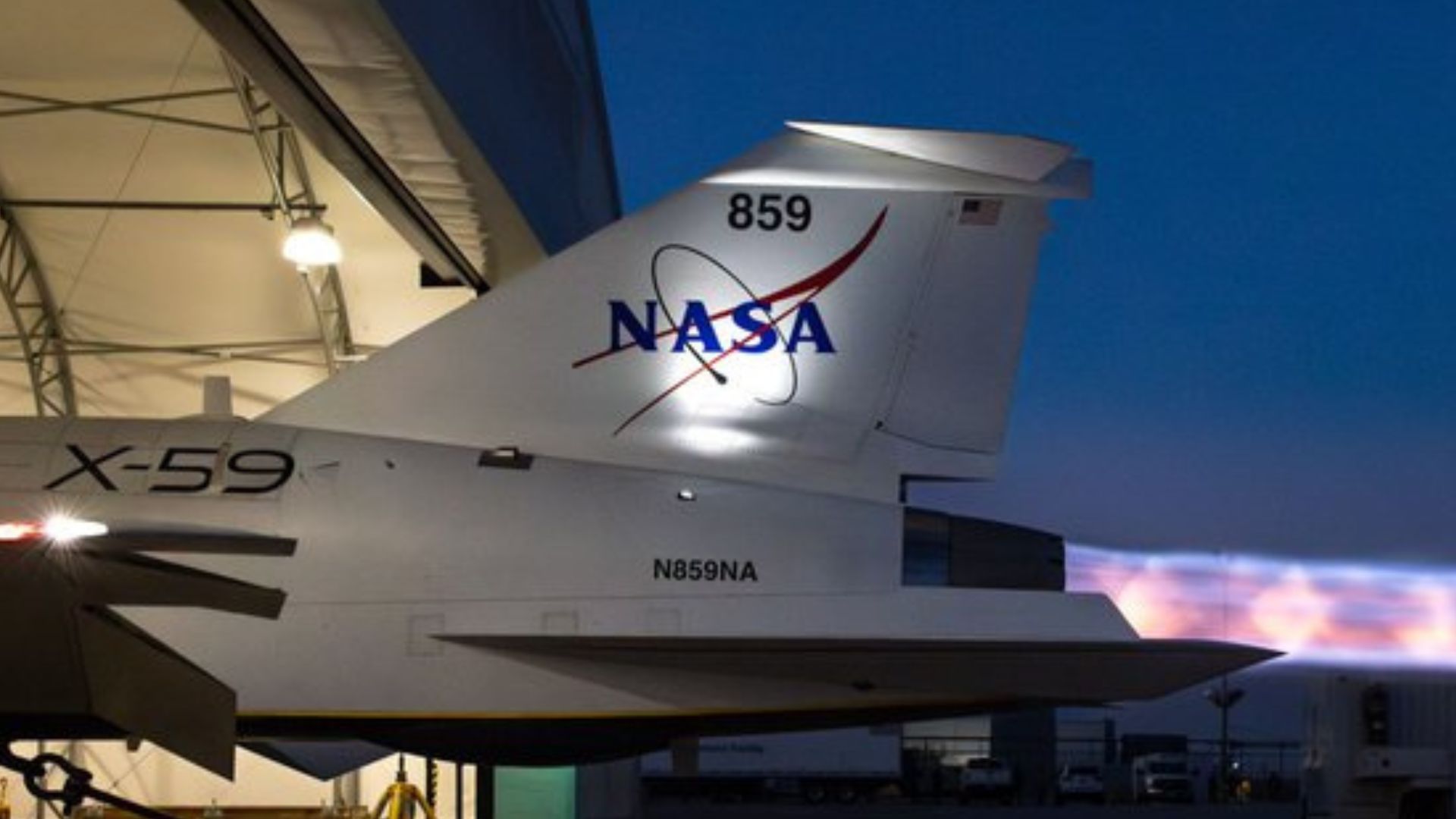
NASA is getting its X-59 experimental jet ready for a second flight, moving closer to proving that supersonic flight can be quiet enough to fly over land.
Test pilot Jim “Clue” Less will fly the aircraft from Edwards Air Force Base in California, with another NASA pilot following in an F/A-18 to observe. The flight marks the start of “envelope expansion”—a careful process of increasing speed and altitude in steps.
Lockheed Martin built the X-59 for NASA’s Quest mission. The aircraft made its first flight on October 28, 2025 , with pilot Nils Larson at the controls. After that flight, teams removed the engine, the tail sections, the seat, and over 70 panels for inspection. Everything has now been reinstalled and tested, including an engine run on March 12, 2026.
READ ALSO: ISS Will Burn and Fall to Earth: A New Space Race Has Already Begun
The problem the X-59 solves is the ban on supersonic flight over land. Current regulations prohibit civilian aircraft from breaking the sound barrier because sonic booms annoy people on the ground and can damage property. The X-59 is shaped to spread out the shock waves that normally merge into a loud boom, turning it into a quiet thump that might be acceptable to communities below.
How The X-59 Testing Works
On the second flight, the X-59 will start by matching conditions from the first flight to confirm everything works after maintenance. Then it will climb to 20,000 feet and reach 260 mph . Future flights will gradually push toward their target of Mach 1.4 (about 925 mph) at 55,000 feet . Each small increase lets engineers check how the aircraft behaves before going further.
WATCH ALSO: Chinese humanoid robot learns to stitch detailed embroidery patterns autonomously
Real-world use comes later. After proving the aircraft performs safely and quietly, NASA will fly it over selected U.S. communities and ask residents what they hear. If people find the thump acceptable, regulators could change rules to allow commercial supersonic flight over land. That would let airlines cut travel times in half on routes like New York to Los Angeles.
The current limitation is that this is still early testing. The X-59 has flown exactly once. Engineers need many more flights to validate their acoustic performance at different speeds and altitudes. The community surveys are likely years away. The aircraft is a one-off experimental design, not a production model, so commercial versions would need separate development.
READ ALSO: From Orbit to Plate: China’s Latest Space Experiment Yields a Big Surprise
Supersonic land travel has been impossible since the Concorde was banned from U.S. routes. If NASA proves it can be done quietly, it opens the door for a new generation of faster airliners. Cathy Bahm, NASA’s project manager, said the second flight is “the start of envelope expansion”—the beginning of a long process that could reshape how fast we can fly.