In a major strategic shift, NASA has unveiled a sweeping set of initiatives to accelerate its return to the Moon, build a long-term lunar presence, and strengthen its leadership in space exploration.
The announcements came during the agency’s “Ignition” event, where officials outlined a detailed roadmap aligned with the National Space Policy under Donald J. Trump.
The plan reflects urgency, ambition, and a clear intent to reshape how the United States approaches space missions in the coming decade. From frequent Moon landings to nuclear-powered spacecraft, NASA is laying the foundation for a new era of exploration.
NASA Administrator Jared Isaacman emphasized the mission’s urgency. He said NASA is focused on achieving what once seemed nearly impossible: returning humans to the Moon within the current presidential term, building a lunar base, and ensuring sustained American leadership in space.
READ ALSO: Durham University Introduces Alan Humanoid Robot for AI and Assistive Research
He stressed that time is critical. He noted that success will be measured in months, not years, as global competition in space intensifies. He added that by aligning resources, removing delays, and empowering both workforce and industry, NASA can go beyond just returning to the Moon.
NASA Associate Administrator Amit Kshatriya explained that the agency is restructuring its approach across all major areas: Moon missions, low Earth orbit operations, and science programs. He said NASA is moving toward a phased and practical system that builds capabilities step by step, with strong support from industry and international partners.
NASA’s New Path Back to Moon
The updated strategy builds on changes to NASA’s Artemis program. The agency plans to standardize its Space Launch System (SLS) rockets and increase mission frequency. A new mission has been added for 2027, and NASA aims to conduct at least one Moon landing each year thereafter.
Under this revised plan, Artemis III, now targeted for 2027, will focus on testing systems and operations in Earth orbit. This will prepare the way for Artemis IV, which is expected to carry out the next lunar landing.
Looking further ahead, NASA plans to use more commercial and reusable hardware. The goal is to make missions more frequent and affordable. Initially, NASA is targeting Moon landings every six months, with the potential to increase that pace over time.
Building a Permanent Moon Base
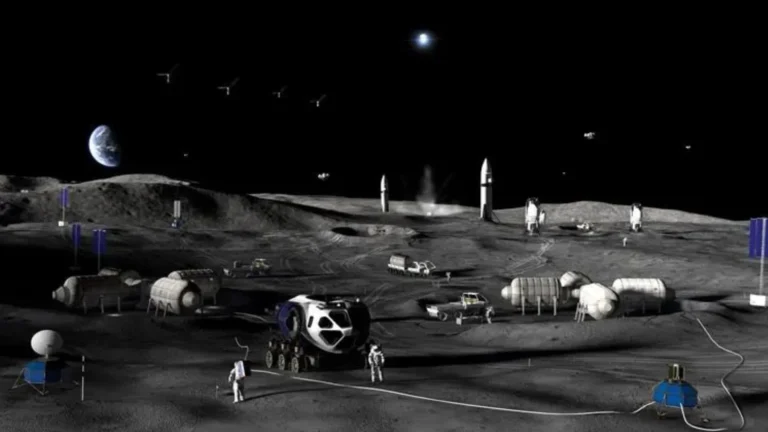
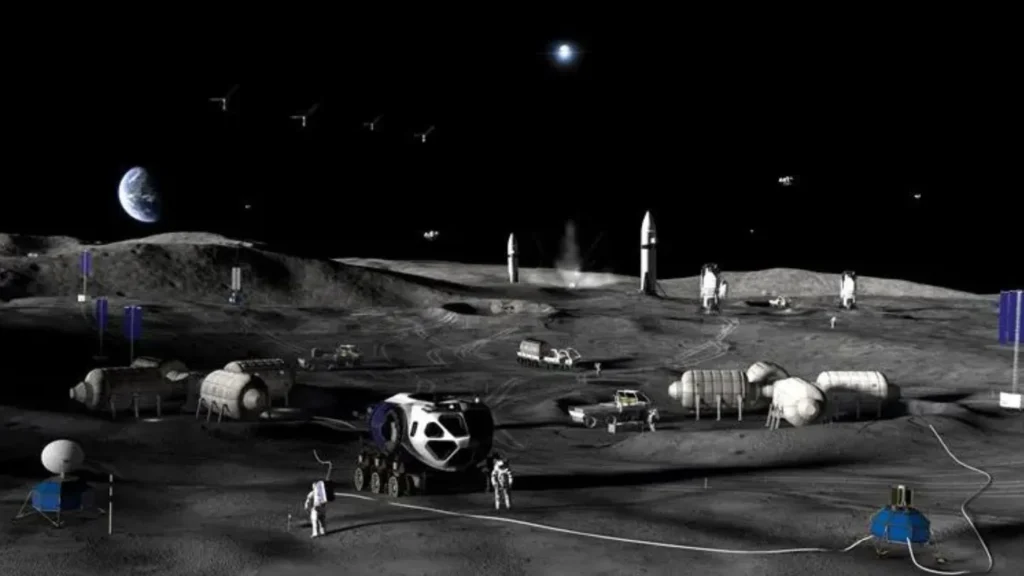
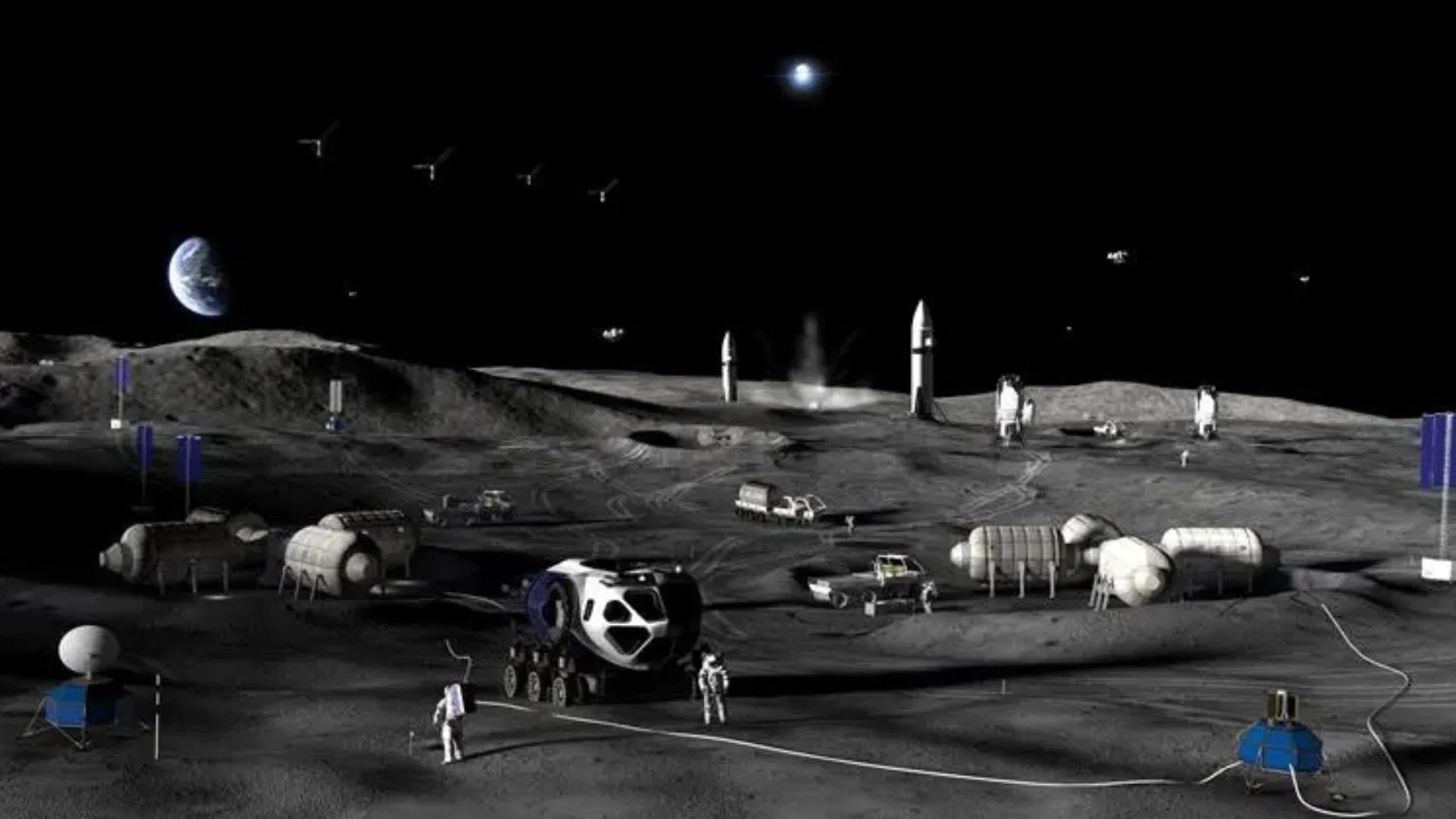
A central part of NASA’s plan is the creation of a long-term lunar base. This will happen in three clear phases.
WATCH ALSO: Boston Dynamics Atlas humanoid robot demonstrates remarkable mobility, balance
In the first phase, NASA will focus on building, testing, and learning. The agency will rely on its Commercial Lunar Payload Services (CLPS) program to deliver instruments, rovers, and technology to the Moon. These missions will test systems for mobility, power, communication, and scientific research.
In the second phase, NASA will begin setting up early infrastructure. This includes semi-habitable systems and regular supply missions. Astronauts will start spending more time on the lunar surface. International partners will play a key role here, including the Japan Aerospace Exploration Agency, which will deploy its pressurized rover.
The third phase will mark a major shift. NASA plans to enable long-term human presence on the Moon. Heavy cargo systems will deliver advanced infrastructure, including habitats and vehicles. Contributions from partners like the Italian Space Agency and the Canadian Space Agency will support this effort.
NASA also announced that it will pause the Gateway lunar station in its current form. Instead, it will focus on systems that directly support surface operations on the Moon. Existing hardware may be reused where possible.
A New Strategy for Low Earth Orbit
While focusing on the Moon, NASA is also reshaping its plans for low Earth orbit (LEO). The International Space Station has been a cornerstone of space research for over 20 years. It has supported thousands of experiments and researchers worldwide. However, the space station cannot operate forever. NASA is now planning a transition to commercial space stations.
The agency is introducing a phased approach. It may begin with a government-owned core module attached to the ISS. Commercial modules will then be added and tested before eventually operating independently.
NASA wants to avoid any gap in human presence in orbit. At the same time, it aims to build a strong commercial space economy. The agency plans to expand opportunities for private astronaut missions, commercial partnerships, and industry-led projects.
READ ALSO: US Marines Test MADIS Air Defense System to Stop Drone Threats
Expanding Science Missions
NASA also highlighted its ongoing and future science missions. The James Webb Space Telescope continues to reveal new insights about the early universe. The Parker Solar Probe has already flown through the Sun’s outer atmosphere.
Future missions are equally ambitious. The Nancy Grace Roman Space Telescope is expected to launch soon and study dark energy. The Dragonfly mission will send a nuclear-powered drone to Saturn’s moon Titan by 2034.
NASA is also working with the European Space Agency to send the Rosalind Franklin rover to Mars in 2028. This mission will search for organic molecules and signs of past life.
Back on the Moon, NASA plans to increase the number of robotic missions. It aims for up to 30 landings starting in 2027. These missions will carry scientific instruments, rovers, and even drones. Programs like VIPER and LuSEE-Night are part of this effort.
The agency is also opening opportunities for students, researchers, and private organizations to contribute payloads and experiments.
Nuclear Power Moves into Space
One of the most significant announcements is NASA’s move toward nuclear-powered space systems. The agency plans to launch the Space Reactor-1 Freedom spacecraft to Mars by 2028.
This will be the first nuclear-powered interplanetary spacecraft. It will demonstrate nuclear electric propulsion, enabling efficient long-distance travel in space.
Once it reaches Mars, the spacecraft will deploy a set of helicopter drones similar to Ingenuity. These will explore the planet’s surface in greater detail.
NASA says this mission will help establish the use of nuclear technology in space. It will also support future missions beyond the Moon, including deep space exploration.
Strengthening the Workforce
NASA officials stressed that these plans depend on people as much as technology. The agency is investing in its workforce by bringing critical skills back in-house and creating new career pathways.
READ ALSO: IIT Gandhinagar Simplifies Flexible Robot Control with Low Computation
Thousands of contractor roles are being converted into civil service positions. NASA is also expanding opportunities for interns and early-career professionals.
The agency plans to place experts directly within its supply chain. These specialists will work closely with vendors and manufacturers to resolve issues and accelerate production.
A New Phase for Space Exploration
The initiatives announced at the Ignition event mark a turning point for NASA. The agency is shifting from slow, complex missions to a more flexible and frequent model.
By combining government leadership with commercial innovation and international partnerships, NASA is aiming to build a sustained presence in space. From the Moon to Mars and beyond, the agency’s new plan signals a future where space exploration is faster, broader, and more connected than ever before.